
15 Cozy Studio Apartment Ideas That Feel Bigger
A studio apartment asks one room to do everything — living room, bedroom, office, and dining room — and somehow still feel like home. The secret to making it work is not more square footage; it is smarter design. With the right layout, light, and layering, even the tiniest studio can feel open, calm, and deeply cozy.
The best small studios borrow tricks from interior designers: they reflect light, define invisible zones, and choose furniture that works twice as hard. These 15 cozy studio apartment ideas show you exactly how to make your one-room home feel bigger without moving a single wall.
1. Keep the Palette Light and Bright
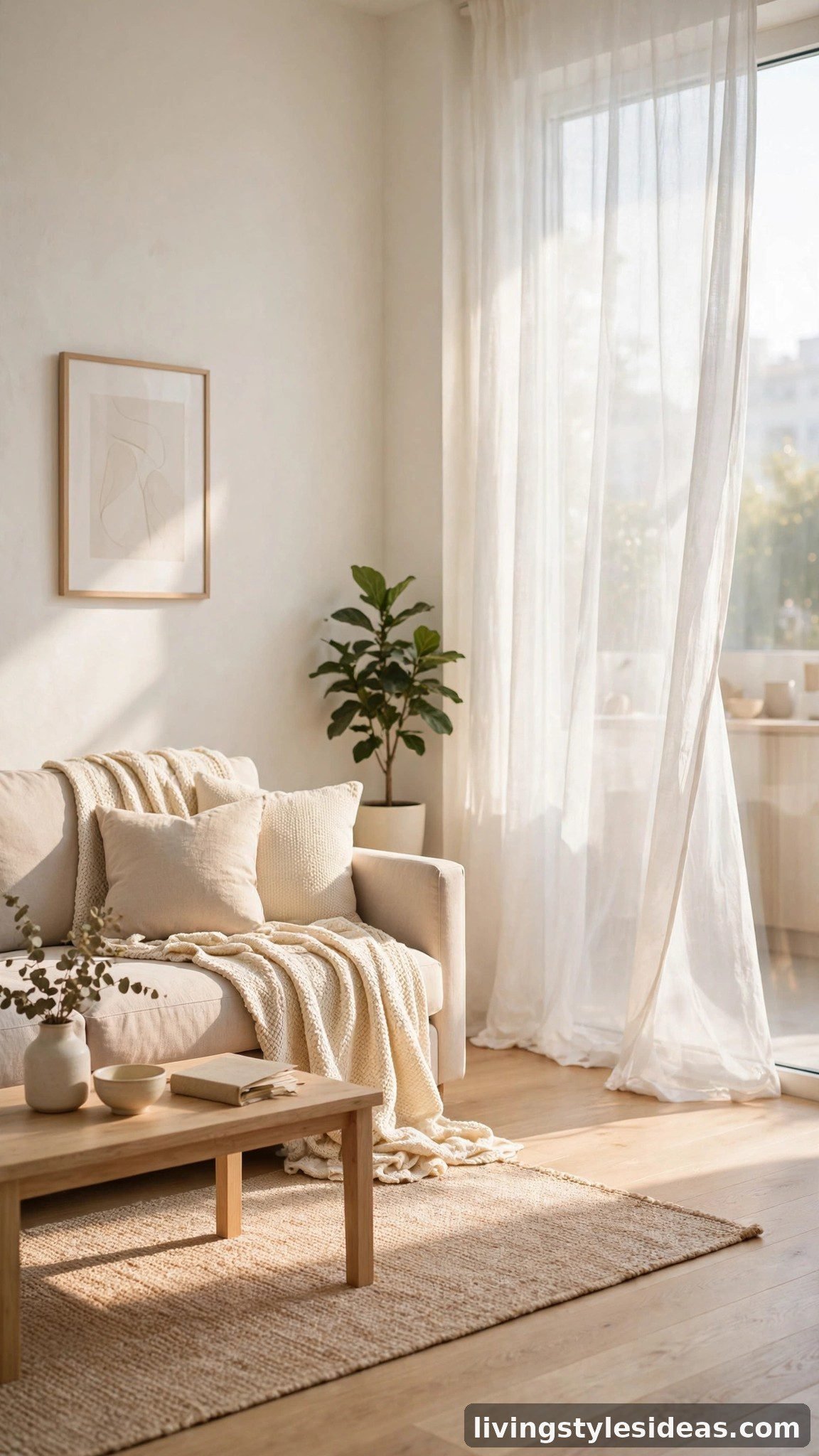
Light colors are a small space’s best friend because they bounce light around instead of absorbing it. Paint walls in warm white or soft cream, and keep big pieces — the sofa, bedding, curtains — in pale tones. This creates one continuous, airy backdrop with no visual breaks, so the eye travels across the whole room instead of stopping at every dark patch. The result is a studio that feels open and calm, even before you add a single decor piece.
2. Define Zones With Area Rugs
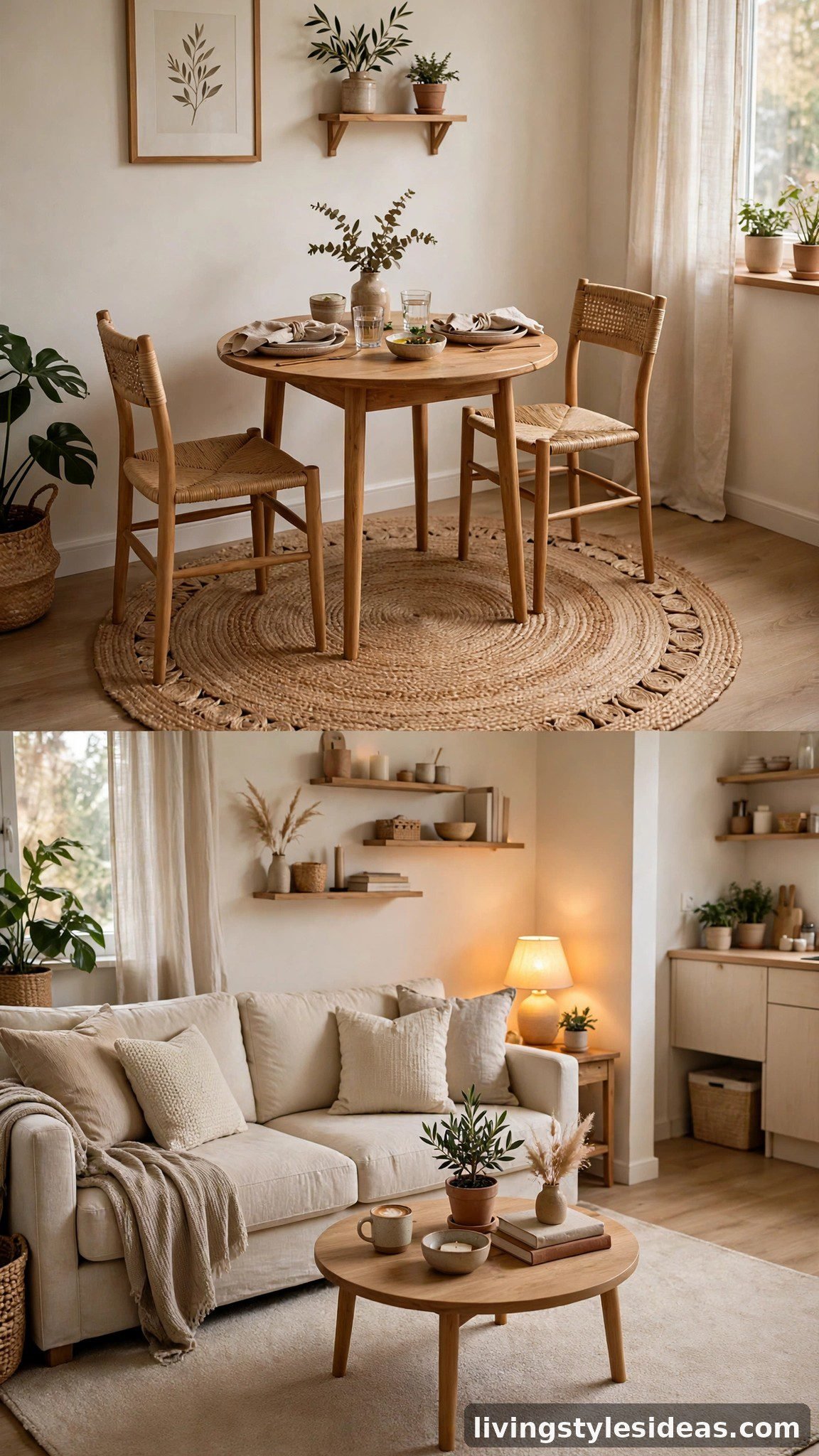
A rug is a wall you can walk on. In a studio, placing a large rug under the sofa and chairs instantly creates a “living room,” while a round jute rug under a small table carves out a “dining room.” These soft boundaries give the open plan structure and purpose without any partitions blocking light or airflow. Choose rugs in similar tones so the zones feel connected, and size each one generously — a too-small rug chops the room into fragments.
3. Choose Multifunctional Furniture
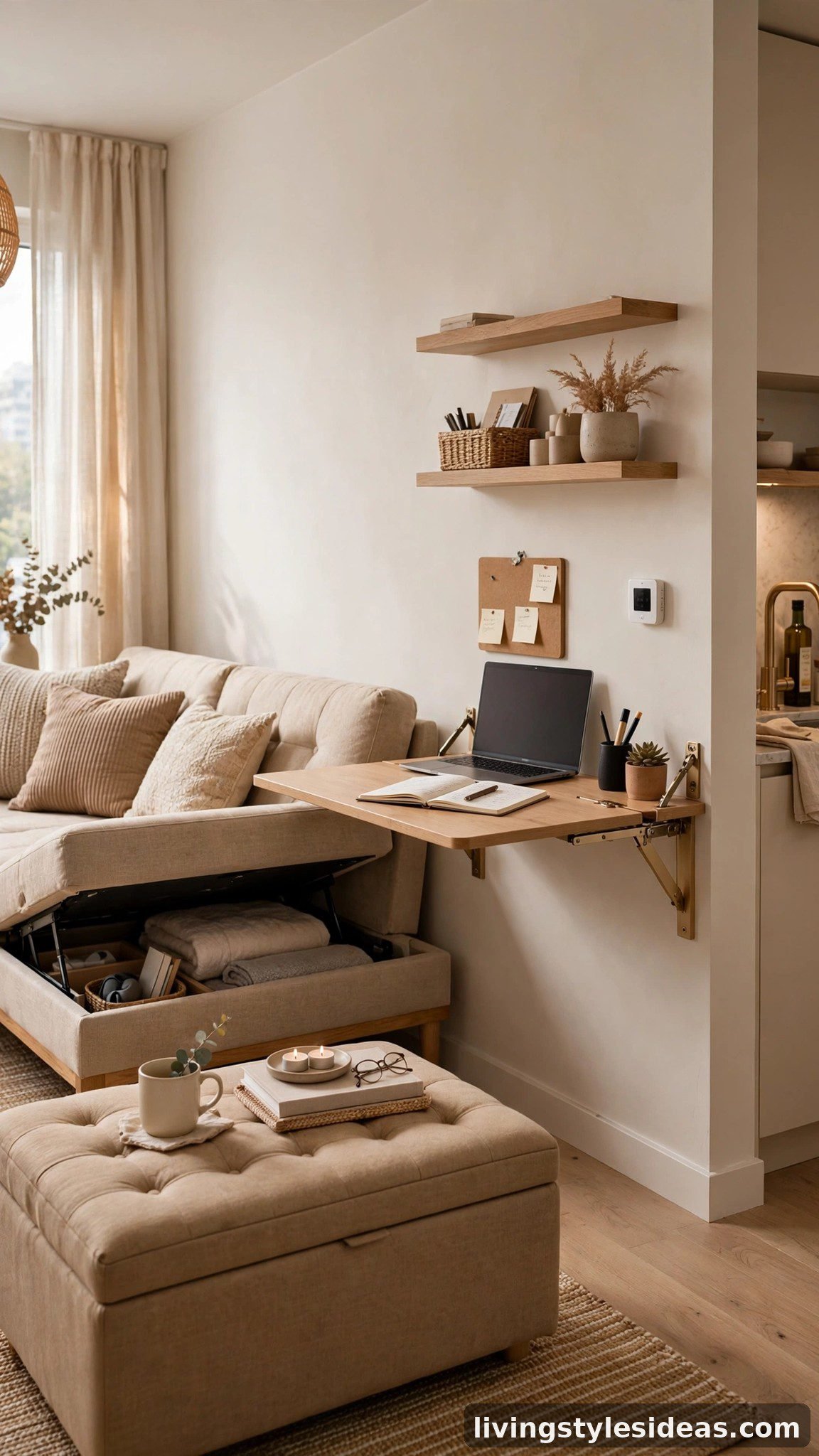
Every piece in a studio should earn its footprint twice. A storage ottoman works as a coffee table, extra seat, and a place to hide blankets. A sleeper sofa or daybed handles lounging by day and sleeping by night. Look for nesting tables, beds with built-in drawers, and desks that fold away. When each piece does double duty, you need fewer pieces overall — and fewer pieces means more open floor, which reads as more space.
4. Hang Curtains High and Wide
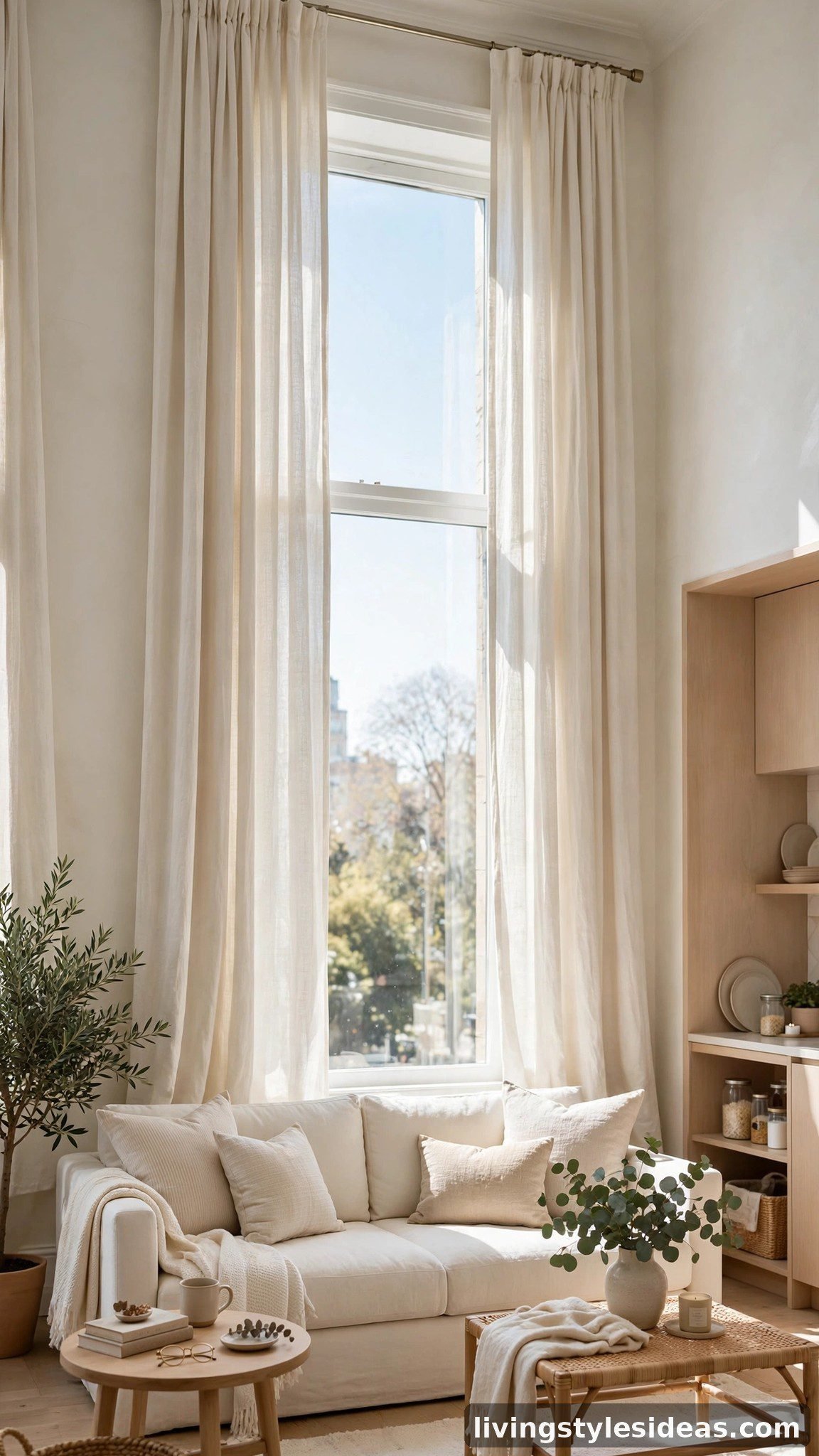
Where you hang curtains matters more than the curtains themselves. Mount the rod close to the ceiling and extend it well past the window frame on both sides, then use long panels that just kiss the floor. This simple trick makes the window look dramatically larger and the ceiling higher, and it lets in more daylight when the panels are open. Floor-to-ceiling linen in a light tone adds softness and vertical drama that stretches the whole room upward.
5. Go Vertical With Tall Shelving
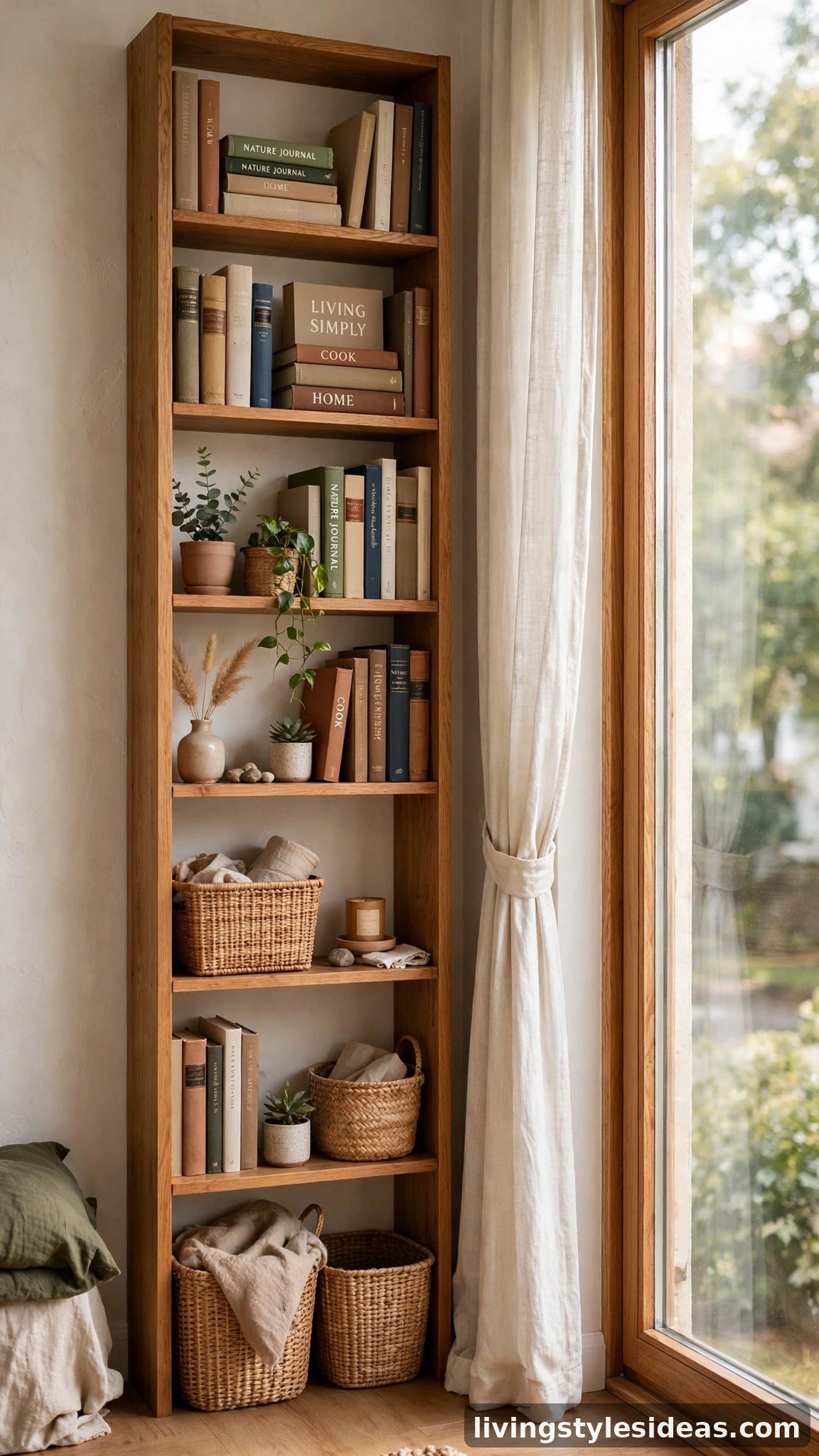
When floor space is scarce, the walls are your second floor. A tall, narrow bookcase or a set of floating shelves draws the eye upward and gives everything a home — books, plants, baskets, and decor — without eating a single square foot of floor. Keep the top shelves light and airy with a few styled objects, and store everyday items at arm’s reach. Vertical storage adds architecture to blank walls and makes the ceiling feel higher at the same time.
6. Add an Oversized Mirror
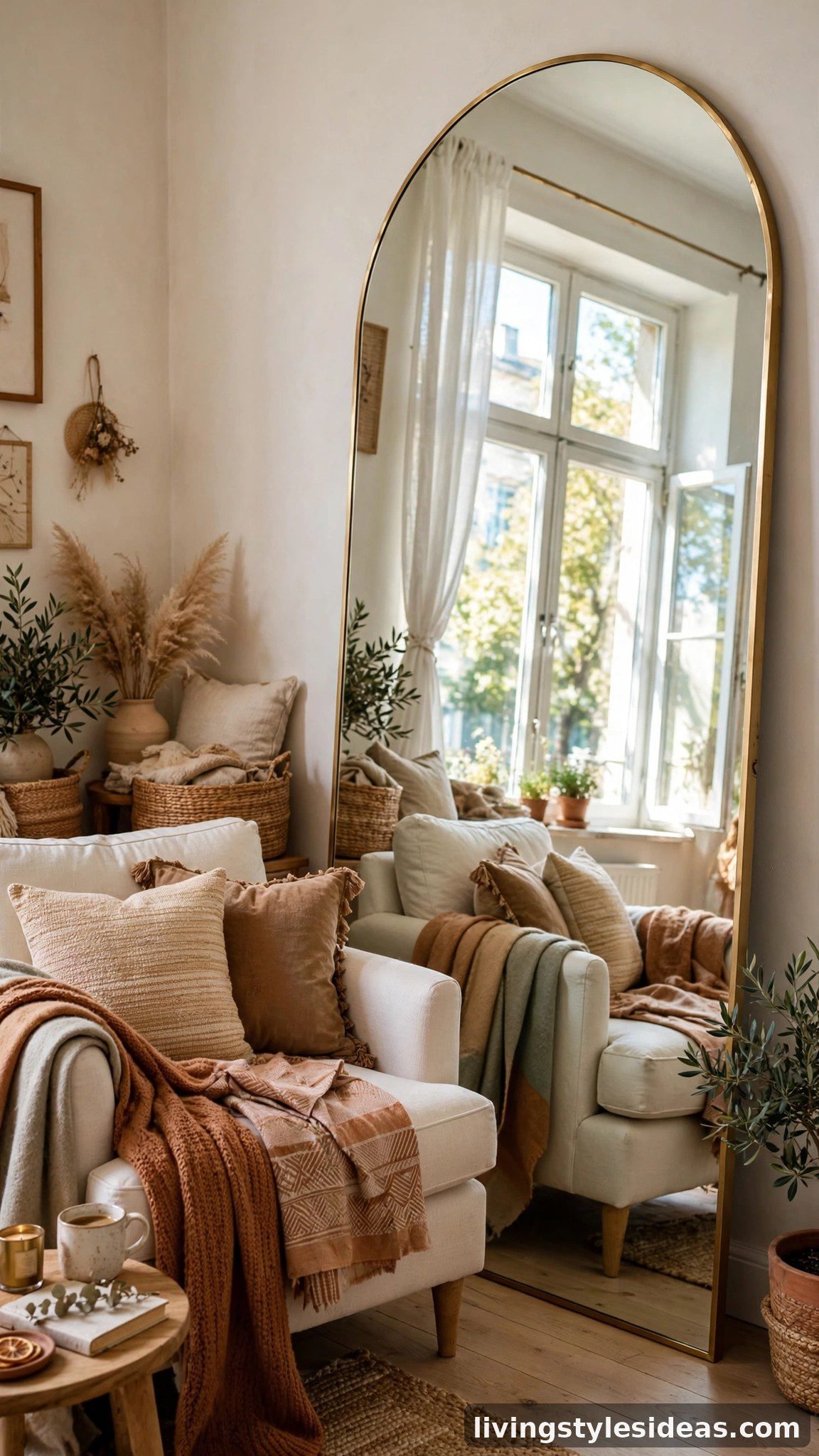
A big mirror is the oldest small-space trick because it genuinely works. Placed opposite or beside a window, a large leaning mirror doubles the daylight, reflects the view, and creates the illusion of a second room beyond the glass. Choose one generous mirror over several small ones — an arched or full-length piece in a slim frame becomes a design moment while visually doubling your space. It is the fastest square-footage illusion you can buy.
7. Keep Furniture Leggy
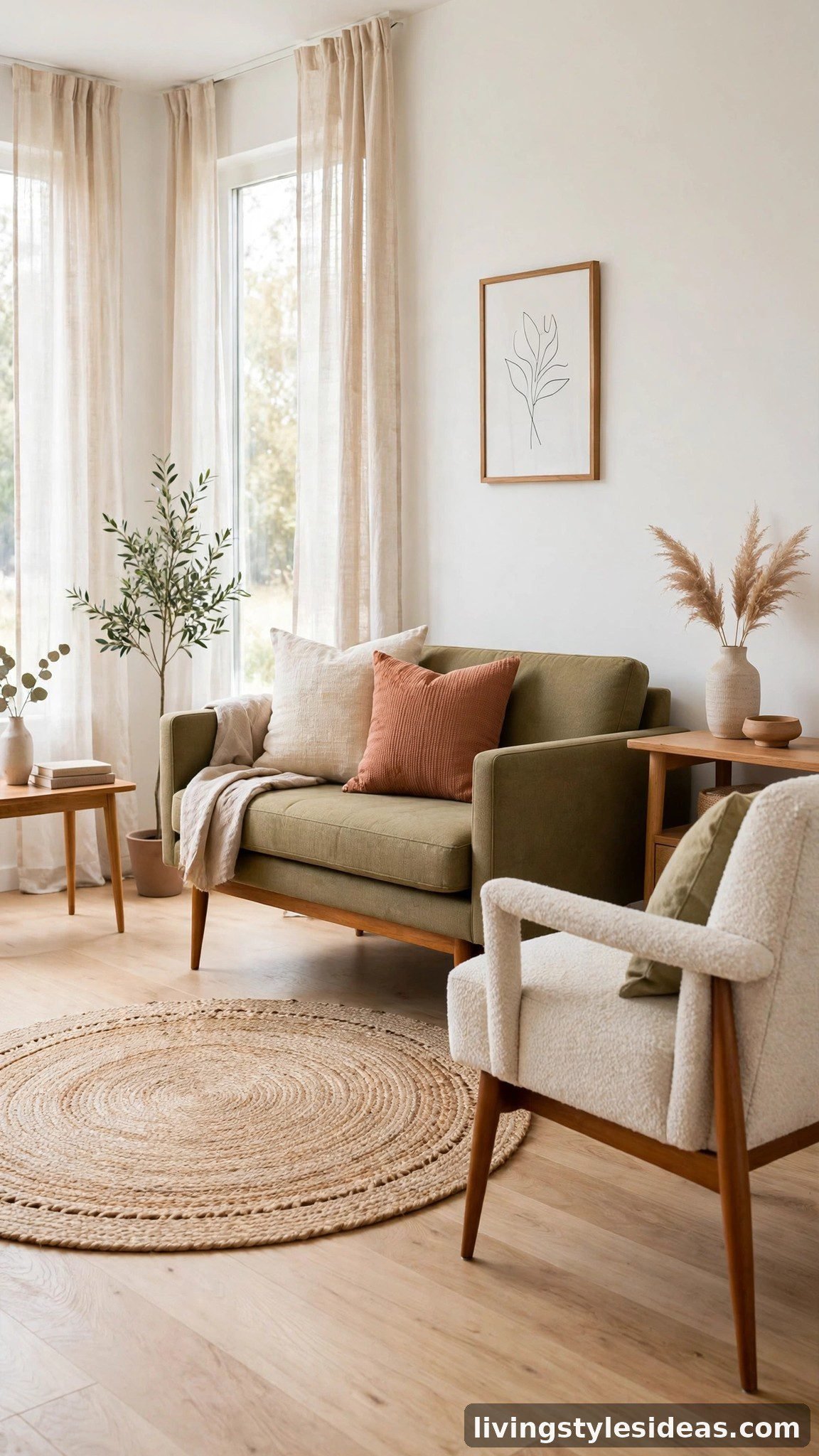
Furniture that sits flat on the floor looks heavy and blocks sightlines, which shrinks a room. Pieces raised on legs — a sofa on tapered wood feet, a console on slim metal legs — let light and air flow underneath, so the floor reads as one continuous surface. Your eye sees more floor, and more visible floor always means a bigger-feeling room. Mid-century and Scandinavian styles are full of these airy silhouettes that keep a studio feeling light instead of cramped.
8. Create a Cozy Bed Nook
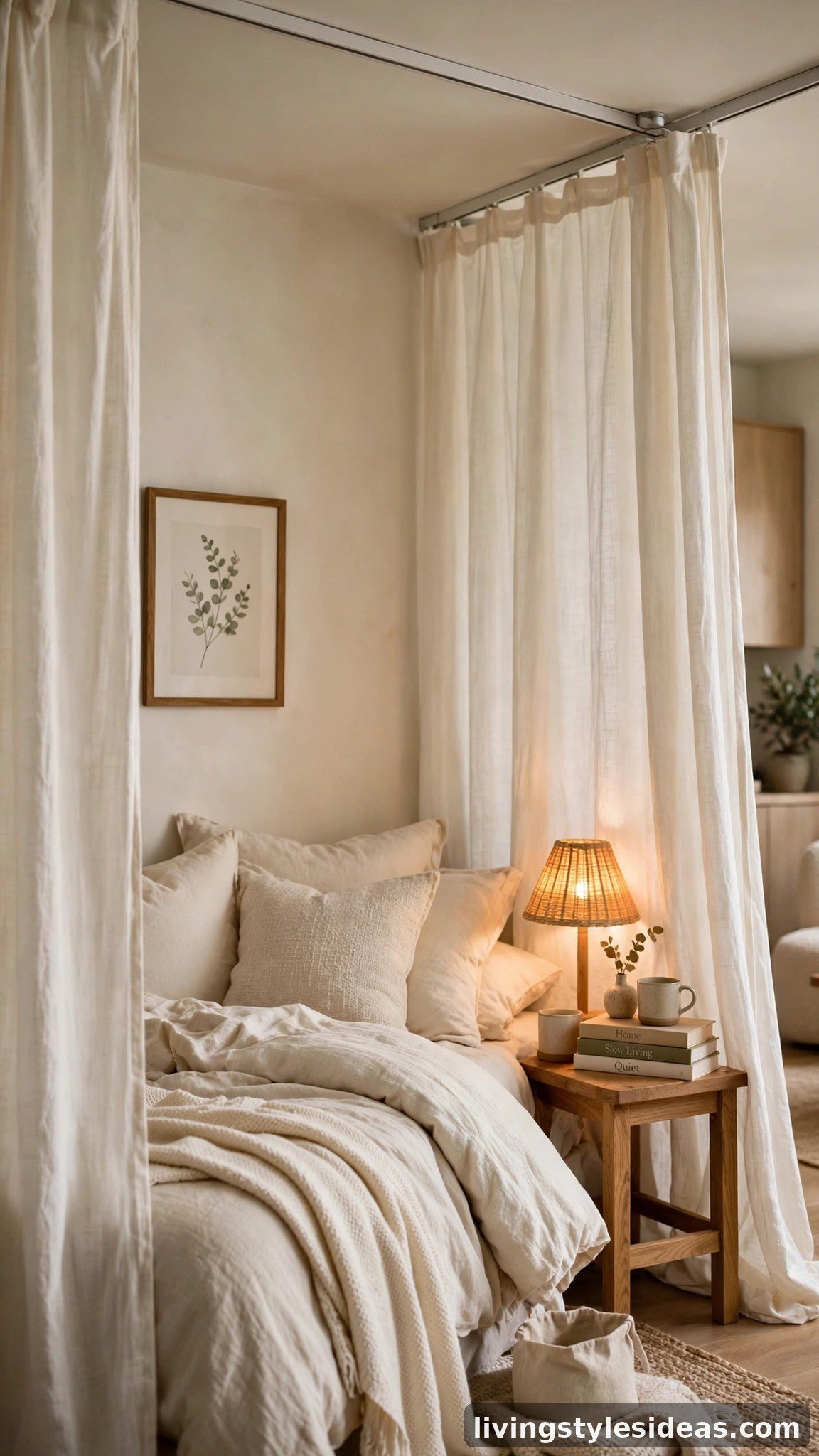
A studio feels bigger when the bed has its own identity. Tuck the bed into a corner and frame it with a ceiling-mounted linen curtain, a folding screen, or an open bookcase as a soft divider. Inside the nook, layer warm bedding, a small lamp, and a side table with books so it feels like a deliberate retreat. The rest of the room then reads as a proper living space, and you get the psychological comfort of “rooms” without any construction.
9. Layer Warm Lighting
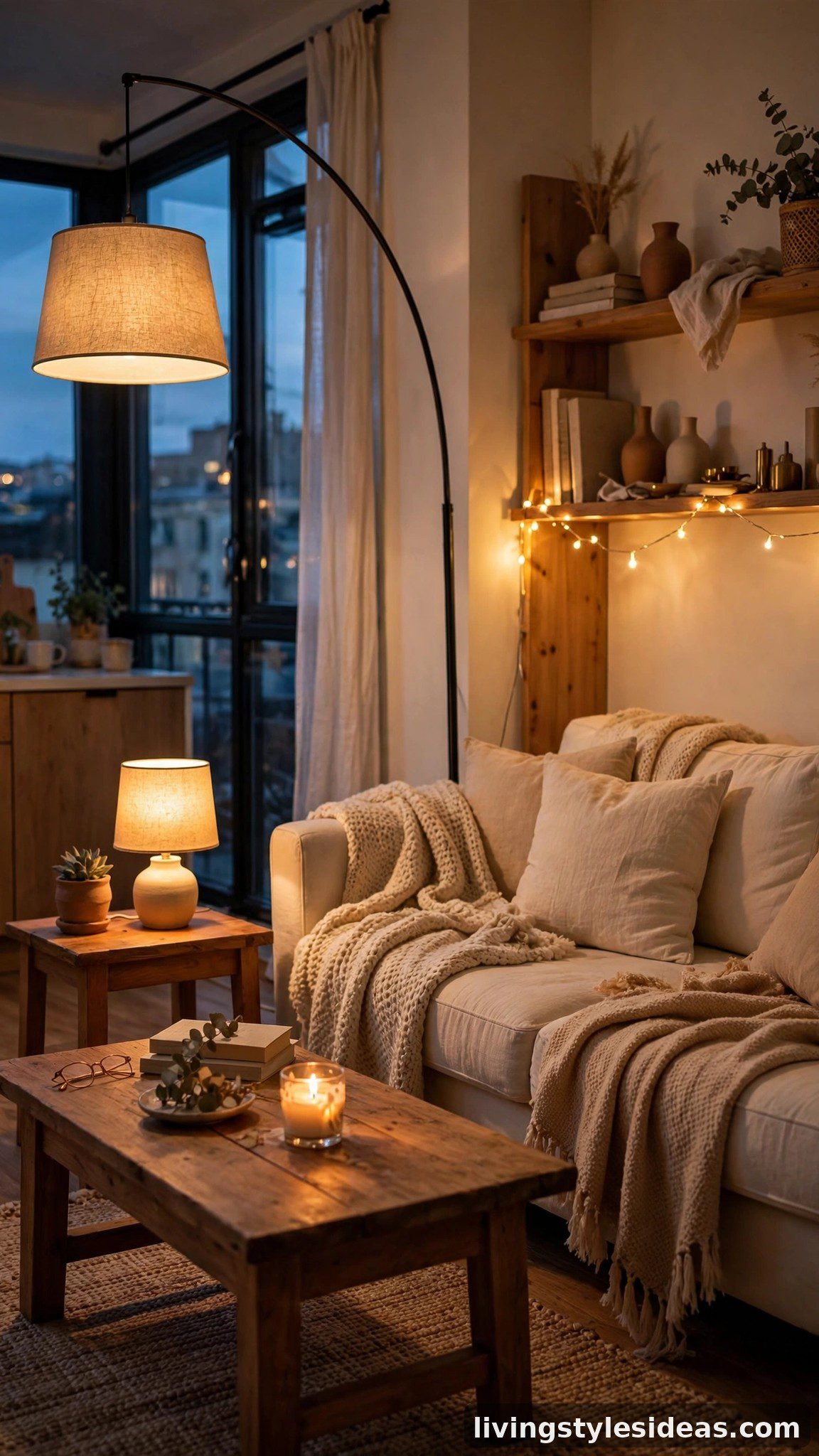
One harsh overhead light flattens a studio and makes every corner visible at once, which emphasizes how small it is. Instead, layer several warm light sources at different heights: a floor lamp by the sofa, a small lamp on the nightstand, string lights along a shelf, candles on the coffee table. Pools of warm 2700K light create intimate zones and soft shadows that add depth, and the room feels cozy and expansive rather than exposed.
10. Stick to a Cohesive Color Story
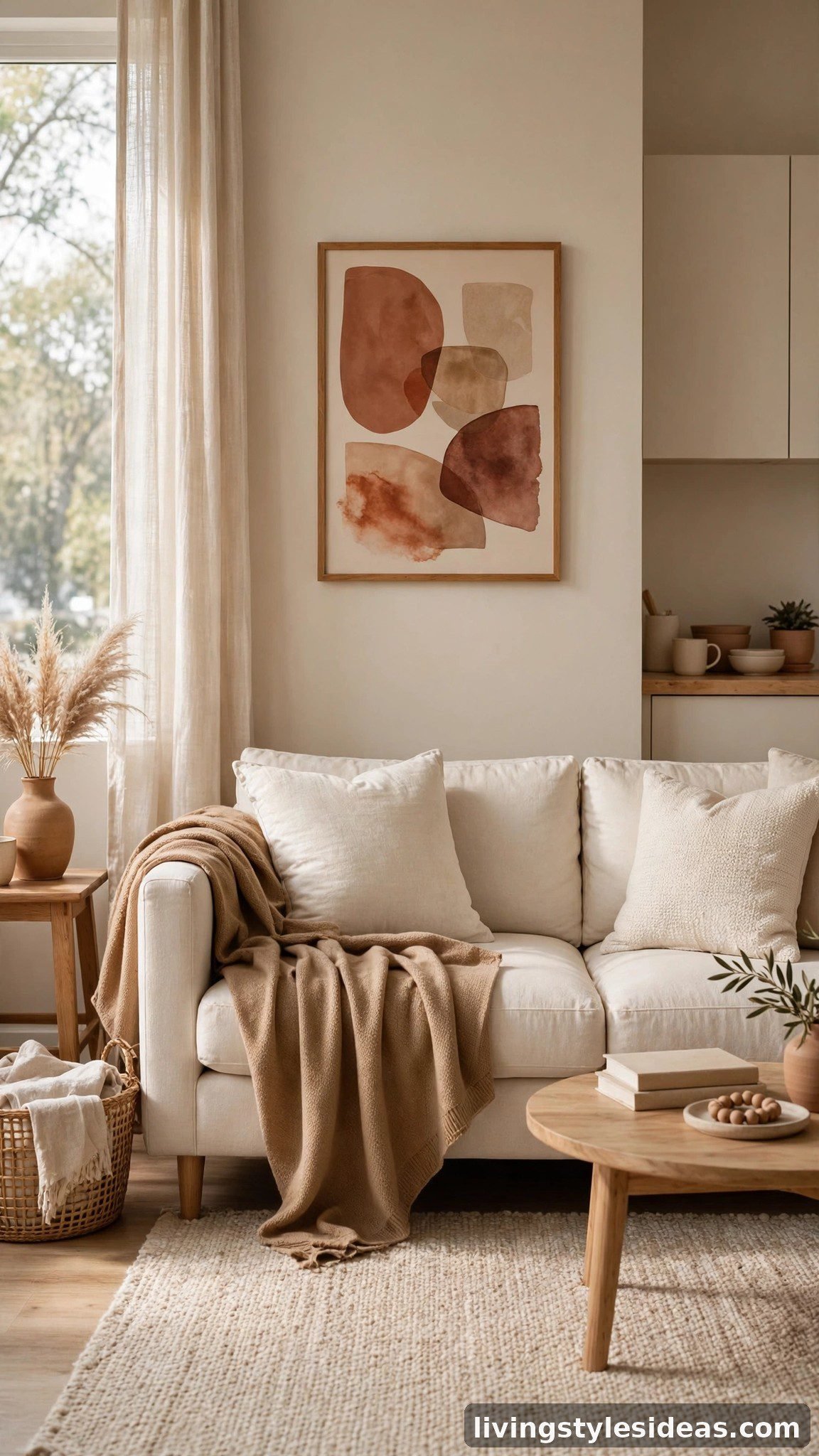
Too many competing colors chop a studio into visual fragments, and every fragment feels smaller. Pick one cohesive palette — say warm beige, camel, cream, and soft terracotta — and repeat it across textiles, art, and accessories. When the rug, throw pillows, curtains, and artwork all speak the same color language, the room flows as one continuous space. Cohesion is calming, and calm rooms always feel larger than busy ones.
11. Float Furniture Off the Walls
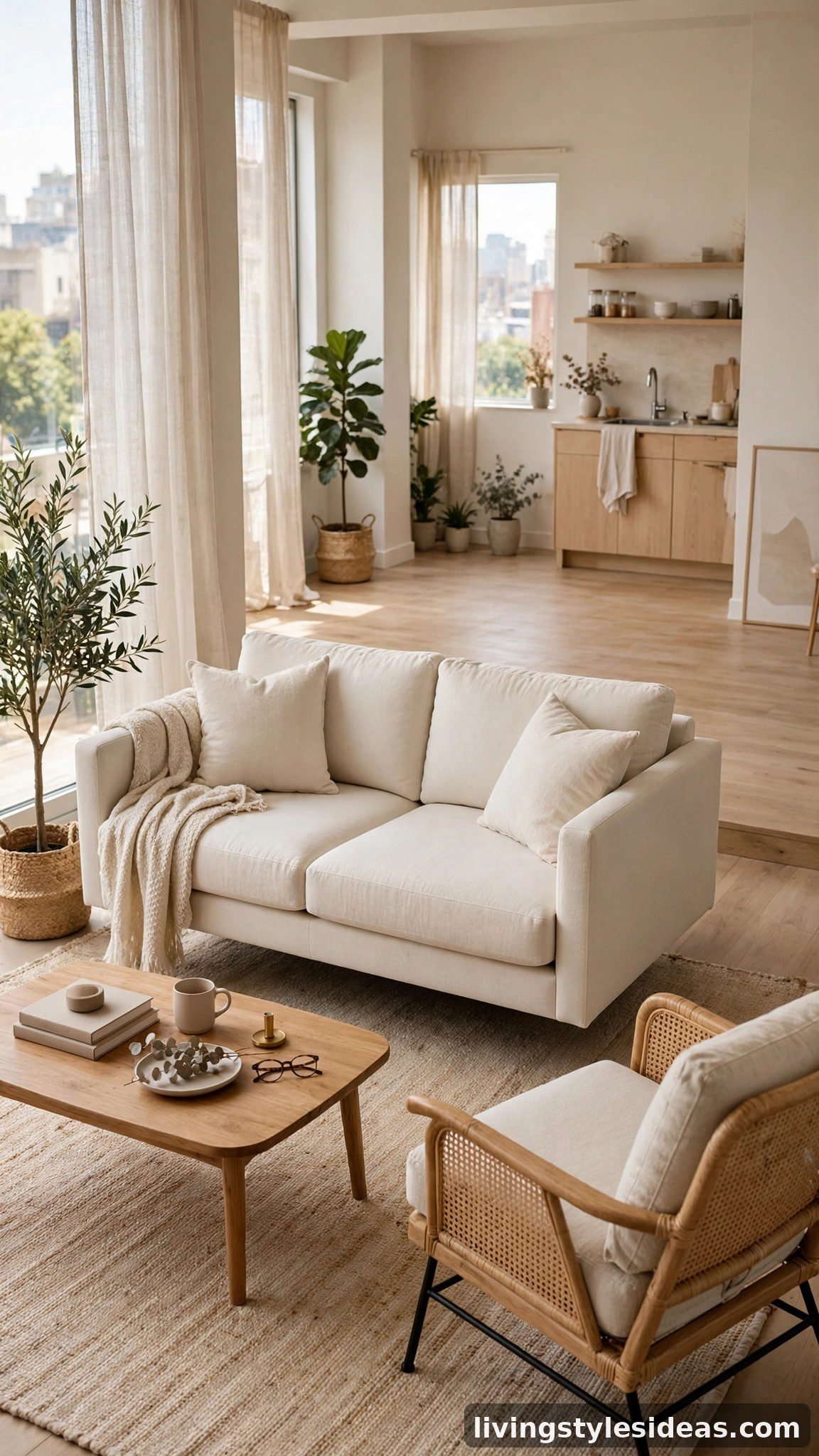
Pushing every piece against the walls seems logical in a small space, but it actually makes a studio feel like a waiting room. Try floating the sofa a few inches — or even a foot — off the wall, anchored on an area rug with a console or plant behind it. The breathing room behind furniture adds depth and shadow, which the eye reads as extra space. It feels counterintuitive, but a little air around pieces makes the whole layout feel intentional and roomy.
12. Use a Fold-Down or Extendable Dining Setup
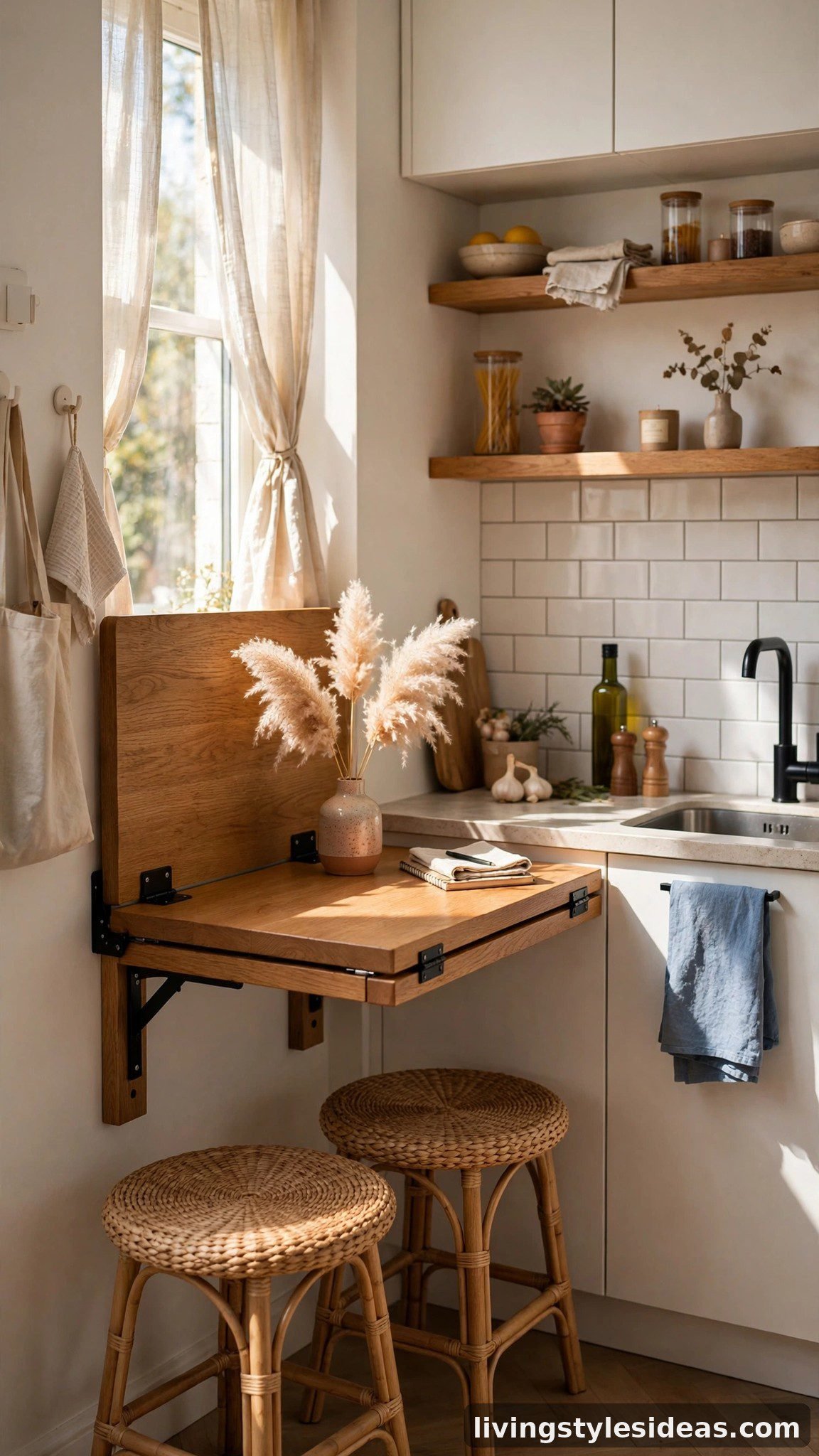
A full dining set can swallow a studio, but you still deserve a real place to eat. A wall-mounted drop-leaf table folds flat when you are done, an extendable bistro table seats two daily and four for guests, and stackable stools tuck away neatly. Choose a setup that disappears into the wall or corner between meals, and suddenly the same square footage serves as kitchen, office, and dining room without any of them feeling compromised.
13. Add Greenery for Life and Softness
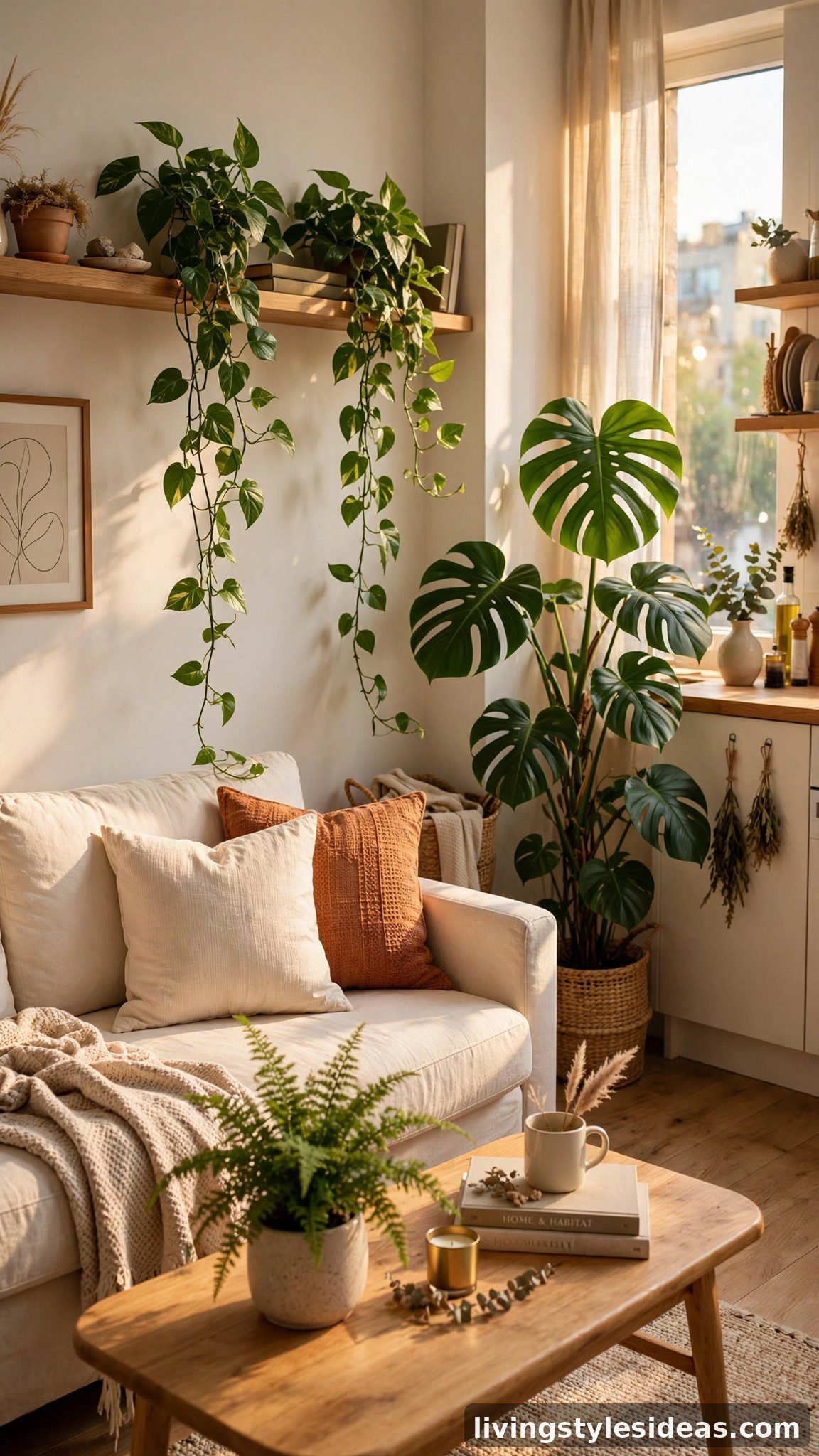
Plants are magic in small spaces: they soften hard corners, add organic shape, and bring a sense of life that makes a studio feel like a home rather than a box. A tall monstera fills an empty corner vertically, trailing pothos adds movement on a high shelf, and a small fern warms up the coffee table. Group plants in odd numbers and vary their heights for a lush, layered look. Green also pairs beautifully with warm neutrals, deepening the cozy factor.
14. Build in Smart Hidden Storage
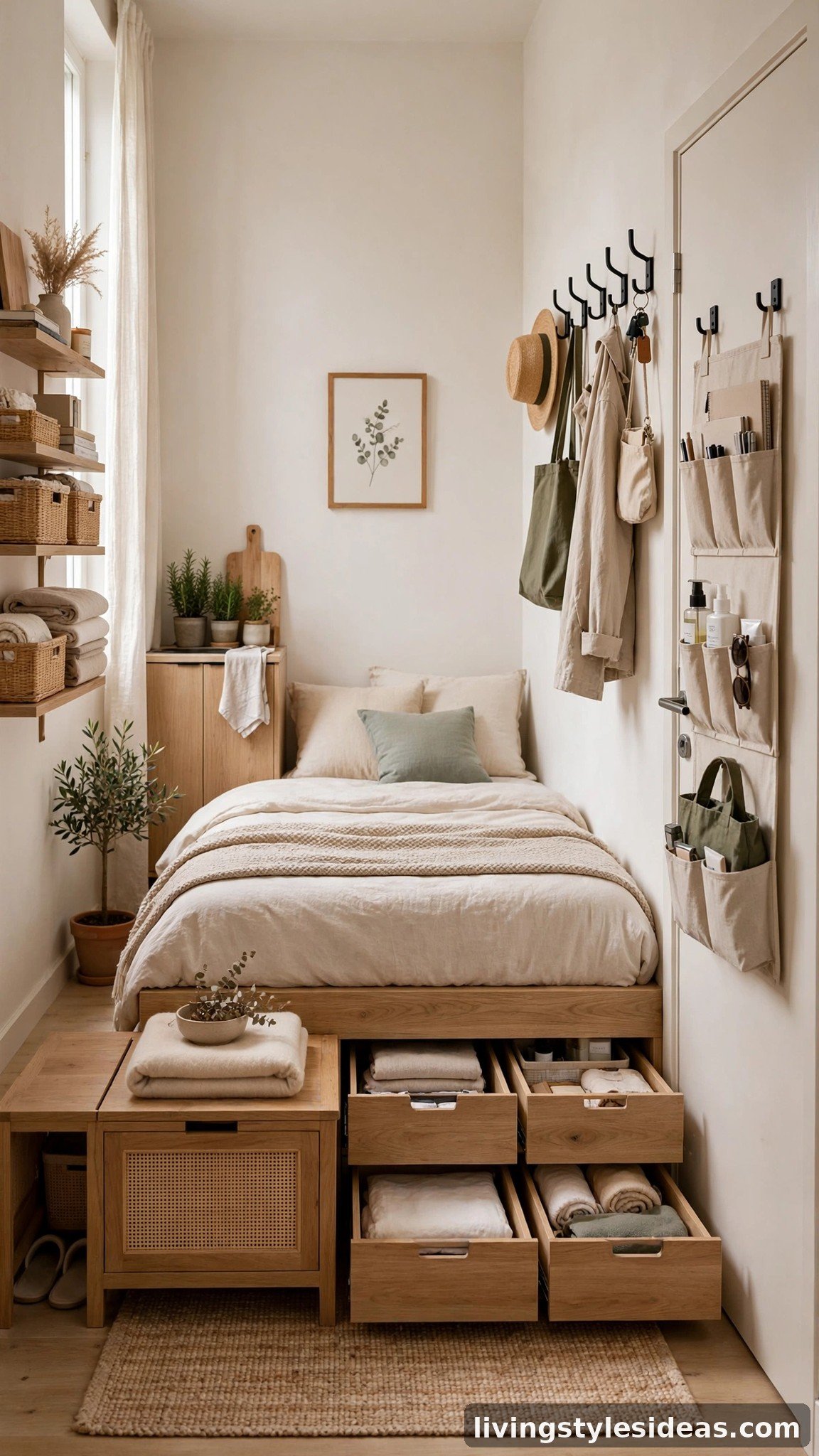
Clutter is the fastest way to make a studio feel tiny, so storage has to be ruthless and invisible. Use the dead space under the bed for drawers, a storage bench at the foot of the bed for linens, slim rolling carts in narrow gaps, and hooks behind doors. When everything has a hidden home, surfaces stay clear and the room breathes. A studio with nothing out of place looks twice as big as the same room with everyday items scattered around.
15. Keep Surfaces Styled but Uncluttered
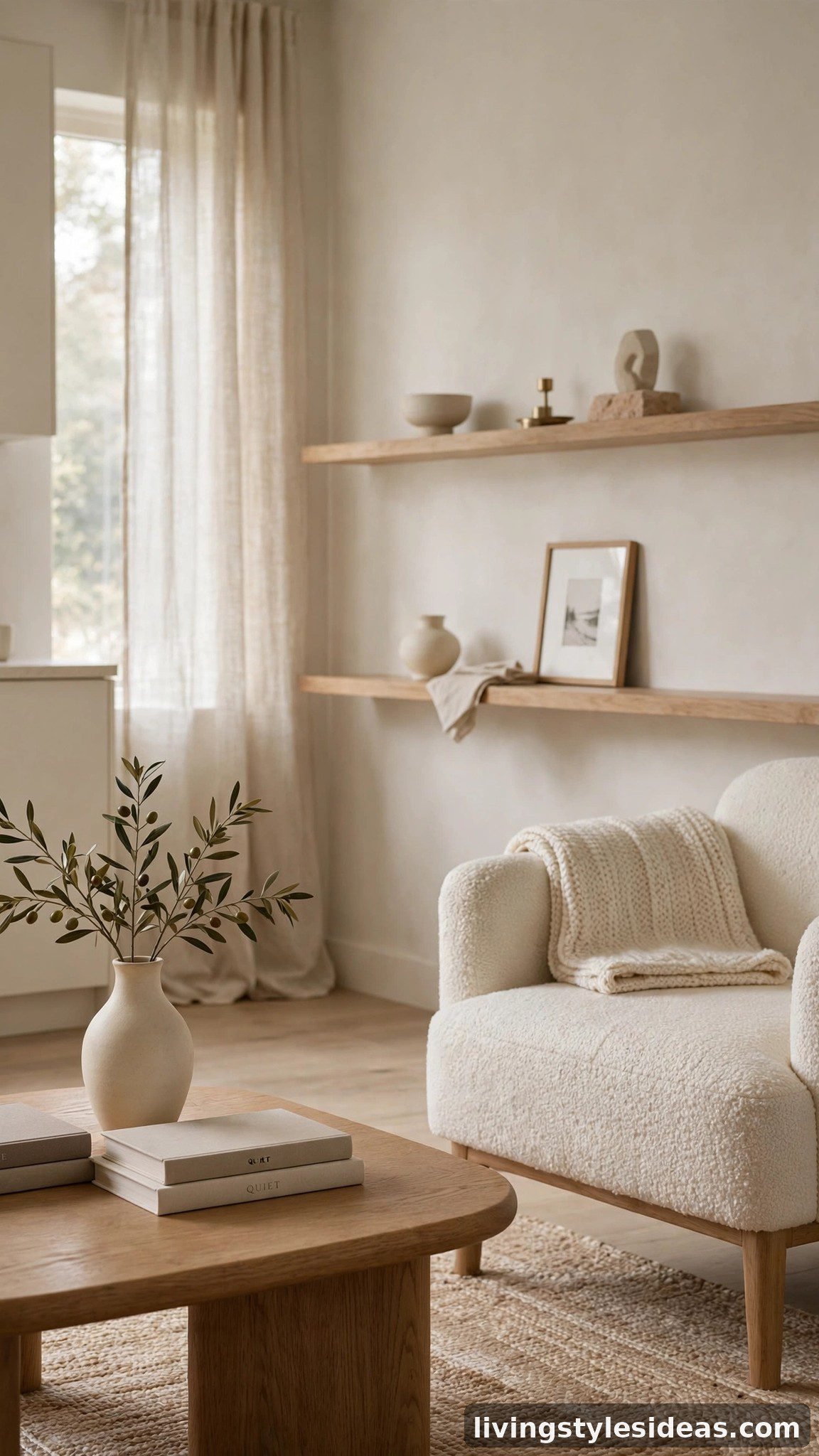
Editing is the final, free design move. Style each surface with a few meaningful pieces — a vase, two stacked books, one candle — and resist filling every shelf and corner. Negative space gives the eye places to rest, and rested eyes read a room as calm and spacious. Walk through once a month with a basket, remove what has crept back, and enjoy the breathing room. In a studio, restraint is not emptiness; it is the luxury of space.
Frequently Asked Questions
How can I make my studio apartment look bigger without renovating?
Use light colors, a large mirror opposite the window, and leggy furniture that shows the floor. Hang curtains high and wide, define zones with area rugs, and layer warm lighting so the room has depth. Keep clutter hidden with smart storage and stick to one cohesive color palette. Together these tricks create the illusion of more square footage with zero construction.
What is the best layout for a small studio apartment?
Divide the room into invisible zones: a living area anchored by a rug and sofa, a sleeping nook with a curtain or screen divider, and a compact dining or work corner near the kitchen. Float larger pieces slightly off the walls for depth, keep pathways clear, and place the bed in the least visible corner so the living zone reads as the main room when you walk in.
What colors make a studio apartment feel larger?
Warm whites, soft creams, pale beiges, and light grays reflect the most light and make walls feel farther apart. Keep large pieces in these tones and add depth with slightly deeper accents like camel, taupe, or soft terracotta. One continuous, cohesive palette across the whole room prevents visual breaks that would chop the space into smaller-looking fragments.
How do I keep a small studio cozy without it feeling cluttered?
Choose fewer, better pieces and give everything a hidden home — under-bed drawers, storage ottomans, and closed cabinets keep daily items out of sight. Layer texture through throws, rugs, and warm lighting for coziness instead of piling on decor. Style surfaces with restraint, edit monthly, and let negative space do its quiet work of making the room feel calm and open.
Final Thoughts
A studio that feels bigger is not about tricking anyone — it is about designing with intention. Light colors, mirrors, vertical storage, defined zones, and warm layered light all work together to stretch what your eyes perceive. Add multifunctional furniture and ruthless hidden storage, and your one room does the work of three. These 15 ideas prove that cozy and spacious are not opposites; in a well-designed studio, they are the same thing.