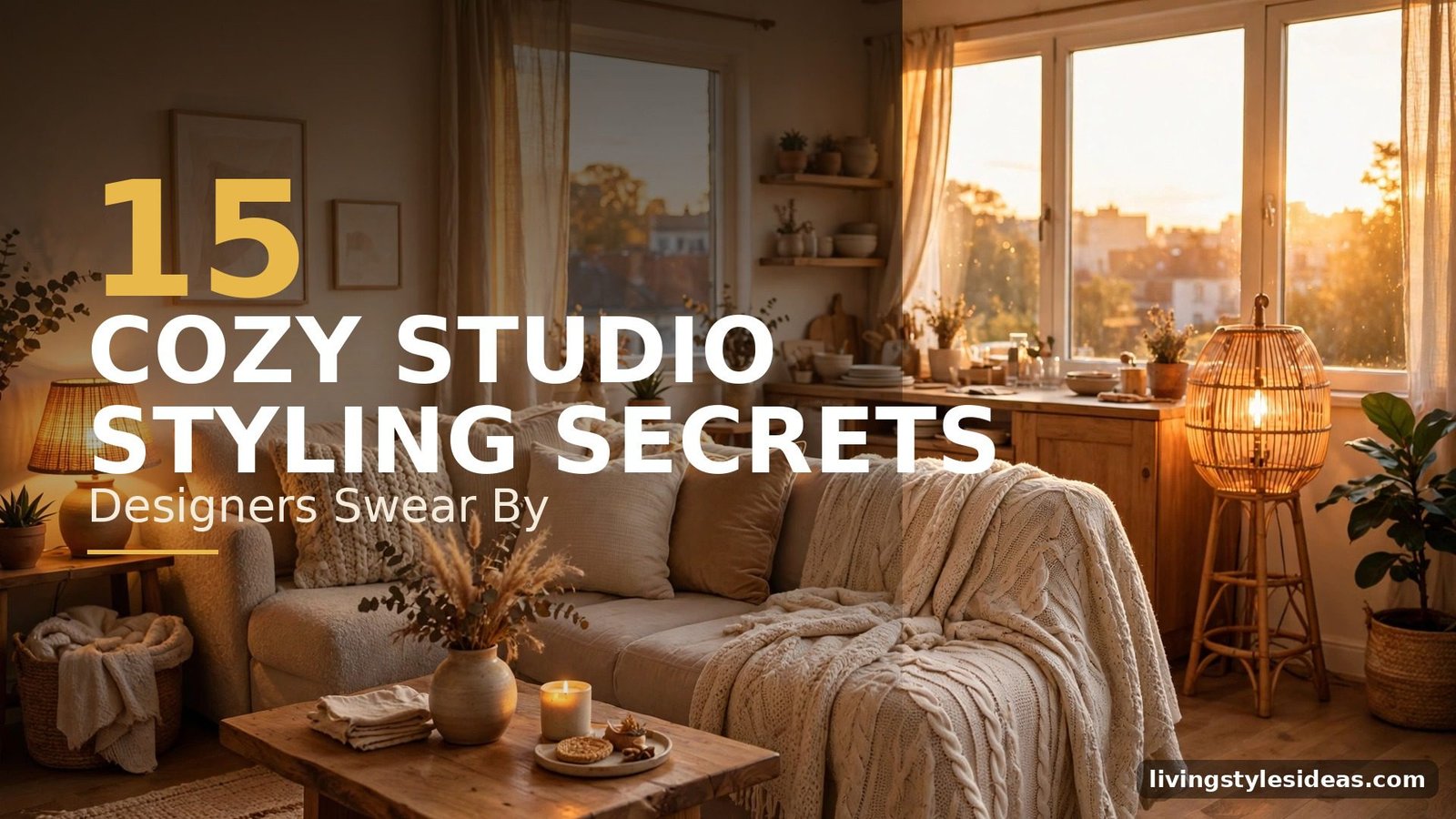
15 Cozy Studio Apartment Styling Secrets Designers Use
A studio apartment asks a lot of one room: it has to sleep you, feed you, host your friends, and still feel like a sanctuary. The designers who style small spaces for a living don’t rely on square footage — they rely on secrets. Small, deliberate moves that stretch light, define zones, and pile on comfort until the whole place feels twice its size.
These 15 cozy studio apartment styling secrets are the exact tricks designers use on real client projects. None of them require a renovation, most of them cost little or nothing, and every one of them works in a rental. Start with the two or three that speak to you, then keep layering.
1. Float a Big Mirror to Double Your Light
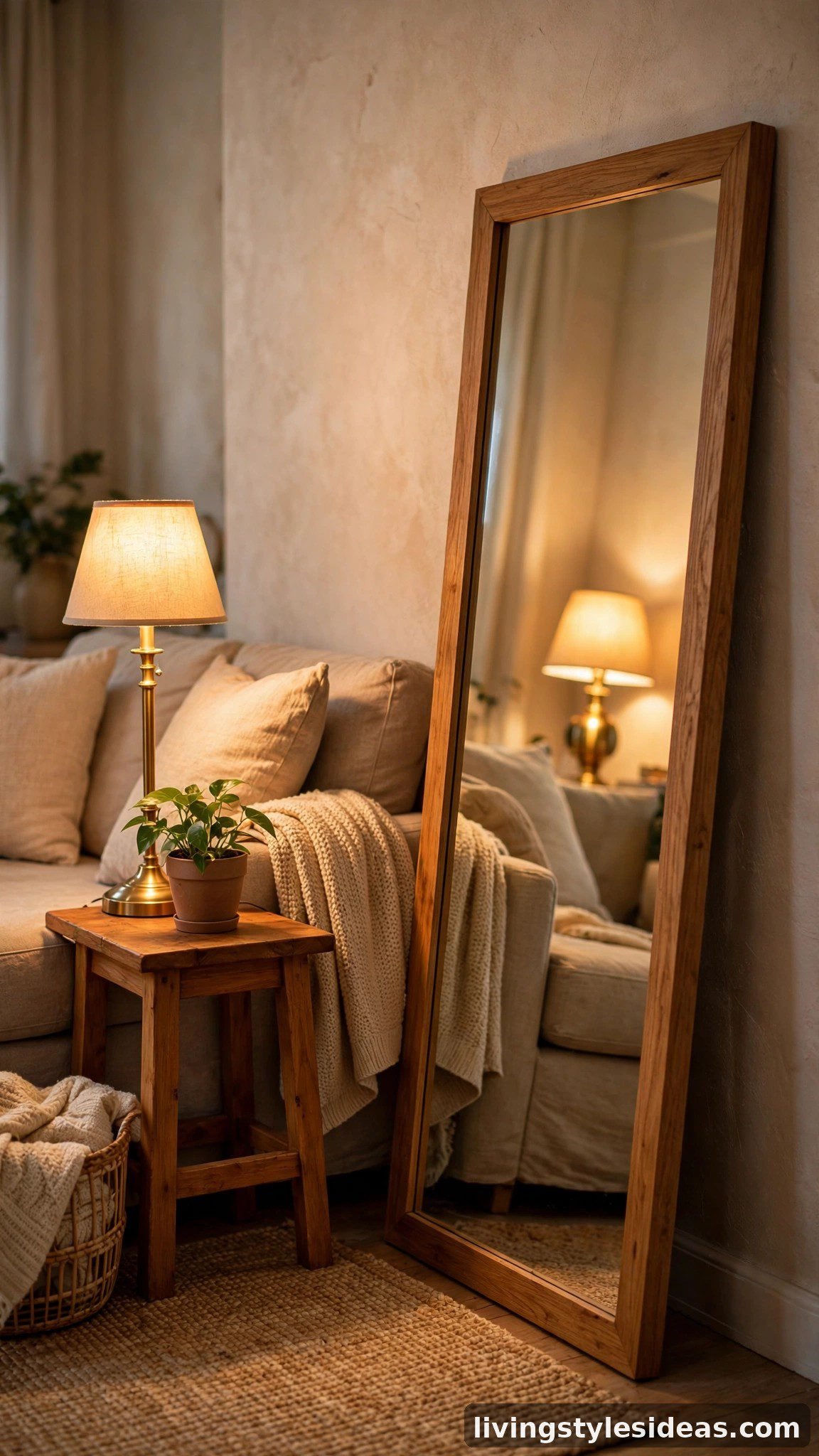
Designers call the mirror the cheapest square footage you can buy. A large leaning mirror placed opposite or beside a window bounces daylight deep into the room and visually doubles whatever it reflects. Go big — a floor-length mirror leaning against the wall feels intentional and makes even a tiny studio read as brighter and far more open. Lean it, don’t hang it, so renters can take it along.
2. Anchor Zones With an Oversized Rug
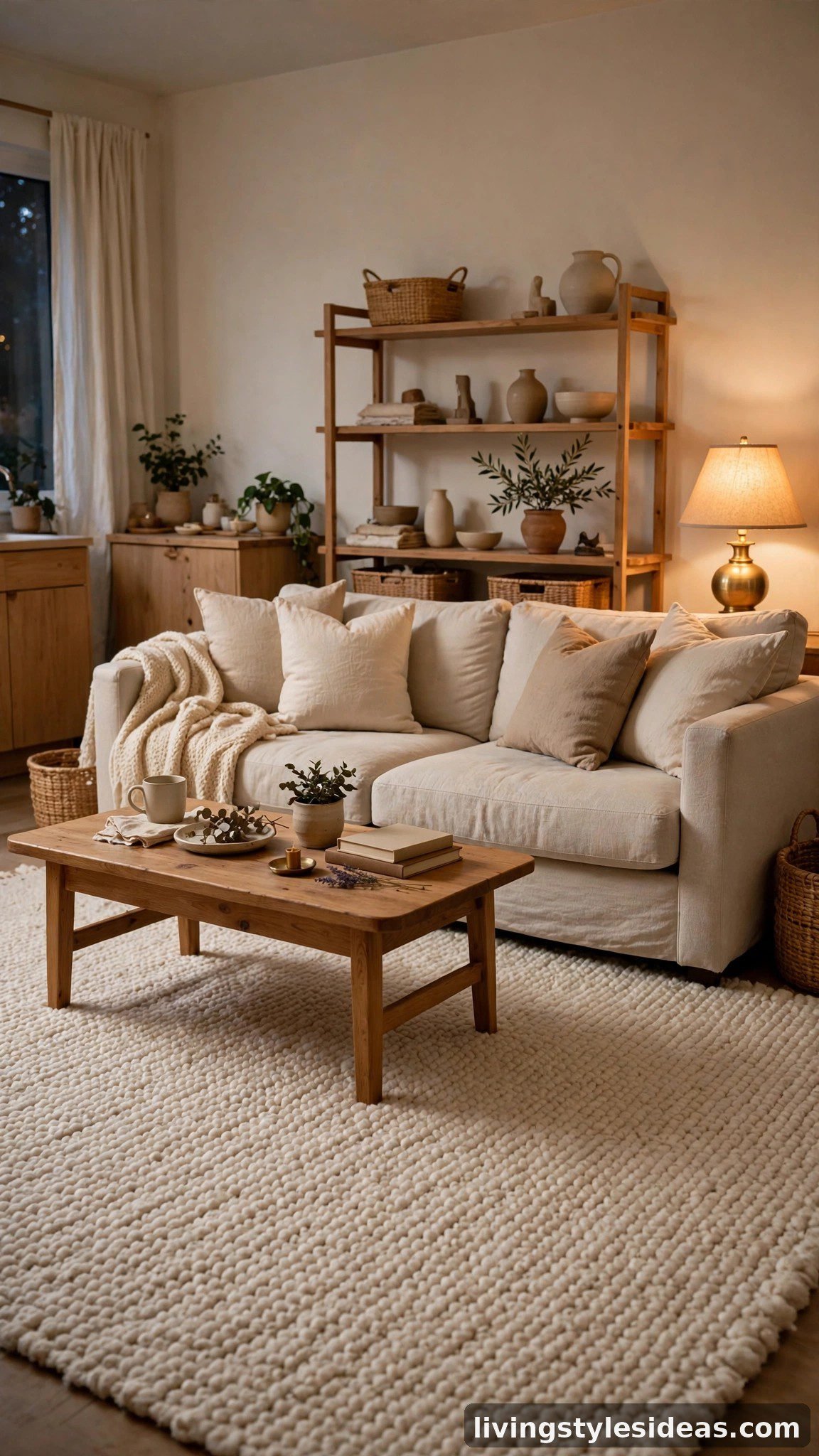
In a studio, the rug is the room divider that never blocks light. Designers size up, not down: an oversized rug under the seating area draws a clear line between living and sleeping zones without a single wall. Make sure the front legs of the sofa and chairs all land on it — a too-small rug floating in the middle shrinks the room. Soft, warm fibers underfoot also add instant coziness.
3. Hang Curtains High and Wide
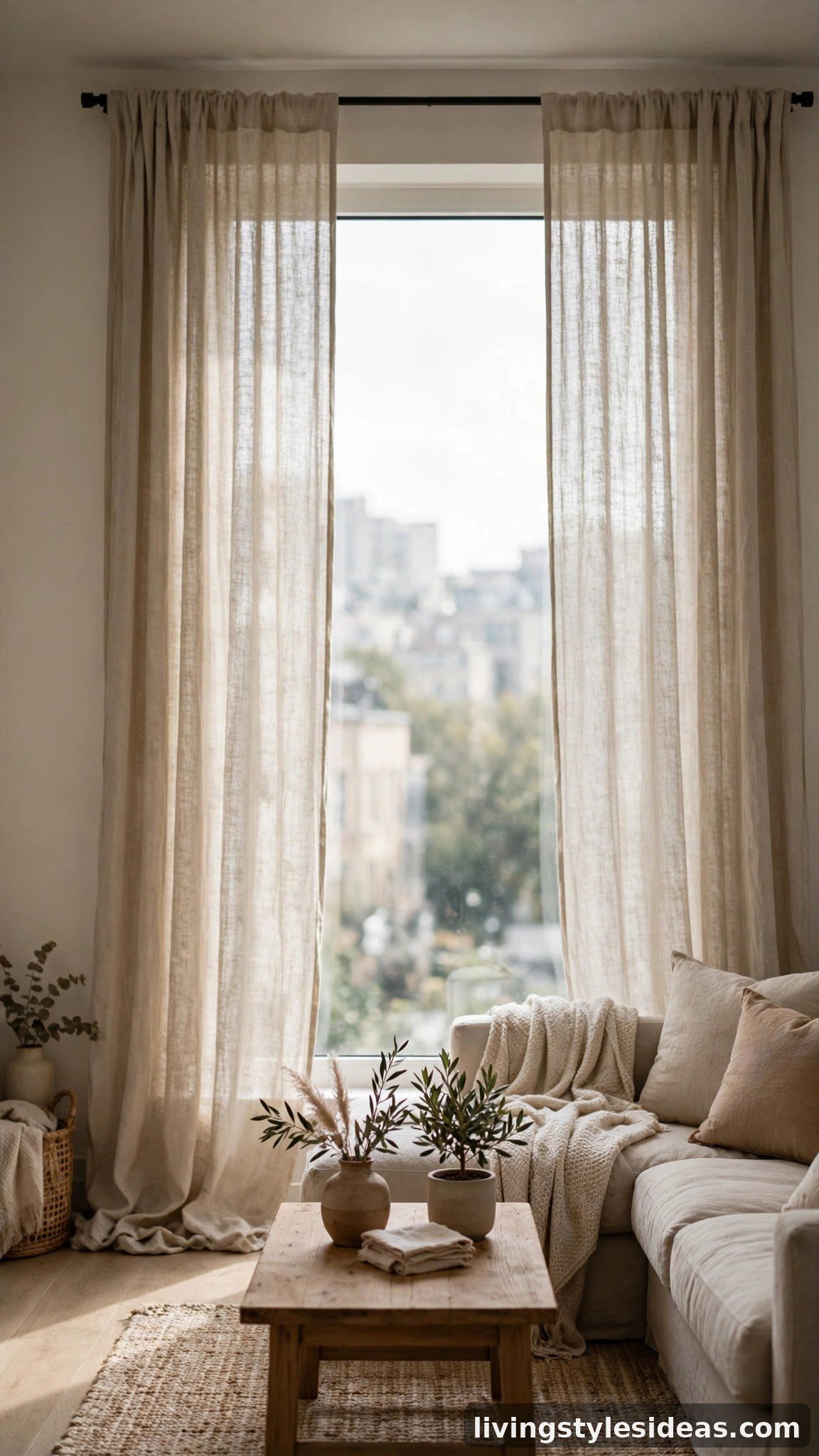
This is the oldest designer trick in the book and it never fails. Mounting the curtain rod close to the ceiling and extending it well past the window frame makes windows look grander and walls look taller. Floor-grazing linen panels in a warm neutral soften the whole room and filter light into a gentle glow. In a studio, taller-looking windows make the entire open space feel more generous.
4. Layer Three Levels of Warm Light
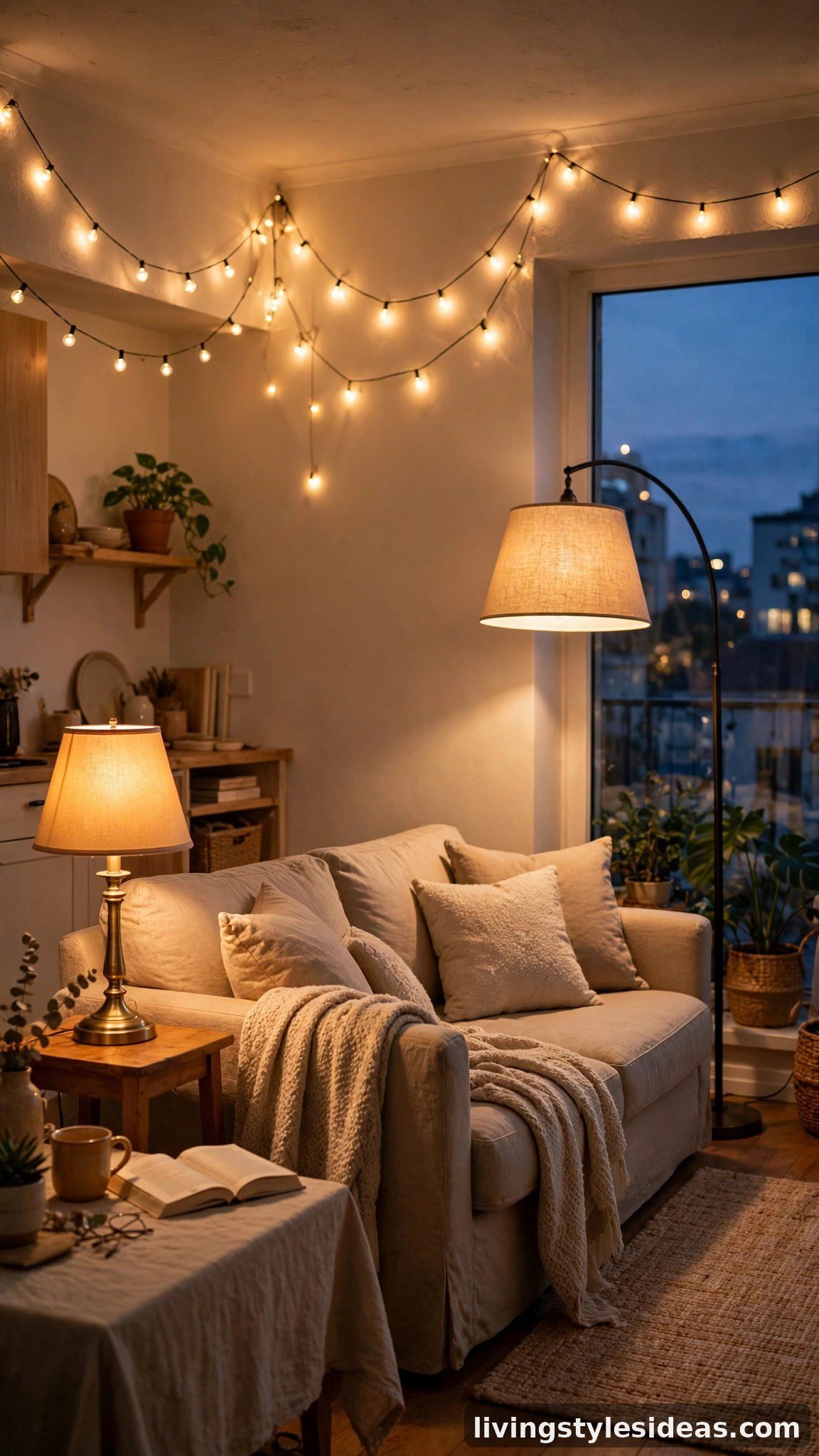
Designers never rely on a single overhead light, especially in a studio. The secret is three layers: ambient (a floor lamp with a linen shade), task (a small table lamp by the bed or desk), and accent (string lights, candles, or a picture light). Keep every bulb at warm 2700K so the palette glows golden instead of flat. Multiple small pools of light make one room feel intimate and zoned after dark.
5. Divide Space Without Walls
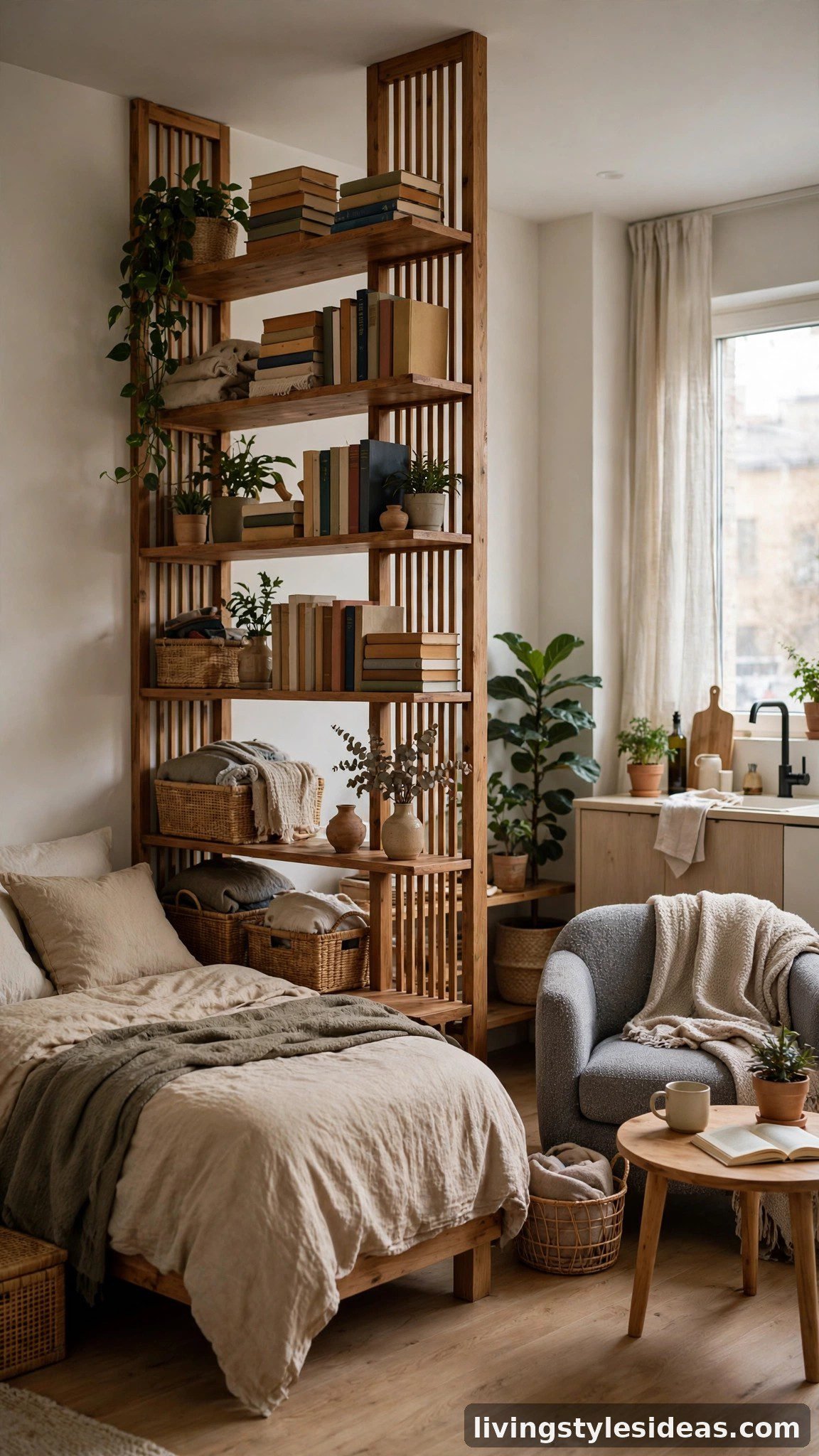
Privacy in a studio doesn’t need drywall. Designers use open bookshelves, folding screens, or even a tall plant to suggest a bedroom zone while letting light pass through. An open shelf styled with books, baskets, and ceramics doubles as storage and a room divider. The key is “suggest, don’t seal” — you want the eye to travel through, so the space still reads as one airy room.
6. Style Up: Use Your Vertical Space
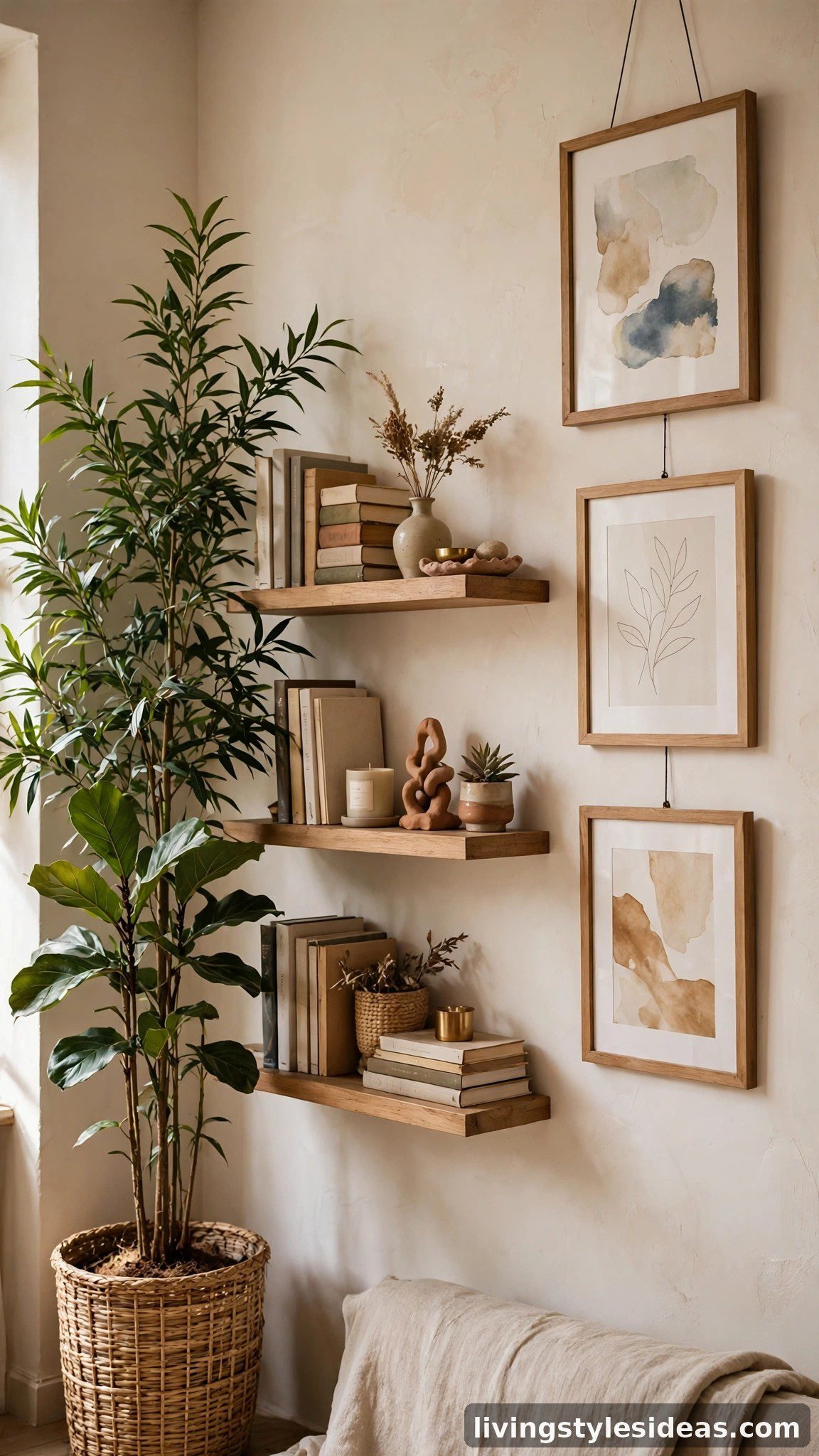
When floor space is precious, designers steal from the walls. Tall bookshelves, floating shelves stacked toward the ceiling, hanging planters, and art hung higher than usual all pull the eye upward, which makes ceilings feel taller and the room feel larger. A tall plant in an empty corner fills dead space beautifully. Think of the top third of your walls as free square footage waiting to be styled.
7. Turn the Bed Into a Daybed-Style Nook
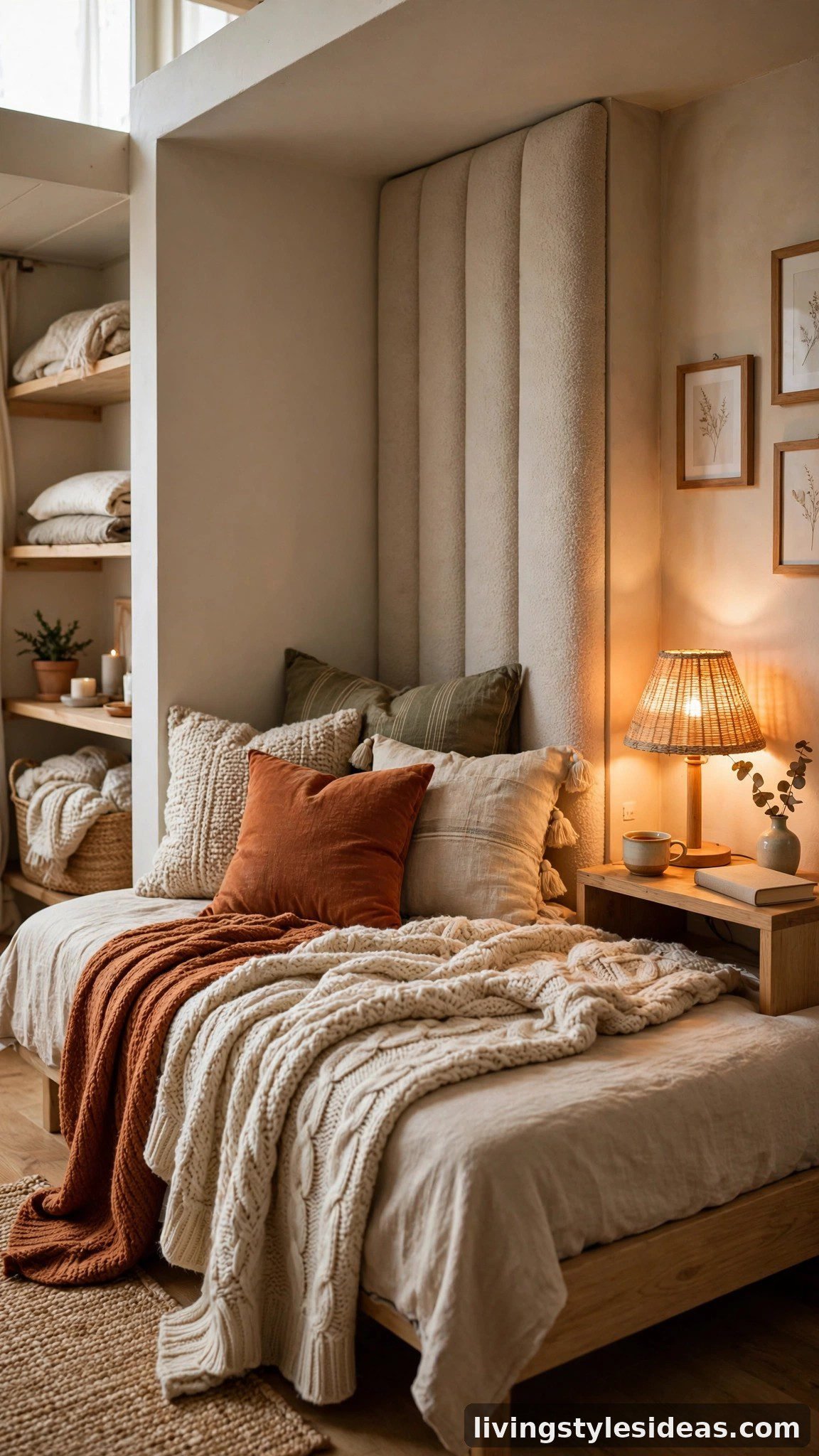
The bed is the biggest piece in a studio, so designers disguise it. Push it against a wall, add a long bolster or a row of large pillows along the back, and drape a textured throw over the foot — suddenly it reads as a daybed or luxe sofa by day. A cushioned headboard or a simple wall-mounted panel behind it completes the illusion. Your studio gains a “living room” without losing a single inch of sleep space.
8. Choose Double-Duty Furniture
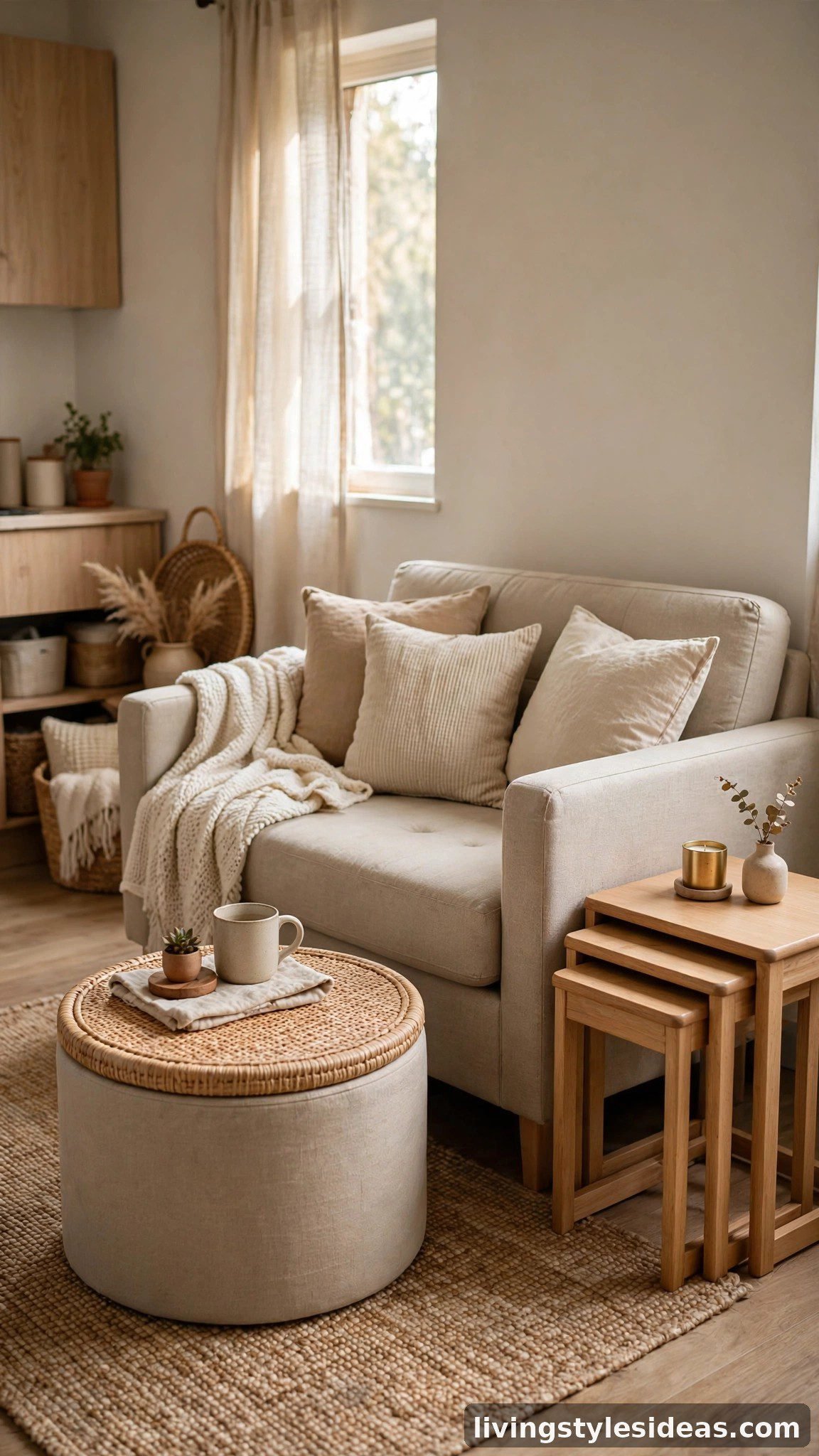
Every designer working in small spaces asks one question before buying anything: what else can it do? Storage ottomans hide throws and double as coffee tables, nesting side tables expand for guests, and a sleeper sofa or murphy-style desk turns one corner into two rooms. When each piece earns its footprint twice over, a studio stops feeling cramped and starts feeling clever.
9. Stick to One Cohesive Palette
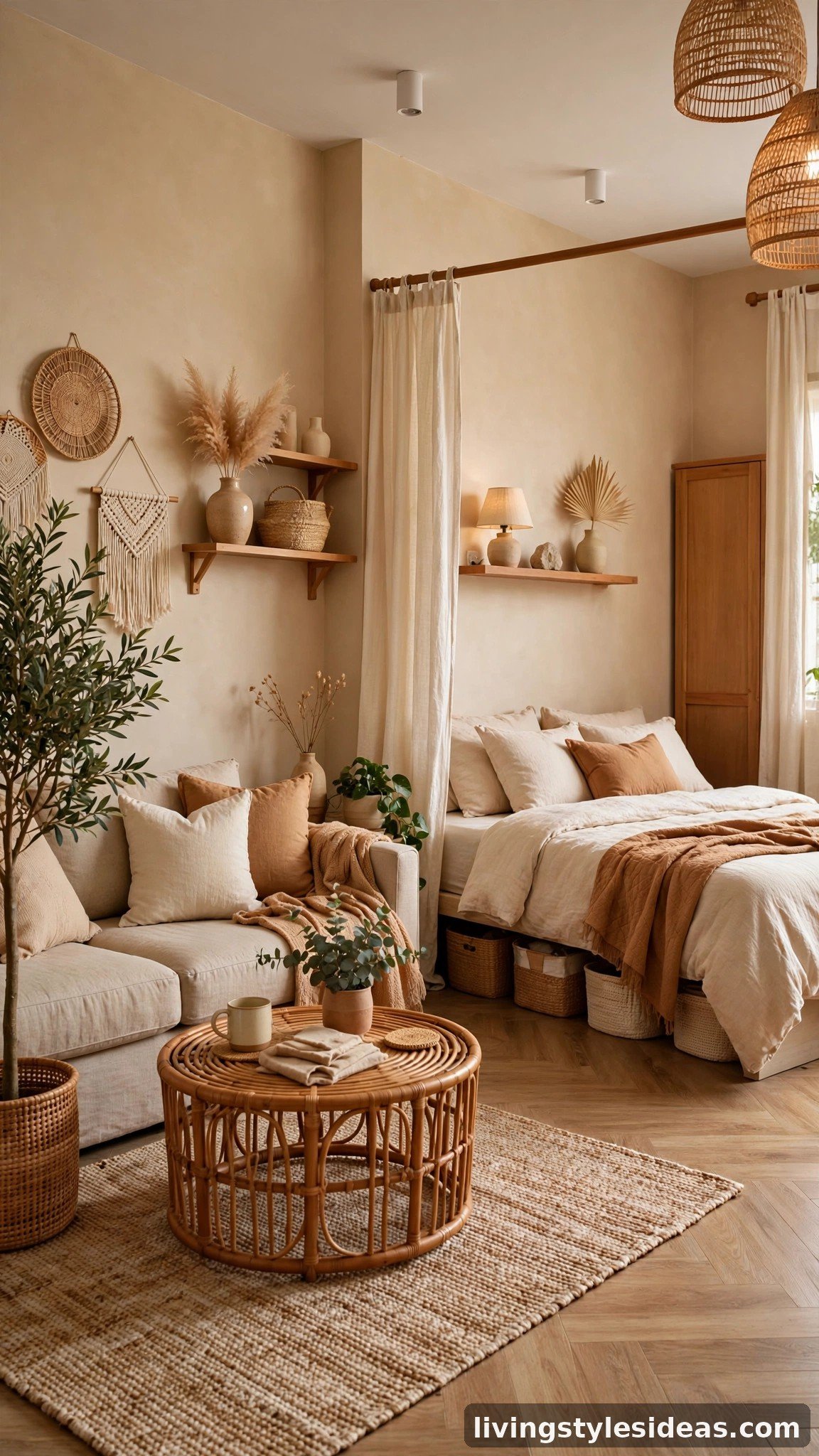
Designers keep small spaces calm by limiting the color story. A cohesive palette of warm whites, beiges, caramels, and soft taupes lets the eye glide across the whole room without stopping, which reads as spaciousness. It doesn’t have to be boring — vary the tones slightly and repeat each color at least three times around the room. One flowing palette makes a studio feel like a curated whole instead of chopped-up corners.
10. Layer Textures for Instant Warmth
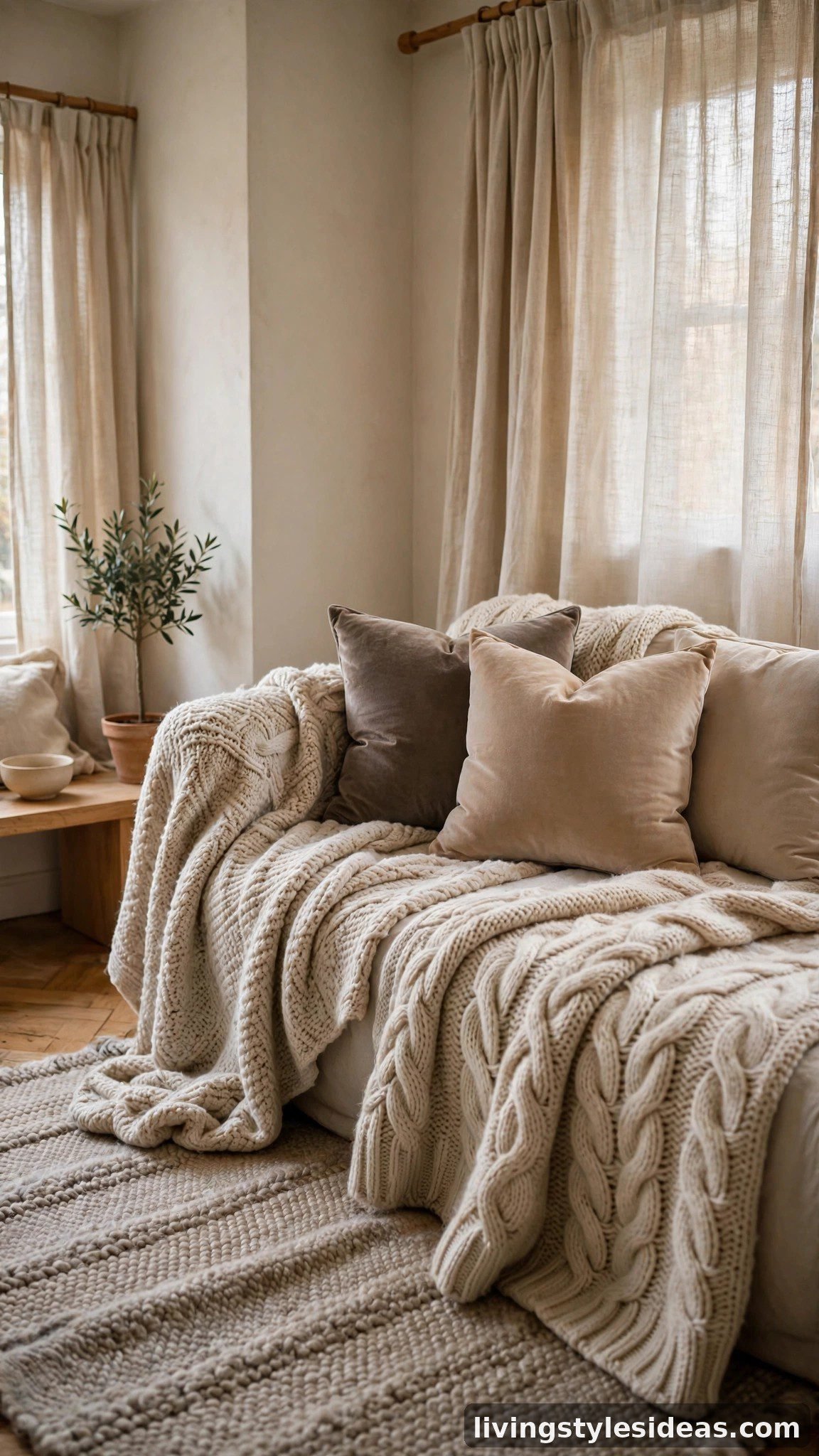
When the palette is quiet, texture does the emotional work. Designers mix at least four in every studio: something nubby like boucle, something soft like velvet or faux fur, something natural like jute or rattan, and something smooth like linen. A chunky knit throw over a velvet cushion on a linen sofa — each layer tells your senses “cozy.” Texture is the fastest way to make a small neutral room feel rich and inviting.
11. Create a Micro Accent Wall
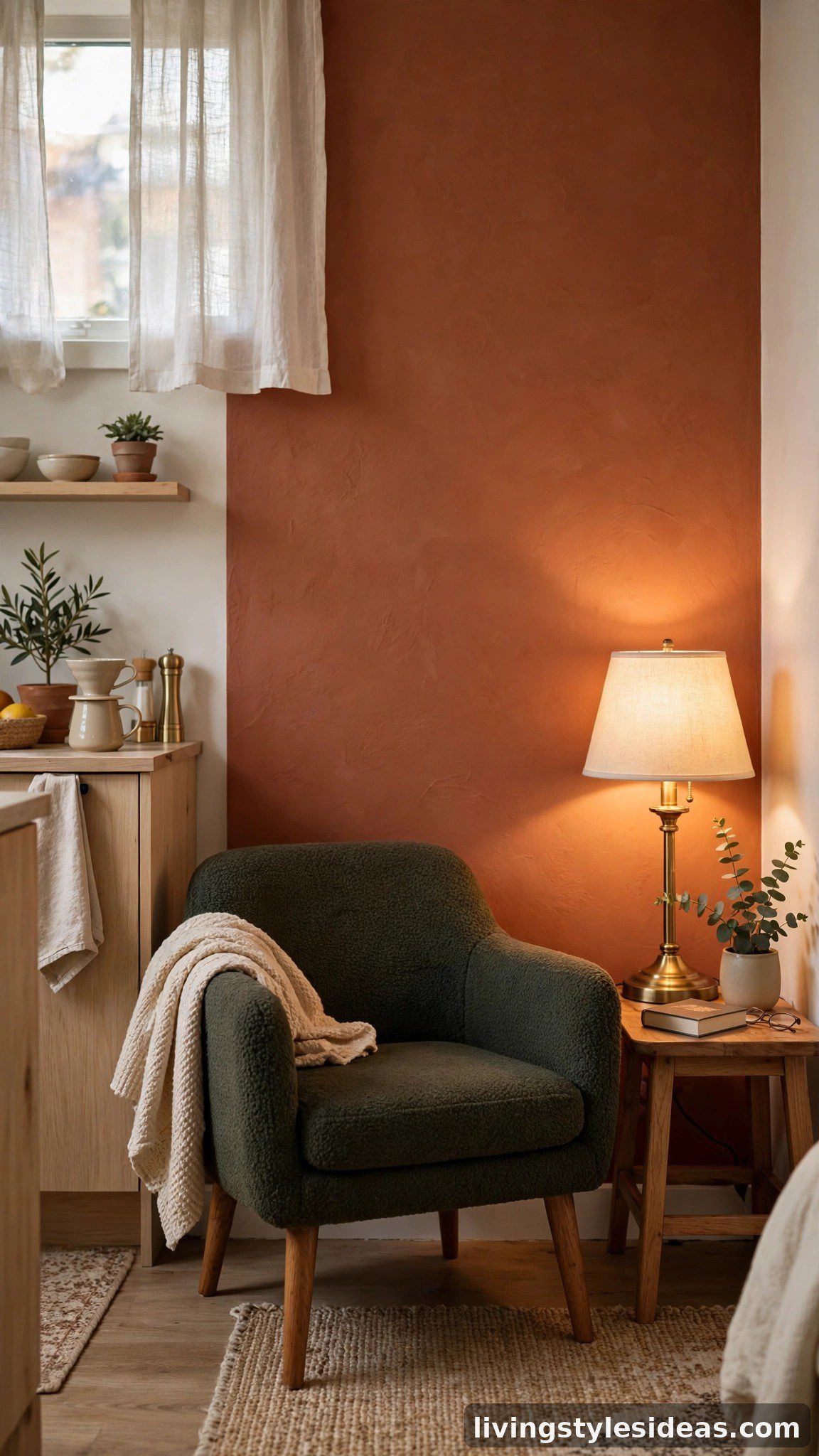
You don’t need to paint the whole studio to get drama. Designers pick one small moment — the wall behind the bed, a reading nook, the entry sliver — and give it a warm, deep tone like terracotta, olive, or warm greige. Peel-and-stick options make it renter-safe. A single saturated wall adds depth and personality, and because it’s contained, it makes the rest of the space feel lighter by contrast.
12. Carve Out a Cozy Coffee Corner
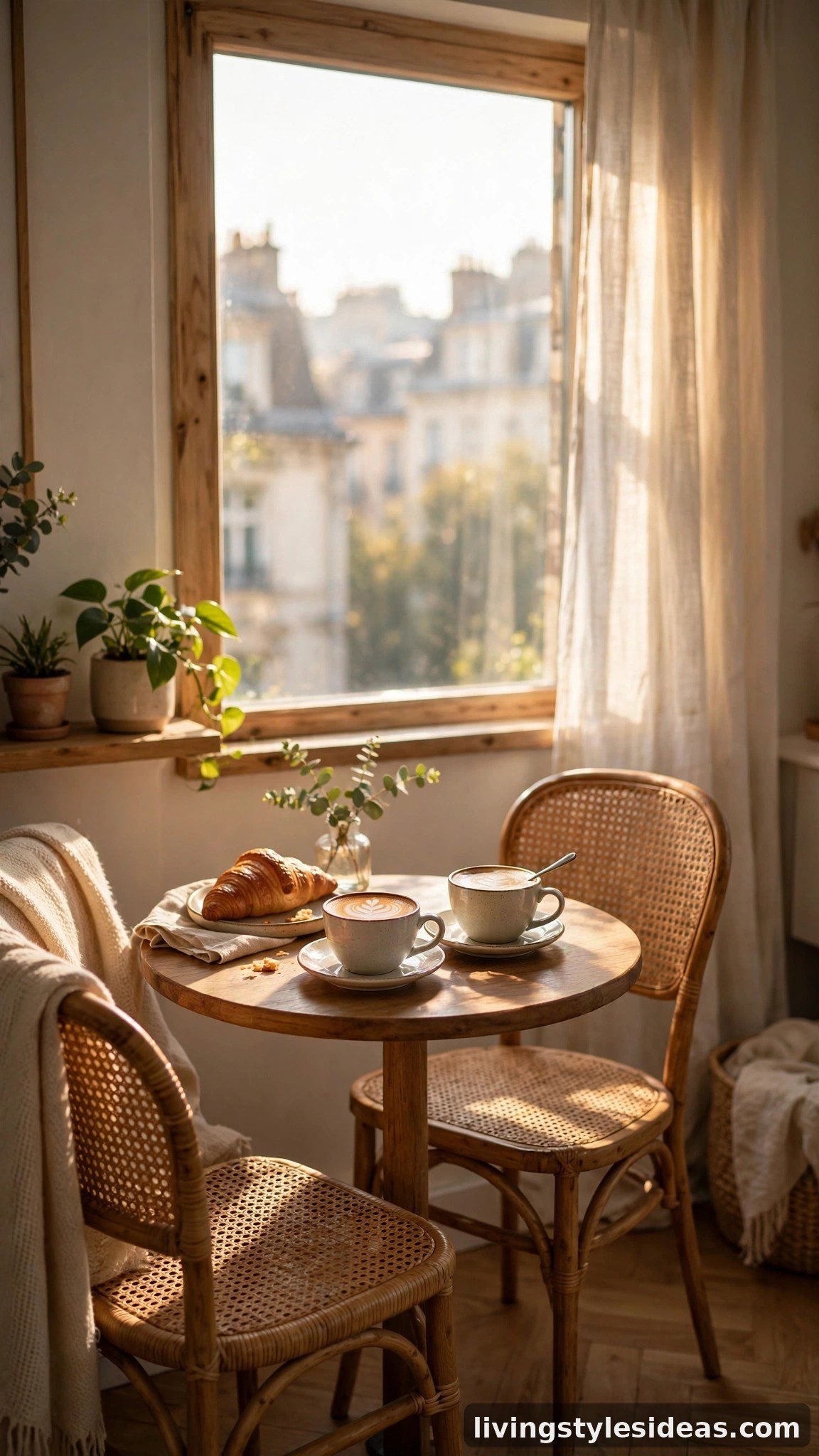
Every studio deserves one spot that exists purely for pleasure. Designers tuck a tiny bistro table and two chairs by the brightest window and call it the coffee corner — a ritual zone that makes mornings feel special. Add a small rug, a candle, and a plant, and this two-foot-square nook becomes the most-loved seat in the house. Small dedicated moments like this make a studio feel like a home, not a hotel room.
13. Add Life With Greenery
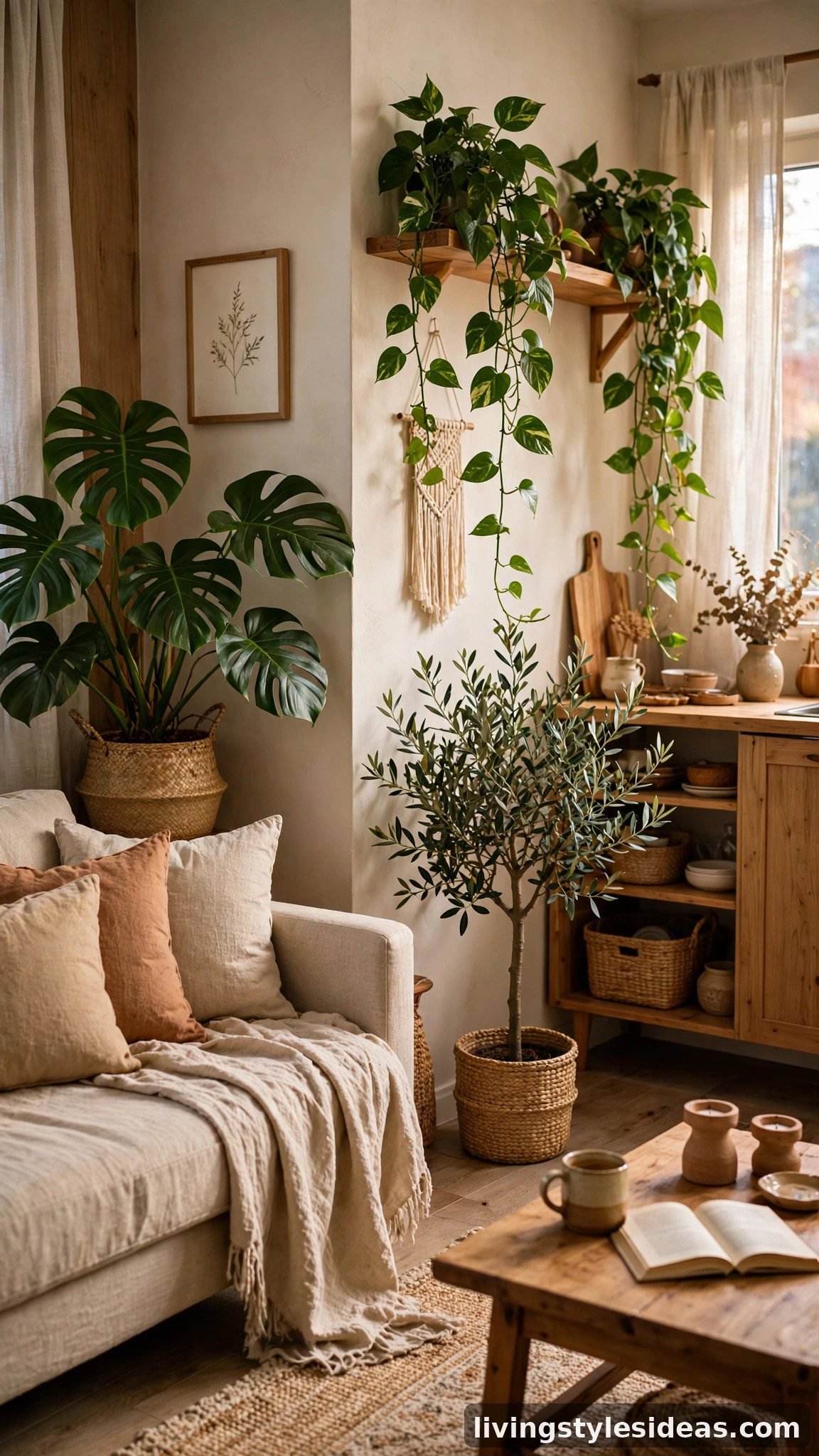
Designers treat plants as living decor, and in a studio they do triple duty: they fill awkward corners, soften hard edges, and make the air feel fresher. One tall statement plant (an olive tree or fiddle-leaf fig) plus a couple of trailing pothos on shelves is enough — you don’t need a jungle. Woven baskets as planters tie greenery into a warm palette. Even one thriving plant makes a small space feel cared for and alive.
14. Design With Scent, Not Just Sight
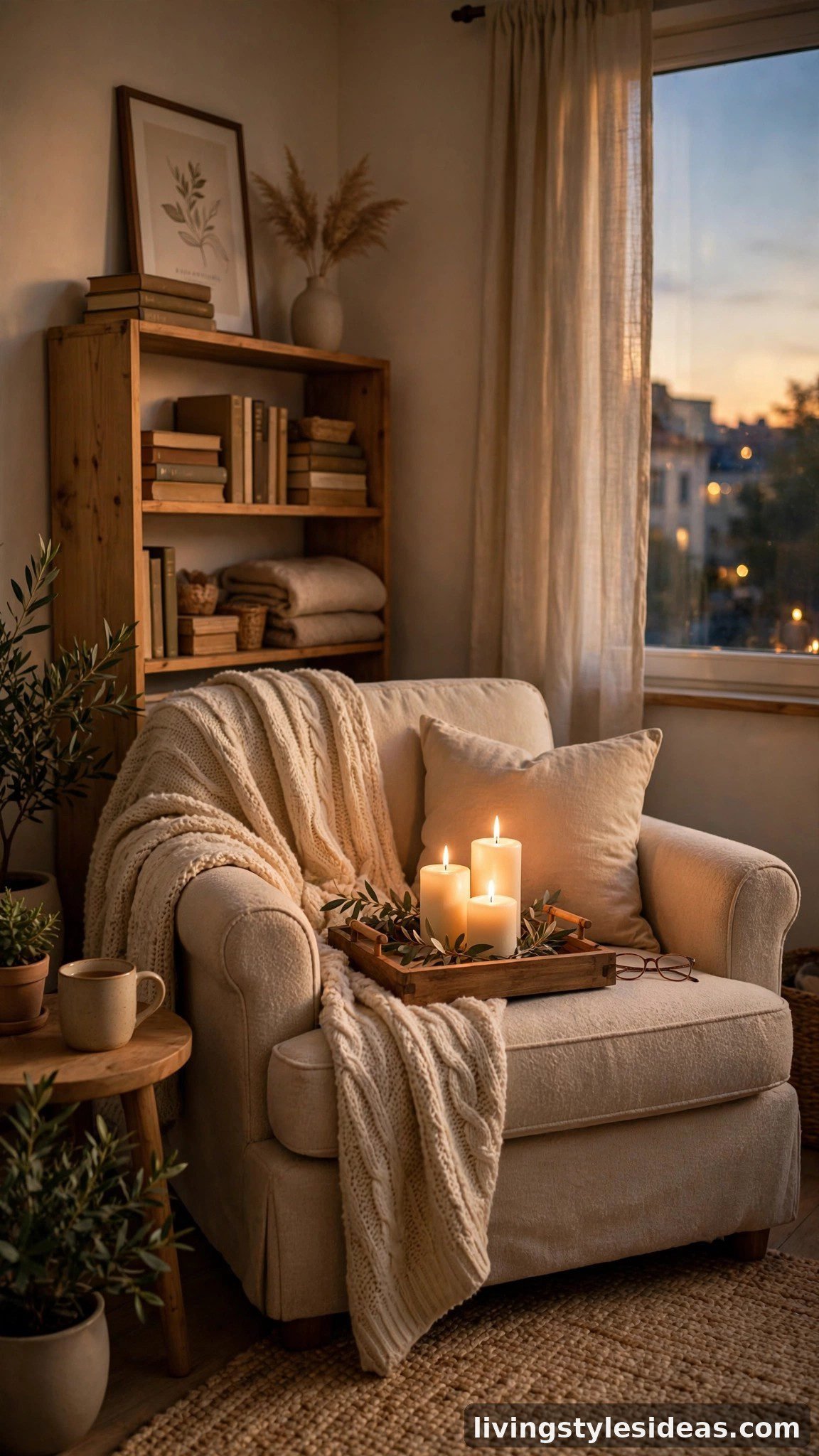
Here’s a secret designers rarely say out loud: coziness is a smell as much as a look. A signature scent — cedar and amber in fall, citrus and linen in spring — makes a studio feel finished the moment someone walks in. Cluster candles of varying heights on a tray for a styled vignette that happens to glow beautifully. Flameless LED candles give the same flicker with zero worry in a small space.
15. Hide Clutter in Beautiful Storage
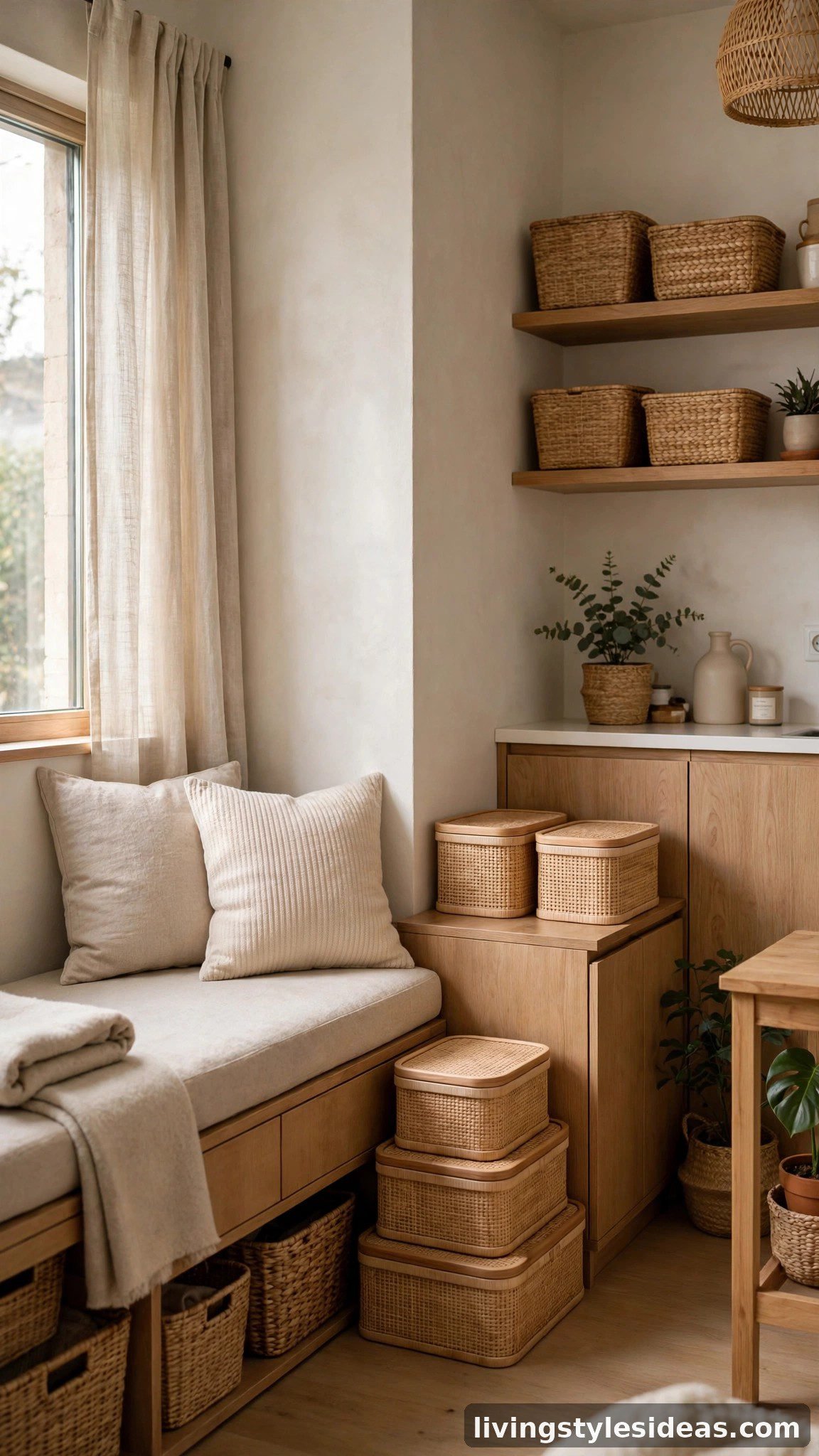
The final designer secret is the least glamorous and the most powerful: nothing kills cozy faster than visual clutter. In a studio, everything is visible from everywhere, so designers hide the mess in storage that looks like decor — woven baskets for throws, lidded boxes on open shelves, a storage bench at the foot of the bed. When every stray item has a beautiful hiding place, the whole room breathes easier.
Frequently Asked Questions
How can I make my studio apartment feel cozy on a budget?
Start with the free and nearly-free secrets: rearrange furniture to create zones, hang curtains higher, declutter ruthlessly, and layer every throw and pillow you already own. Then add one oversized rug and warm 2700K bulbs — together they transform a room for very little money. Texture and lighting deliver more coziness per dollar than any furniture purchase.
How do designers separate the bedroom from the living area in a studio?
With “soft dividers” that suggest zones without blocking light: an open bookshelf, a folding screen, a tall plant, or even just a rug under the seating area paired with a different rug by the bed. Styling the bed as a daybed also helps it read as living-room seating by day. The goal is visual suggestion, not walls.
What colors make a studio apartment feel bigger and cozier?
Warm, light, cohesive tones — warm whites, creams, beiges, soft taupes, and caramel. Keeping one flowing palette across the whole open room makes it read as larger, while warm undertones keep it feeling snug rather than stark. Add one deeper accent (terracotta, olive, warm greige) in a small dose for depth.
What is the biggest styling mistake in a studio apartment?
Pushing all the furniture against the walls. It feels logical in a small space, but it actually makes the room feel smaller and more awkward. Designers float key pieces — even a few inches off the wall — to create breathing room and better zones. The second biggest mistake is relying on a single harsh overhead light instead of layered warm lighting.
Final Thoughts
Great studio styling isn’t about having more space — it’s about making every inch work harder and feel warmer. Borrow these 15 designer secrets one at a time: bounce light with mirrors, zone with rugs and open shelves, layer warm light and rich texture, and hide the clutter in beautiful baskets. Small space, smart styling, endless coziness — that’s the designer way.