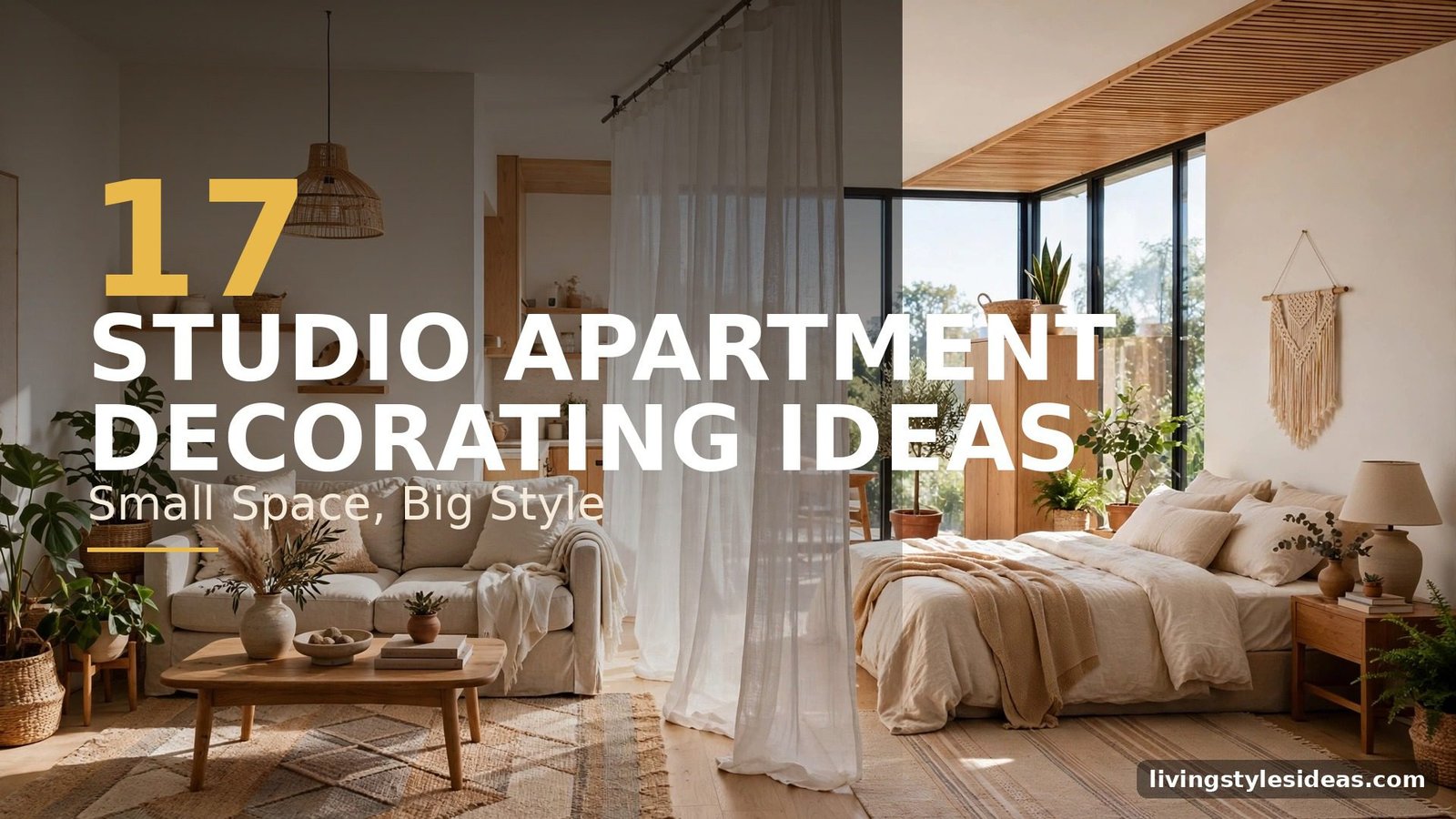
17 studio apartment decorating ideas
Living in a studio apartment is an art form — one open room has to work as your bedroom, living room, office, and dining space all at once. The good news? Some of the most stylish homes in America are tiny. With the right layout tricks, space-saving furniture, and clever styling, a studio can feel bigger, brighter, and far more luxurious than its square footage suggests.
These 17 studio apartment decorating ideas are made for real life: small budgets, rental-friendly options, and layouts that actually work. Whether you’re moving into your first studio or refreshing the one you’ve got, you’ll find smart zoning ideas, storage wins, and styling tips that make every inch count.
1. Define Zones With Area Rugs
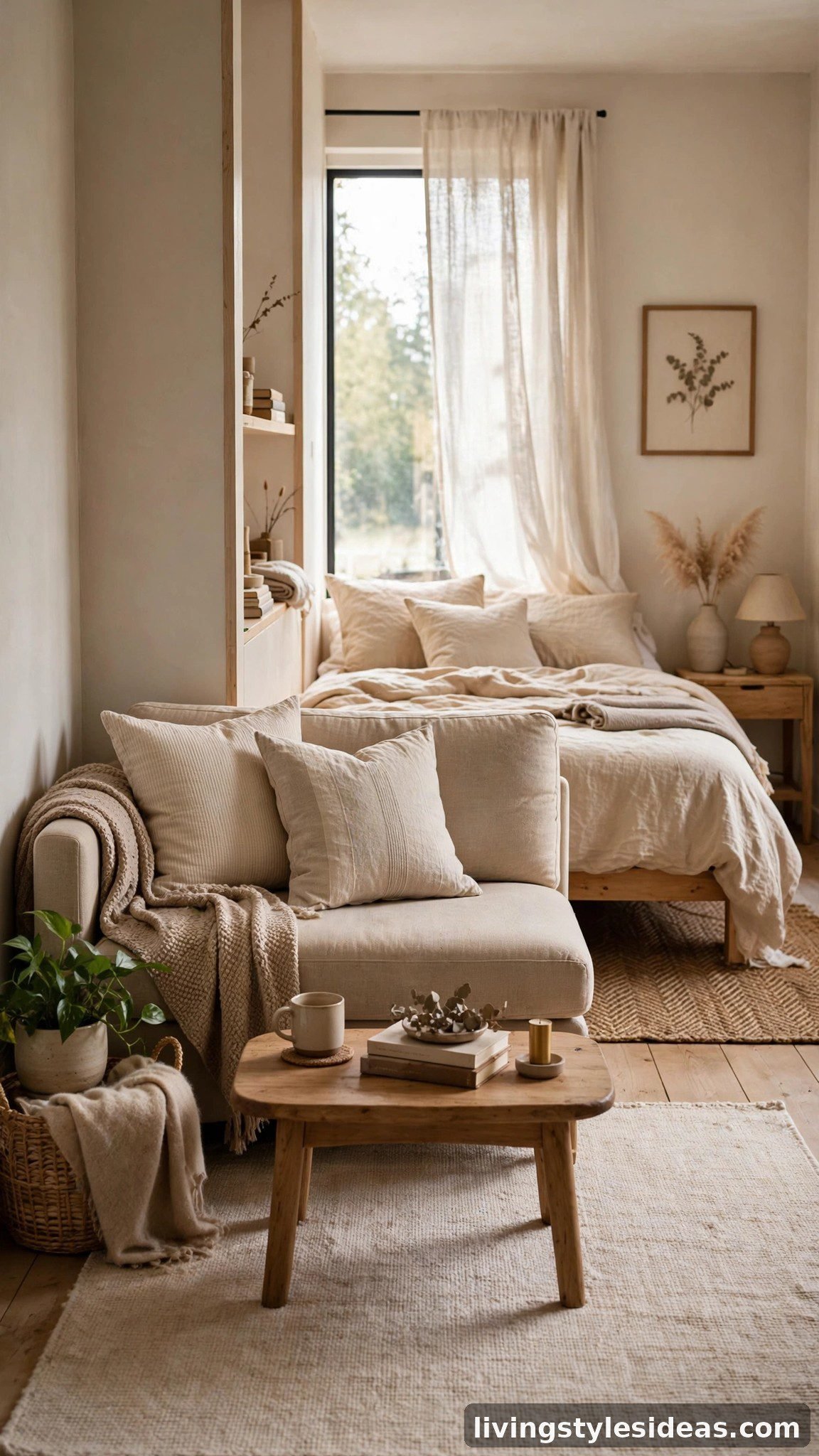
The fastest way to make one open room feel like a real home is zoning with rugs. Lay one rug under the sofa and coffee table to mark the living area, and another under the bed to carve out a sleeping zone. The eye reads each rug as its own “room,” even though there are no walls. Stick to a cohesive color family across rugs so the zones feel connected rather than chopped up.
2. Hang a Curtain as a Room Divider
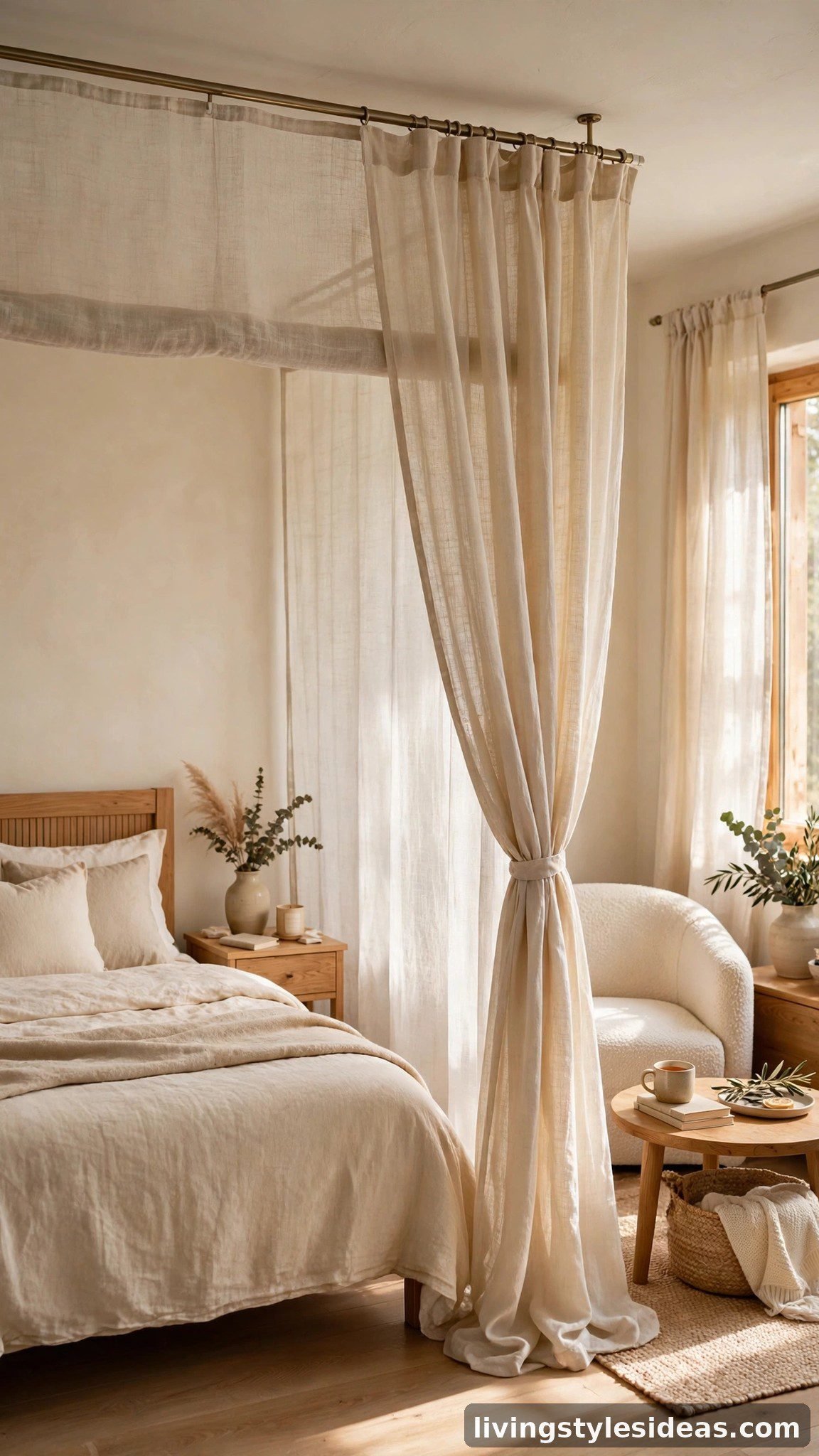
A ceiling-mounted curtain is the renter’s best friend for instant privacy. Hung on a simple track, a linen or sheer curtain can close off the sleeping area at night and sweep open by day. Choose a fabric that complements your palette, and hang the track as close to the ceiling as possible so the room still feels tall. It costs a fraction of a folding screen and takes an afternoon to install.
3. Loft Your Bed to Double Your Floor Space
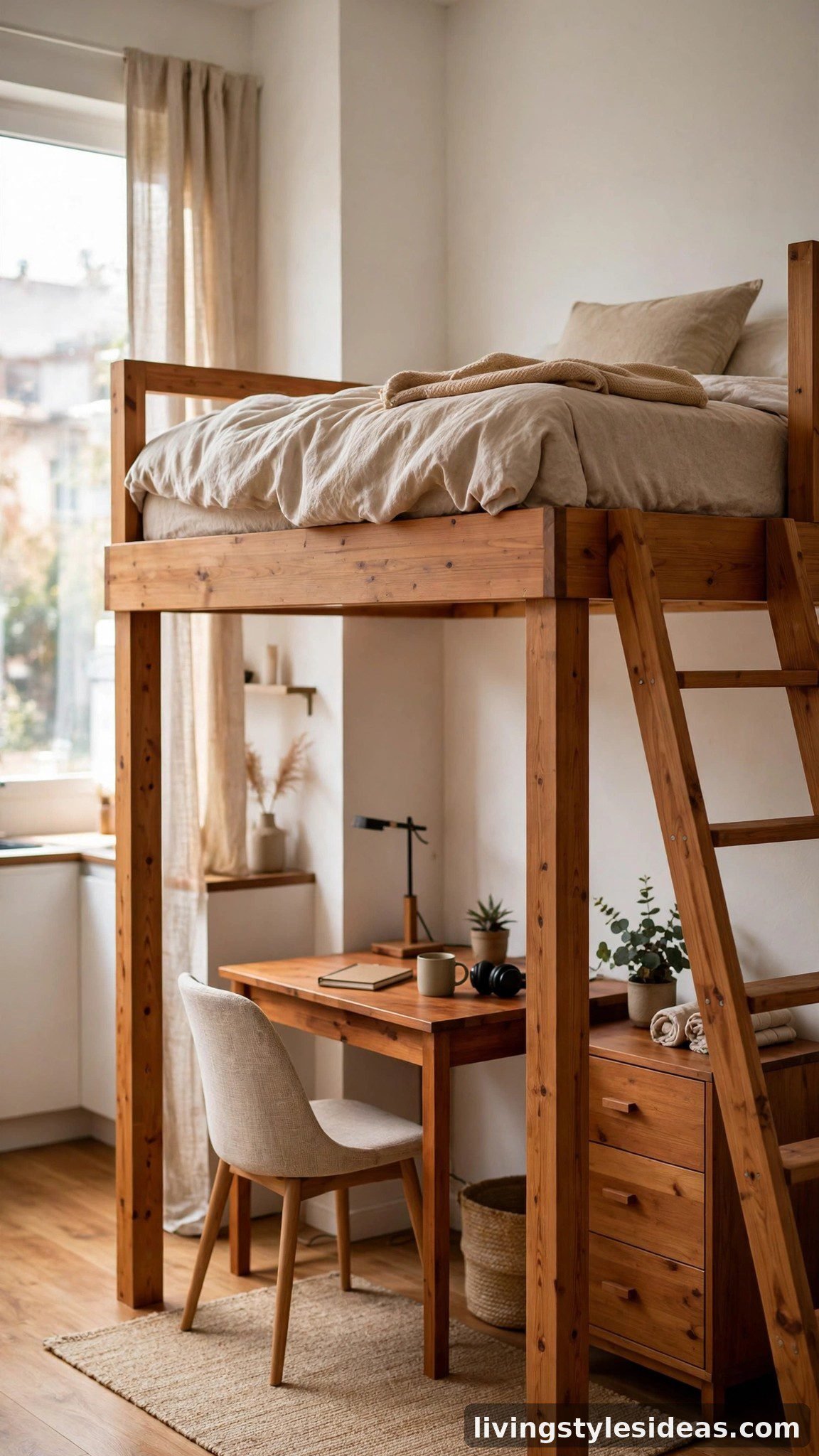
A lofted bed is the ultimate studio power move. Raising your mattress to loft height frees an entire room’s worth of floor space underneath — room for a desk, a reading chair, or a dresser. Modern loft frames come in warm wood and clean metal finishes that look intentional, not dorm-like. Just measure your ceiling height first; you want at least 30 inches of sitting room above the mattress.
4. Go Vertical With Wall Storage
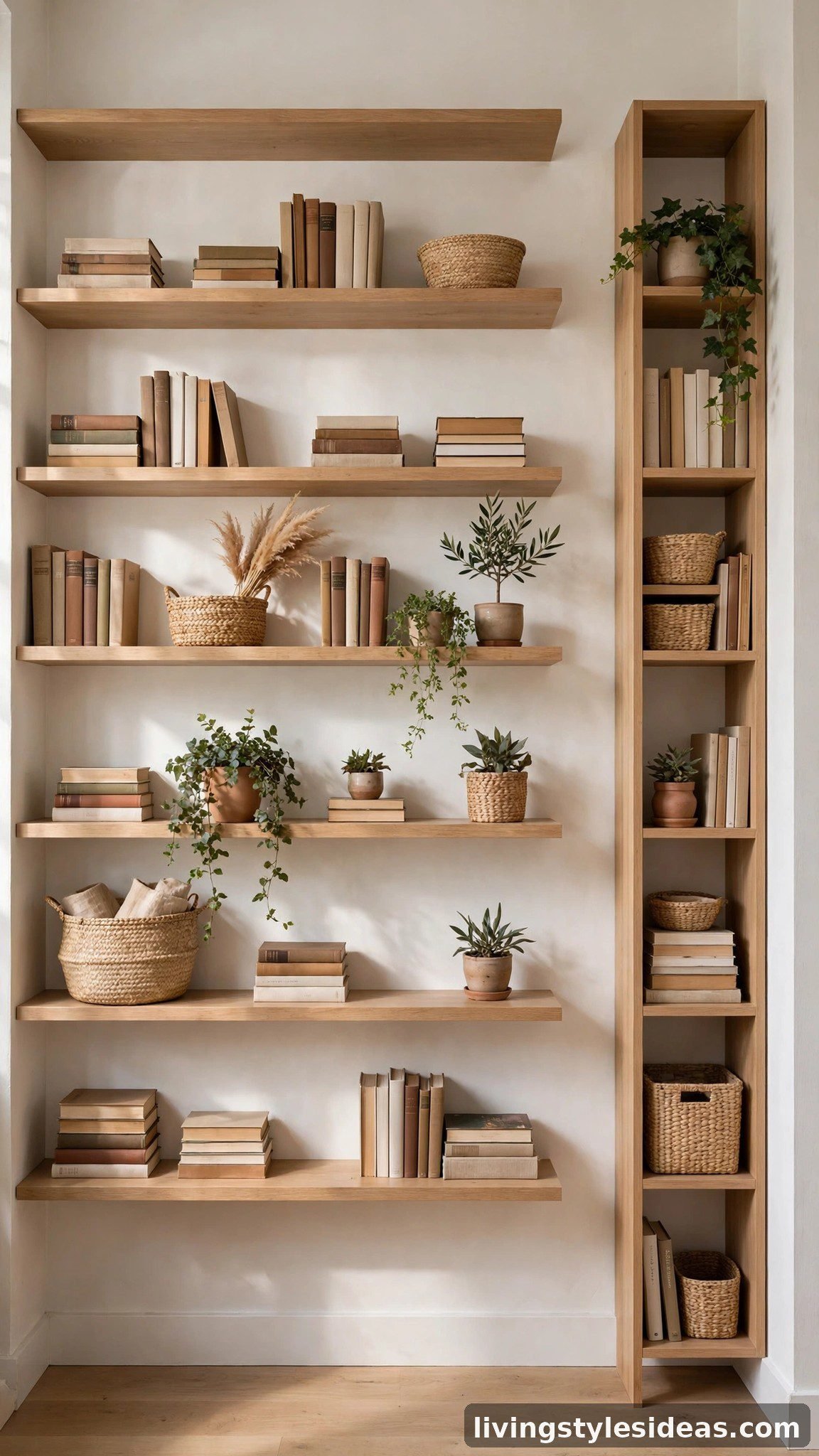
When floor space is scarce, the walls are your square footage. Tall, narrow bookcases, floating shelves, and pegboards move storage upward where it barely registers visually. Run shelves all the way to the ceiling — the top rows are perfect for things you rarely touch. Vertical storage keeps the floor clear, and a clear floor is what makes a small room feel spacious.
5. Keep the Palette Light and Airy
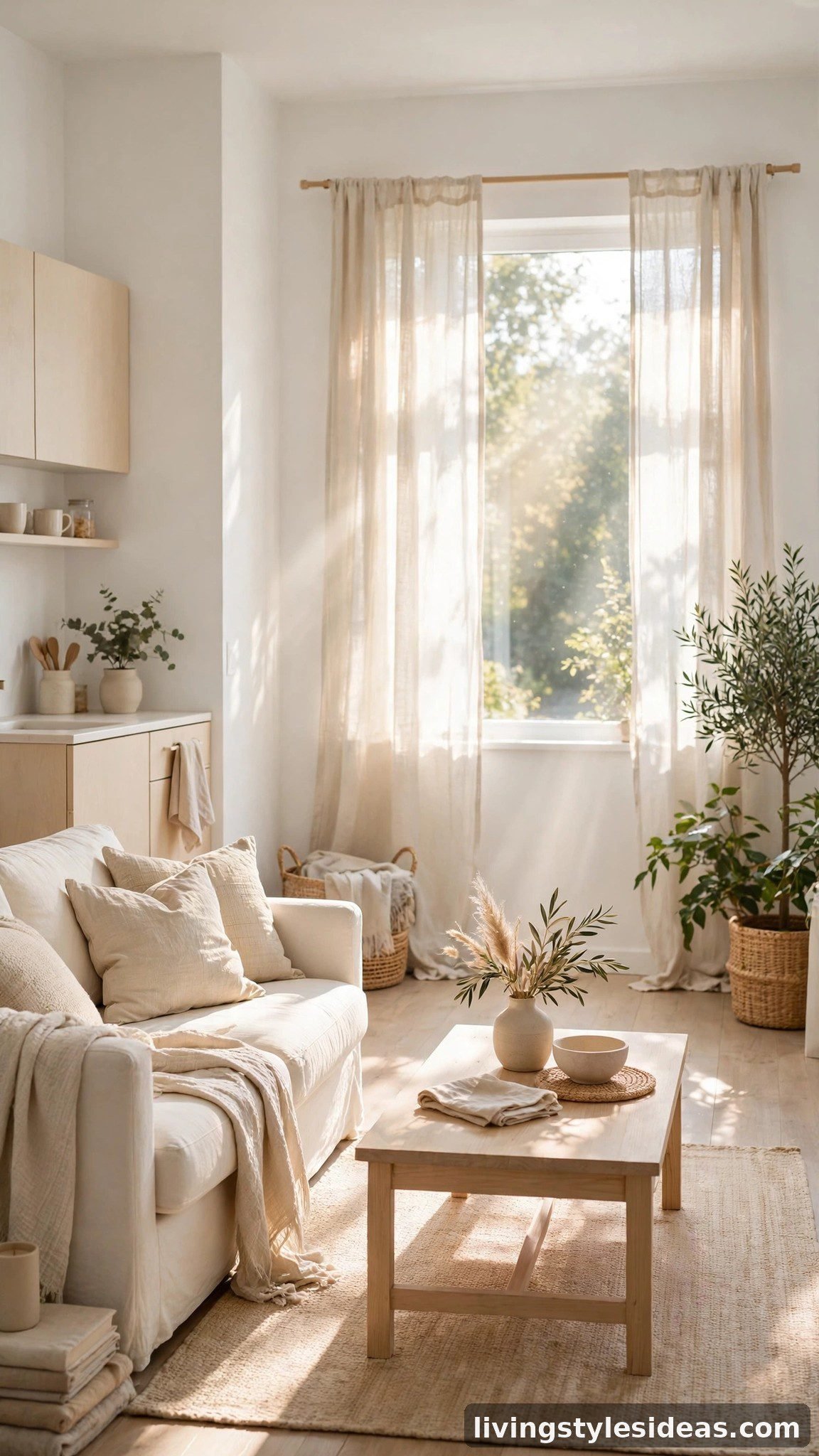
Light colors reflect daylight and visually push the walls outward. Whites, warm creams, pale grays, and soft beiges make a studio feel open and calm, while one unbroken palette across zones makes the whole space read as larger. That doesn’t mean boring — layer in texture and a few darker accents through pillows, art, and plants so the lightness has depth and personality.
6. Choose Furniture That Does Double Duty
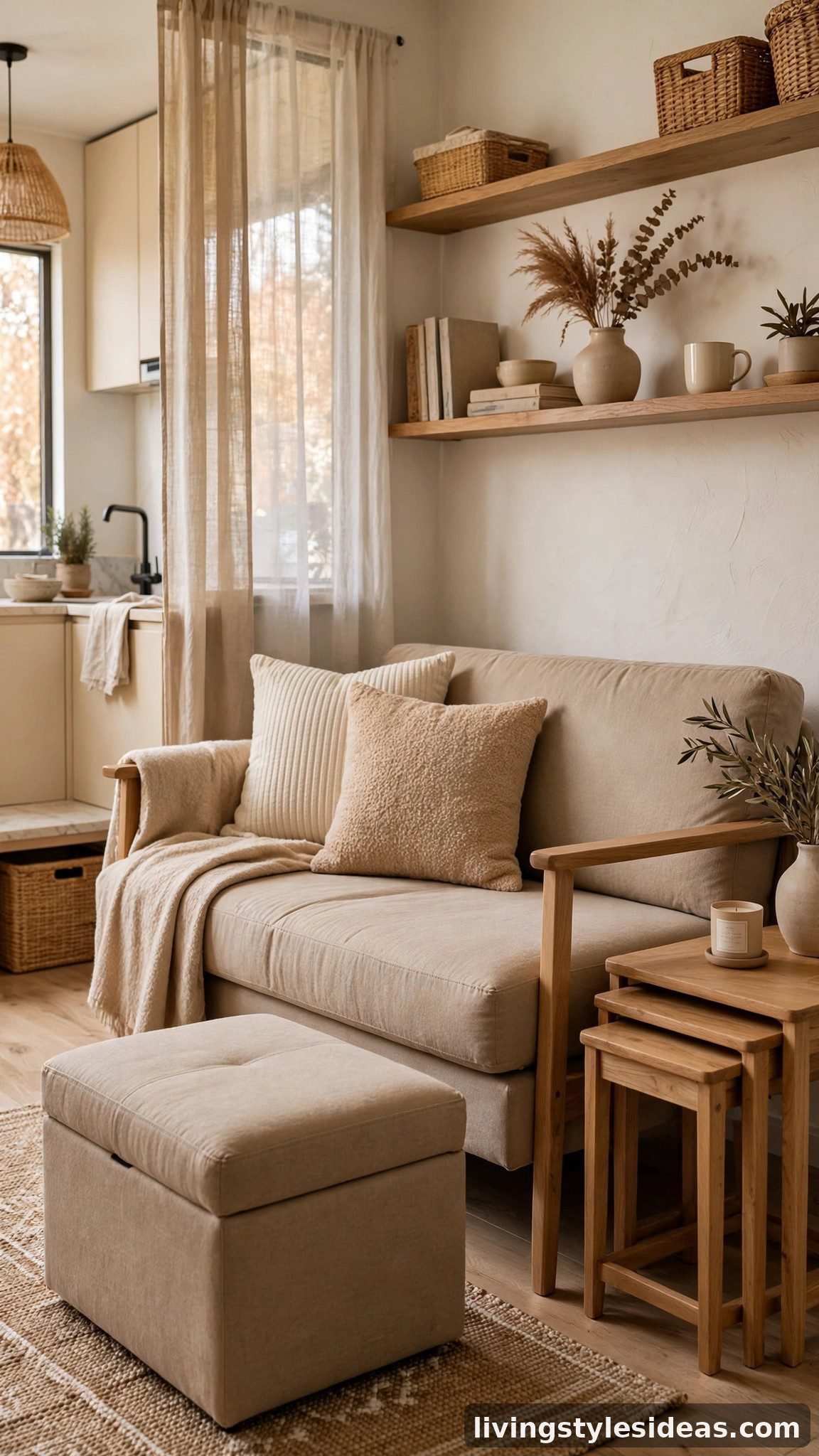
Every piece in a studio should earn its footprint twice. A storage ottoman hides blankets and doubles as seating, a sleeper sofa hosts guests, and a lift-top coffee table becomes a work desk. Nesting side tables tuck away when you need floor space. Multifunctional furniture is how a 400-square-foot studio hosts dinner parties and overnight guests without breaking a sweat.
7. Hang One Big Mirror
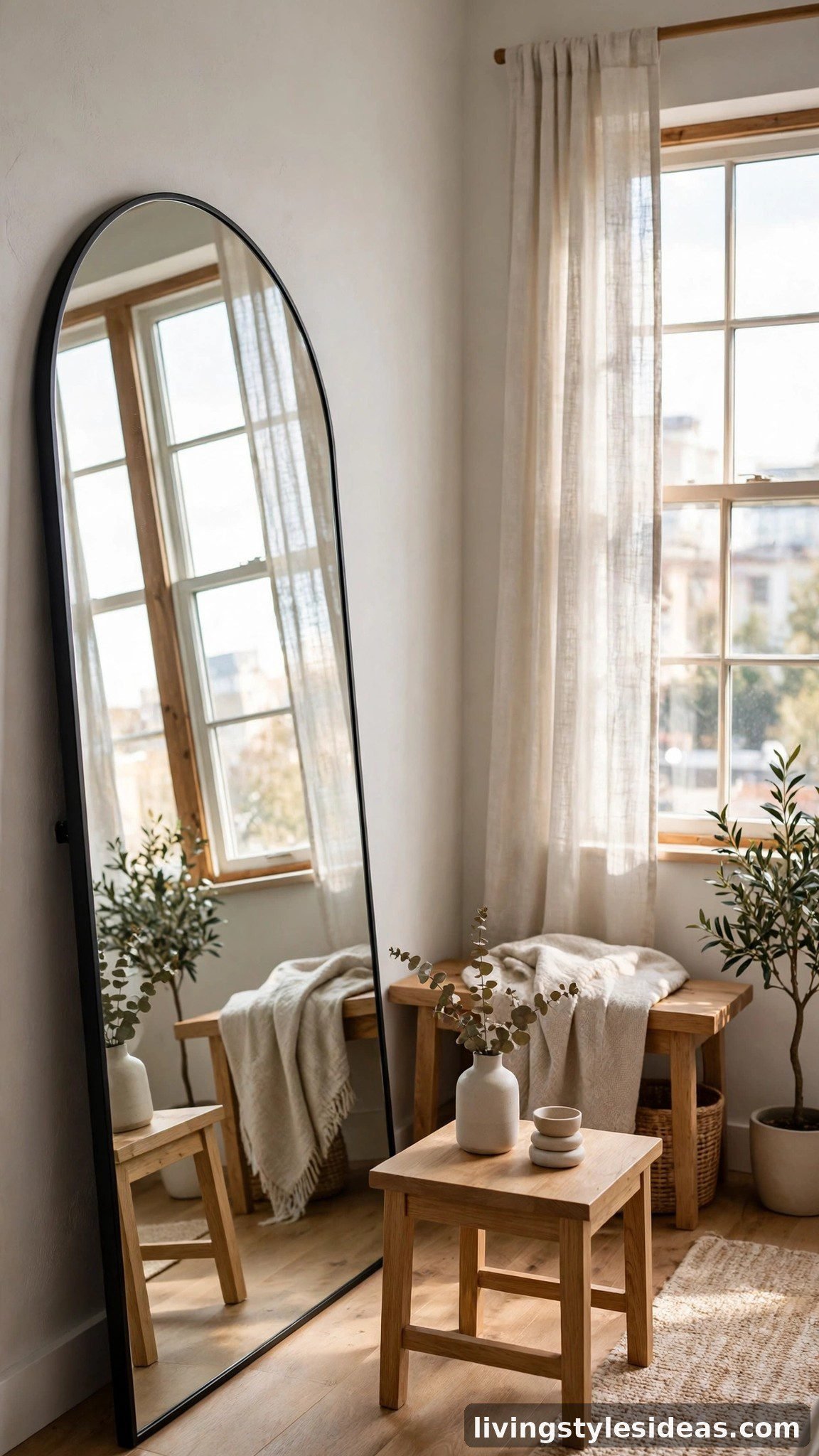
A large mirror is the oldest small-space trick for a reason: it bounces light around the room and visually doubles whatever it reflects. Lean an oversized floor mirror against the wall opposite a window and watch the daylight multiply. A round mirror above the sofa or dresser works too. One statement mirror beats a cluster of small ones — bigger reflection, bigger impact.
8. Carve Out a Workspace Nook
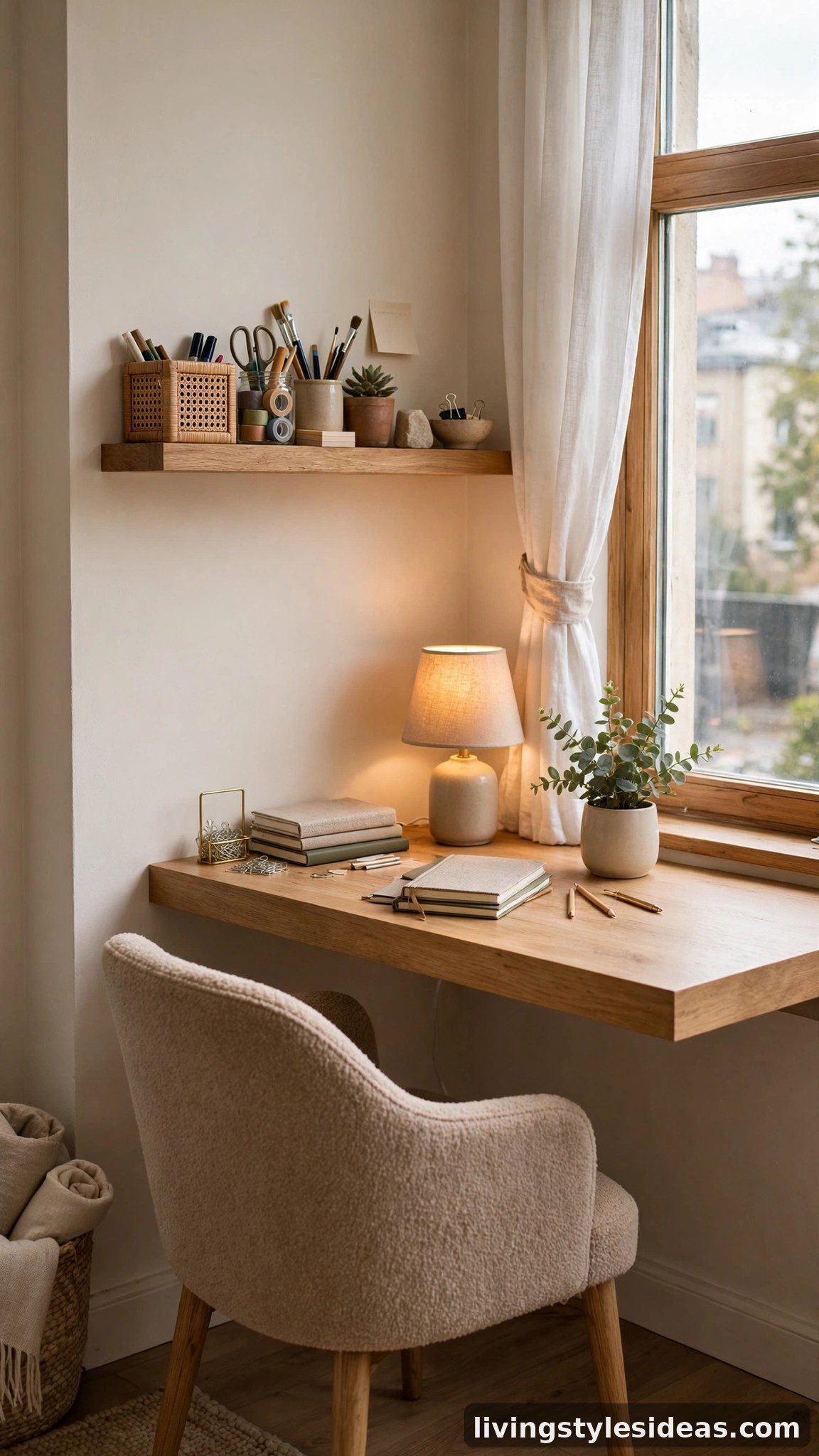
Working from the couch gets old fast. A floating wall desk takes up zero floor space and turns an overlooked corner into a real office. Add a comfortable chair, a small lamp, and a shelf above for supplies, and you have a dedicated workspace that visually disappears when the workday ends. If you can, face the desk toward the room rather than the wall — it feels far less cramped.
9. Add a Slim Kitchen Island or Breakfast Bar
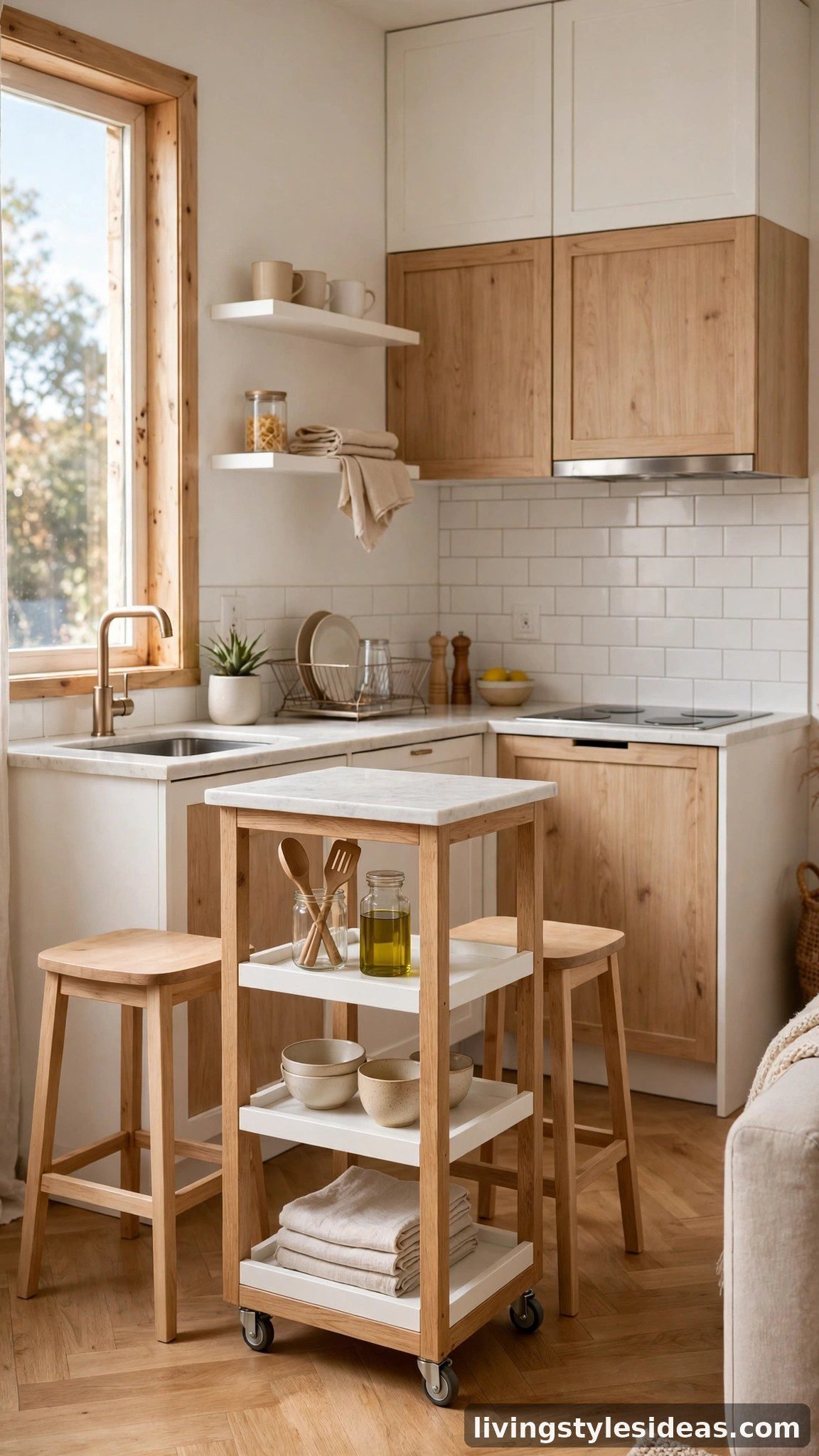
A narrow island or counter-height bar does triple duty in a studio: extra prep space, casual dining for two, and a natural divider between the kitchen and living area. Look for rolling islands with storage shelves underneath — you can wheel them aside when you need the floor. Two backless stools tuck neatly underneath and keep the sightline open.
10. Style a Cozy Curtained Bed Nook
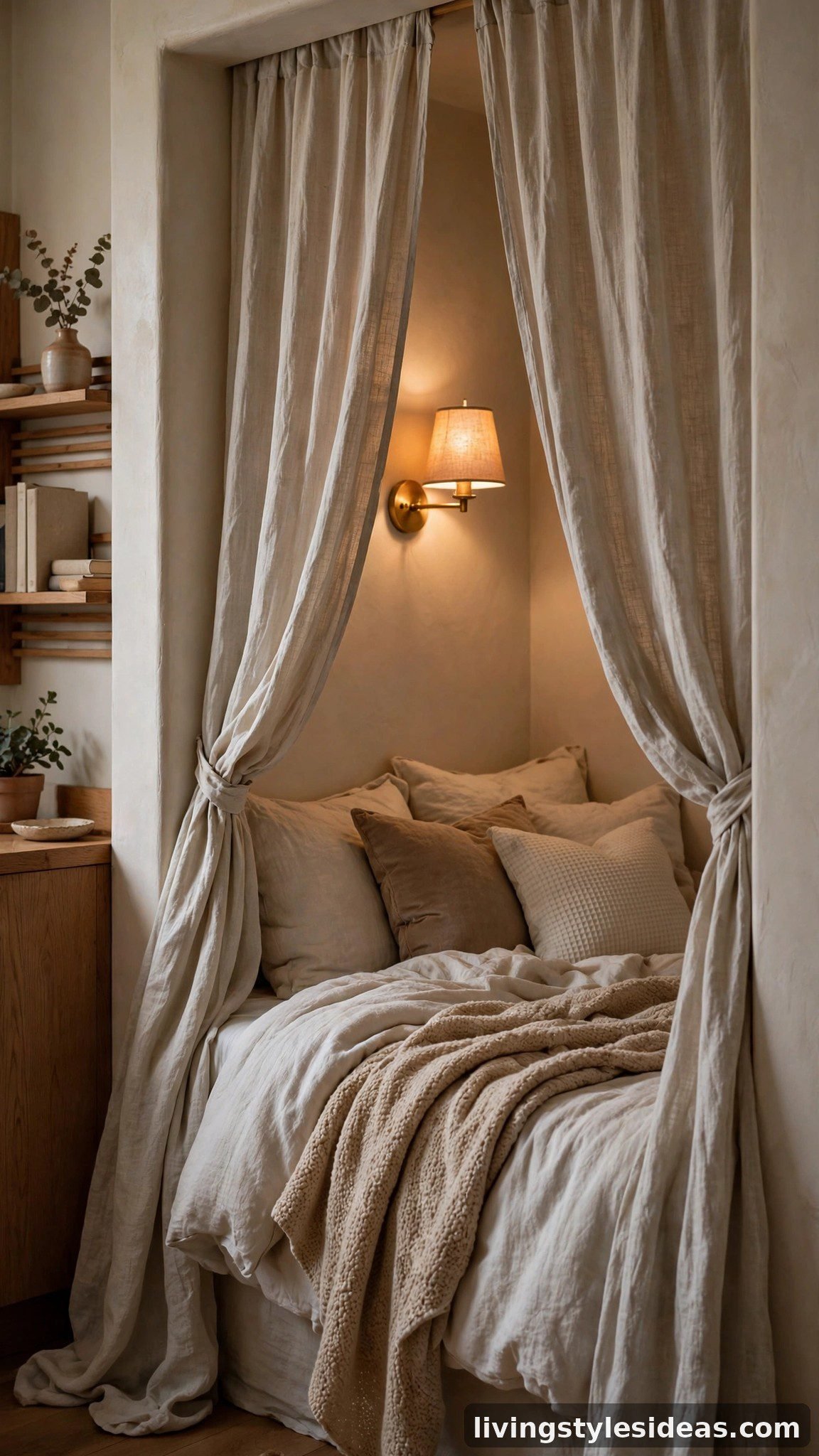
If your studio has an alcove, recess, or even just a quiet corner, turn it into a bed nook. A ceiling curtain or a simple canopy frame around the bed creates the feeling of a separate bedroom without construction. Layer plush bedding, add a wall sconce for reading light, and the nook becomes the coziest corner of the apartment — a private retreat inside your open plan.
11. Bring the Space to Life With Plants
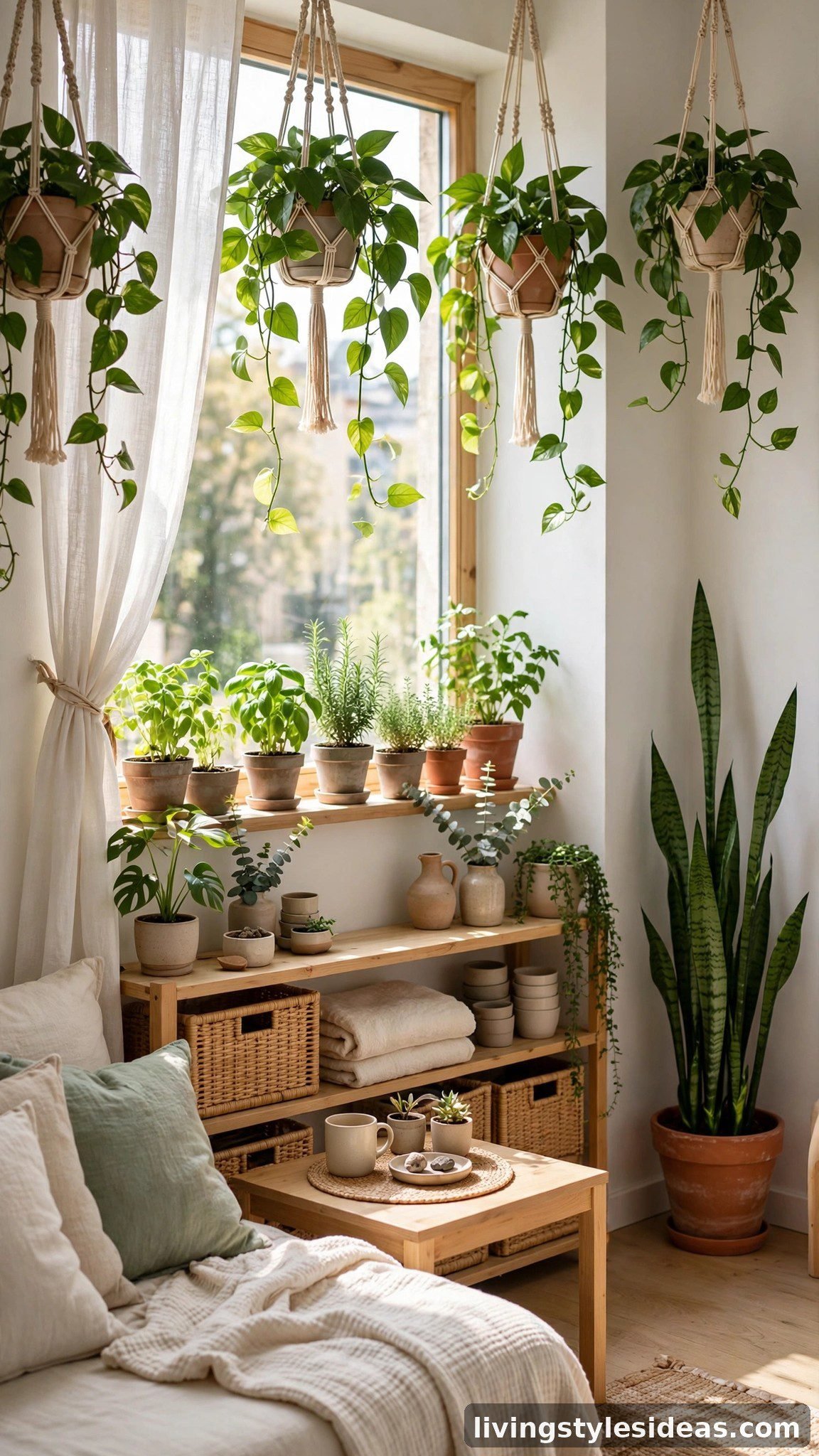
Plants are small-space magic: they add color, texture, and life without eating floor space, especially when you go vertical. Hang trailing pothos from the ceiling, perch a snake plant in an empty corner, and line the windowsill with herbs. Greenery softens the hard edges of compact furniture and makes a studio feel fresh and cared for. Start with low-maintenance varieties if you’re new to plant parenthood.
12. Layer Your Lighting
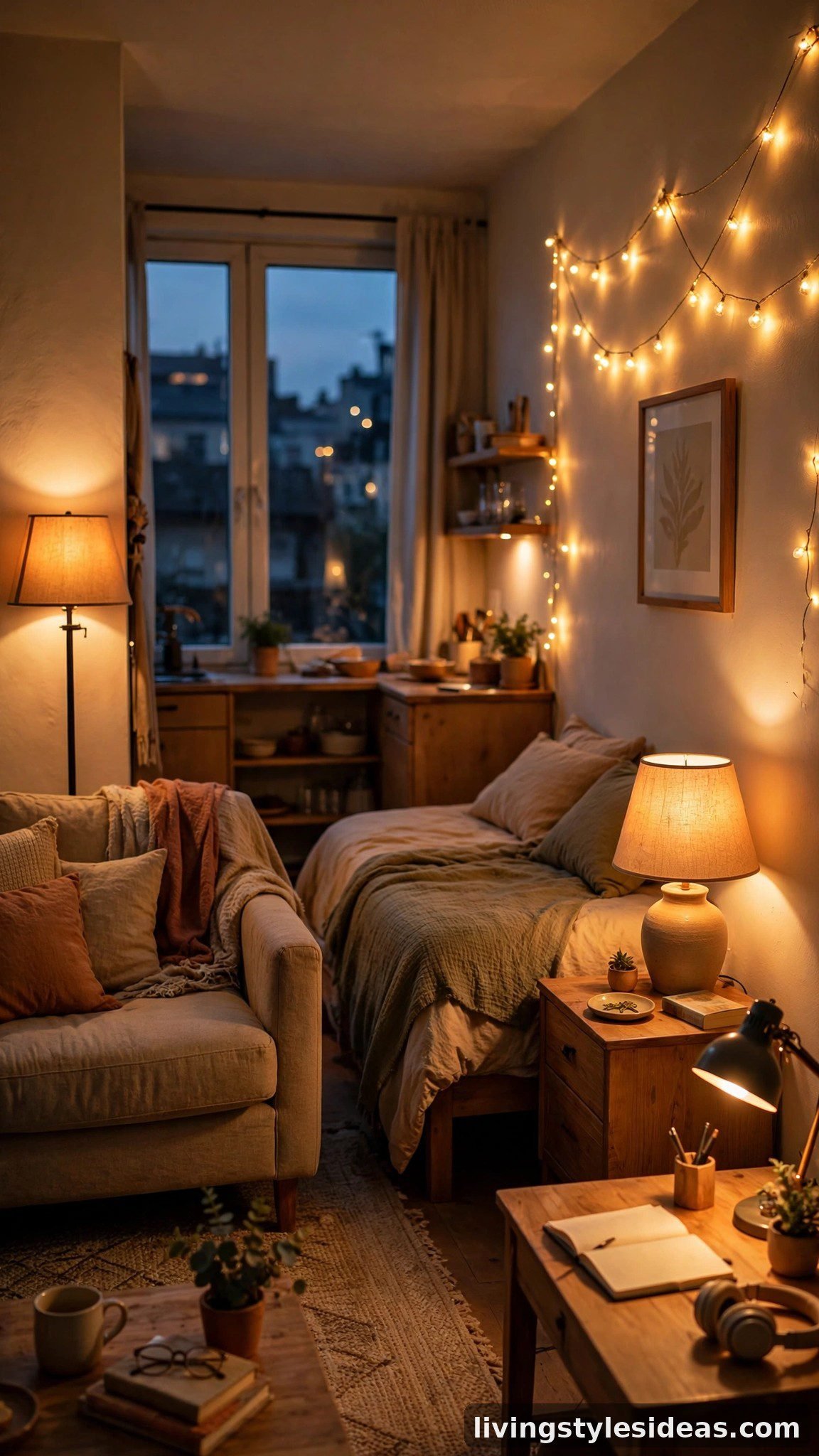
One harsh overhead light flattens a studio; layers of light give it dimension. Combine a floor lamp by the sofa, a table lamp on the nightstand, a desk lamp in the work nook, and warm string lights or candles for evenings. Warm 2700K bulbs make everything glow. Each pool of light defines its zone, so the apartment feels like several inviting rooms after dark.
13. Use Under-Bed Storage Like a Pro
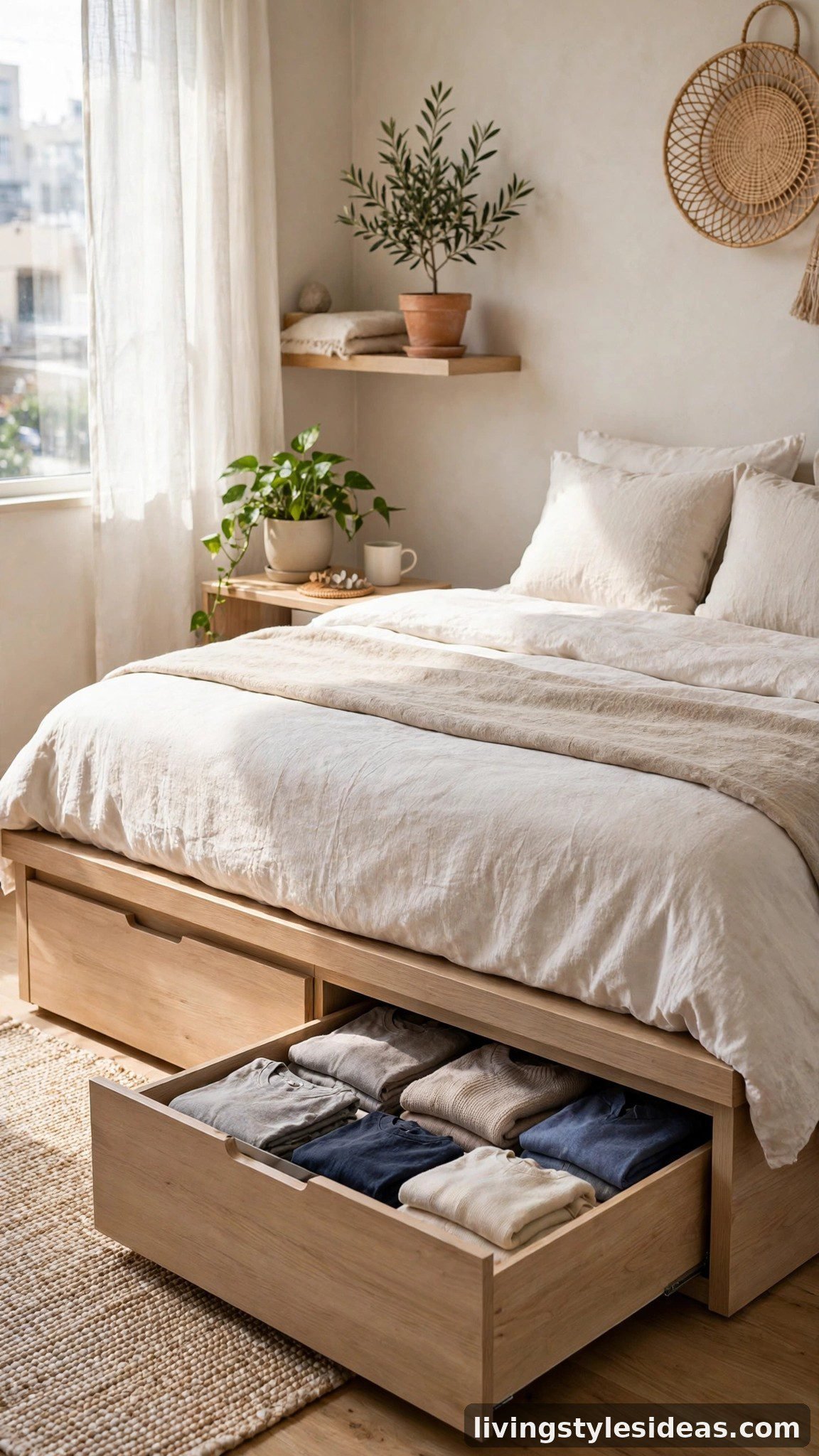
The space under your bed is prime real estate — don’t waste it. Slim rolling drawers, lidded bins, or a platform bed with built-in drawers swallow off-season clothes, shoes, and linens. It’s out of sight, dust-free, and frees closet space for daily essentials. In a studio, a well-organized under-bed setup can replace an entire dresser.
14. Style Open Shelving With Intention
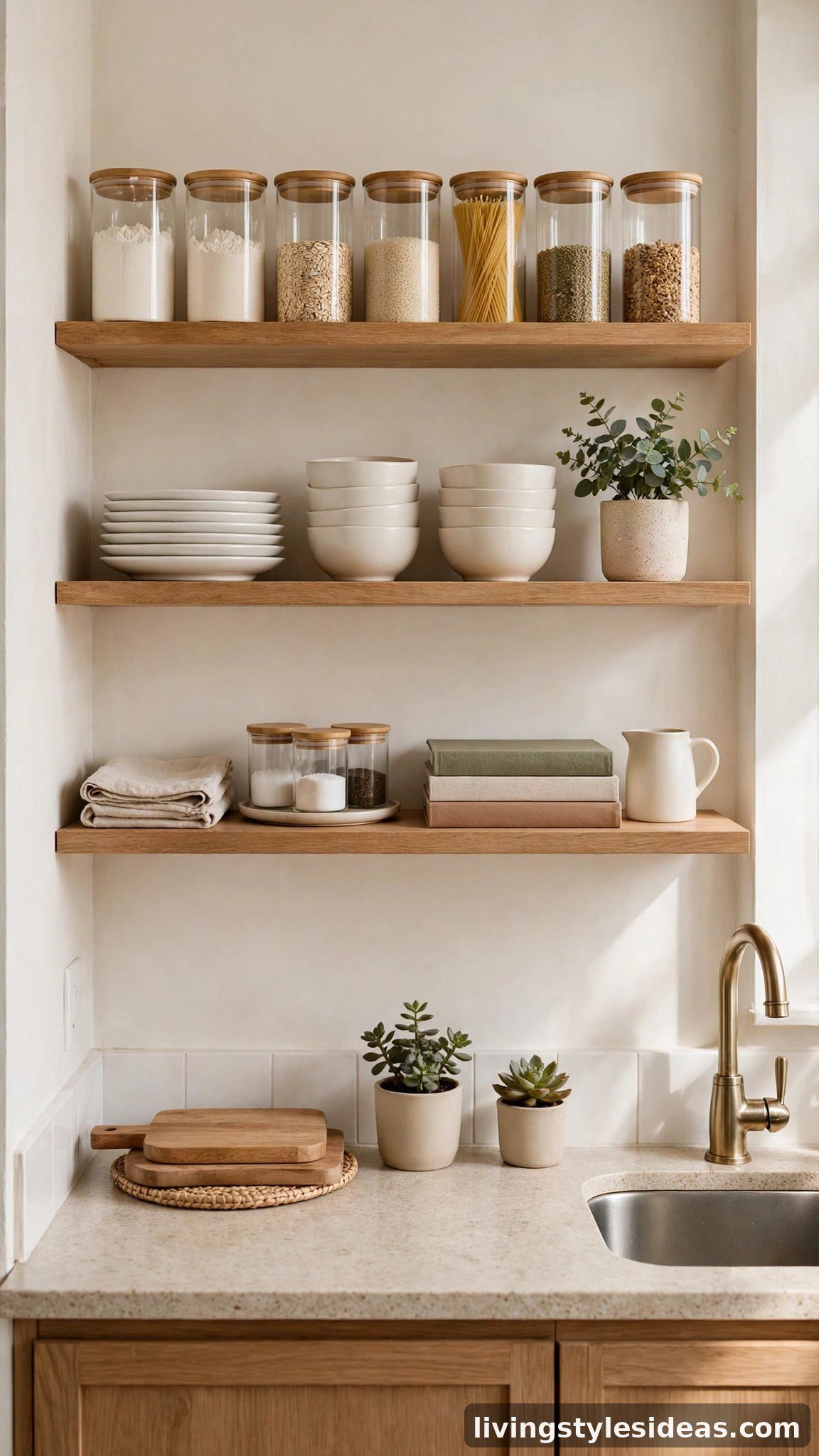
Open kitchen shelves keep a studio airy where upper cabinets would feel heavy — but only if they’re styled, not stuffed. Group everyday dishes, a few cookbooks, and one or two pretty objects; leave breathing room between groups. Decant pantry staples into matching jars for a clean look. Curated open shelving doubles as decor and keeps essentials within arm’s reach.
15. Try a Fold-Down Dining Table
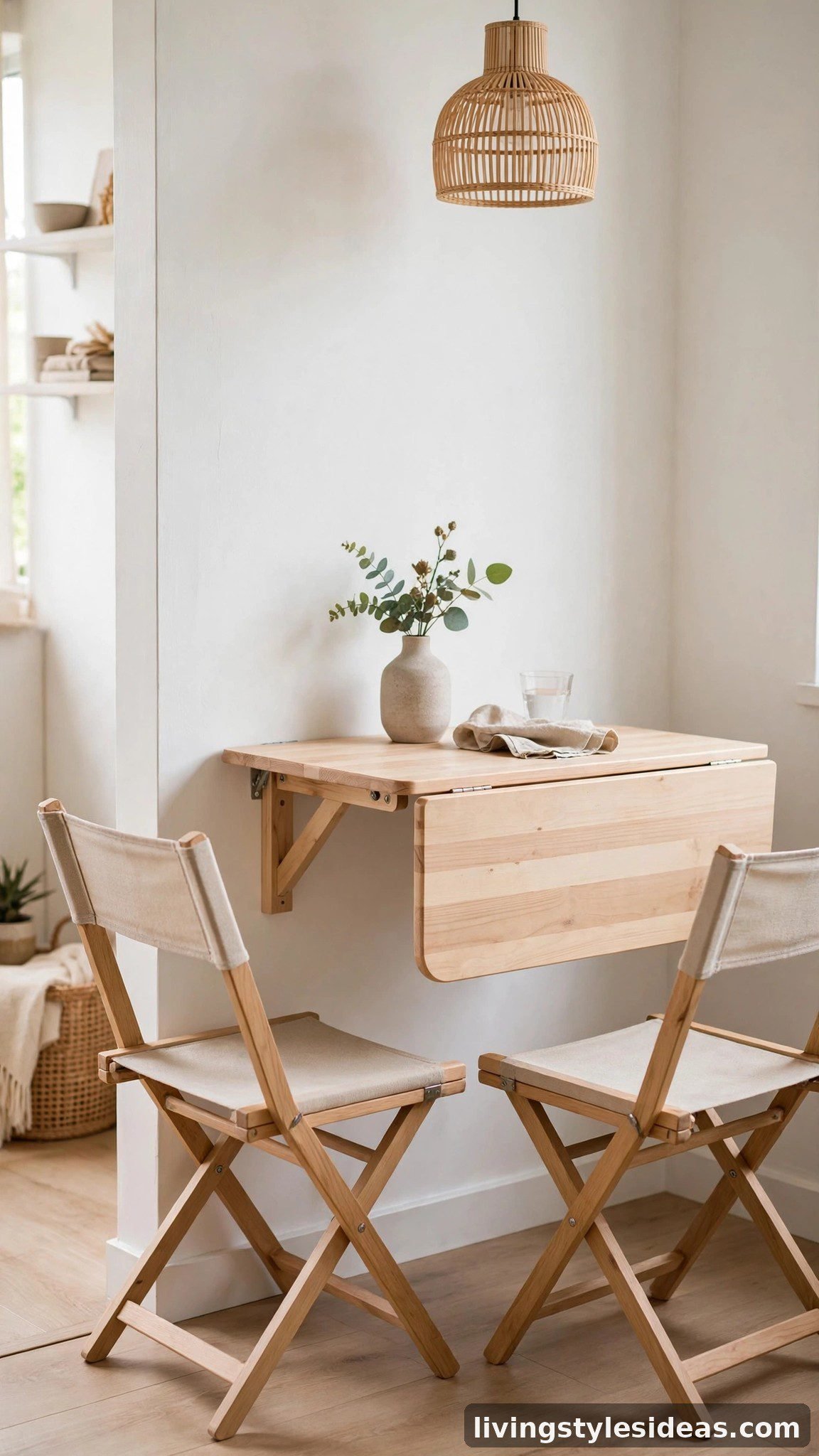
A wall-mounted drop-leaf table gives you a real dining spot that vanishes when dinner’s over. Folded down, it’s a console barely six inches deep; opened up, it seats two to four. Pair it with folding or stackable chairs you can stash in a closet. It’s the perfect answer for studios too small for a permanent dining table but too social for eating on the sofa forever.
16. Paint a Bold Accent Wall
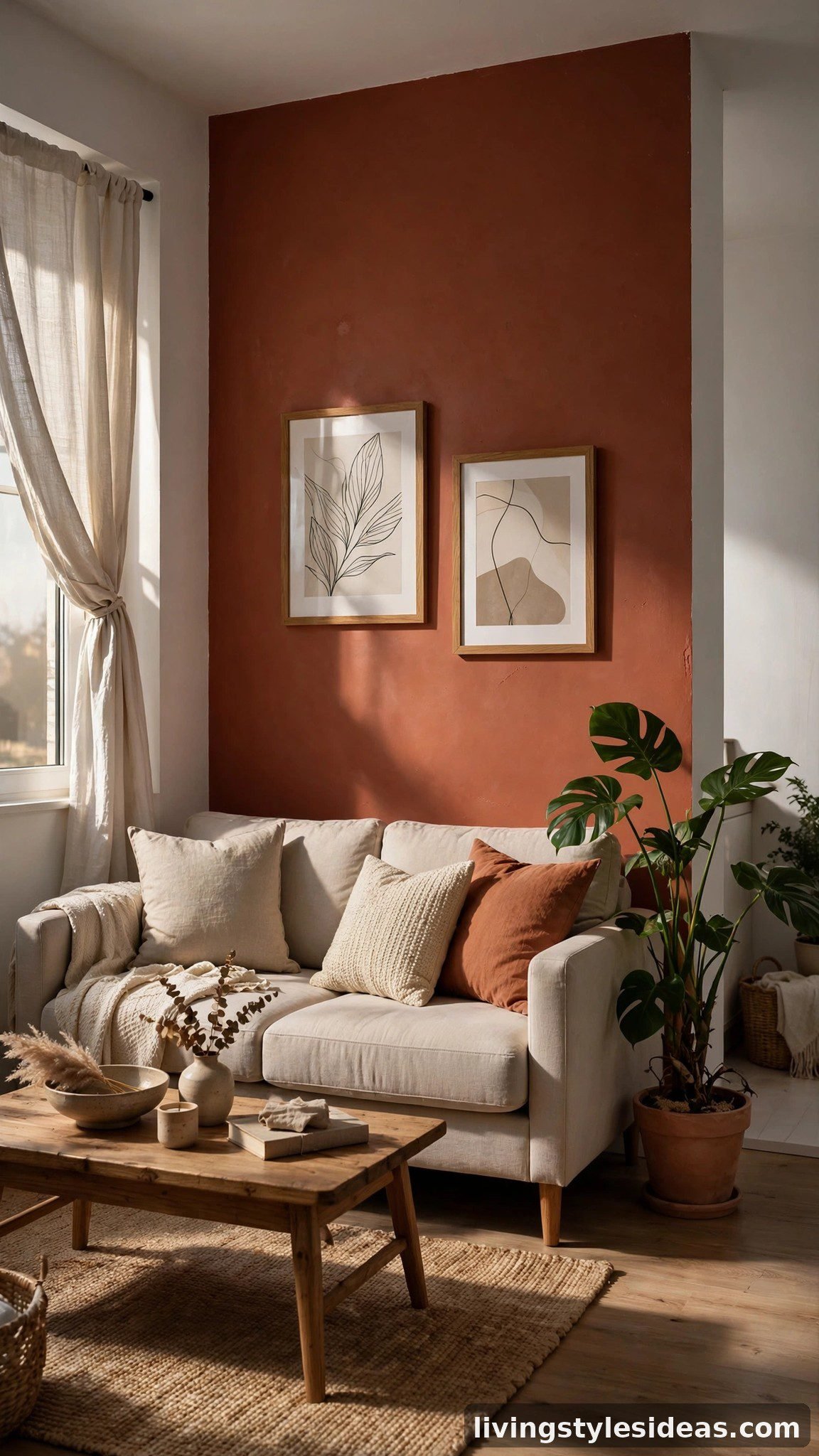
Small space doesn’t mean timid color. One bold accent wall — deep green, warm terracotta, moody navy — anchors the living zone and gives the studio a designer focal point. Because the other walls stay light, the room still feels open while the color adds drama and depth. It’s renter-friendly too: a single wall is cheap to paint and easy to repaint when you move.
17. Finish With a Gallery Wall
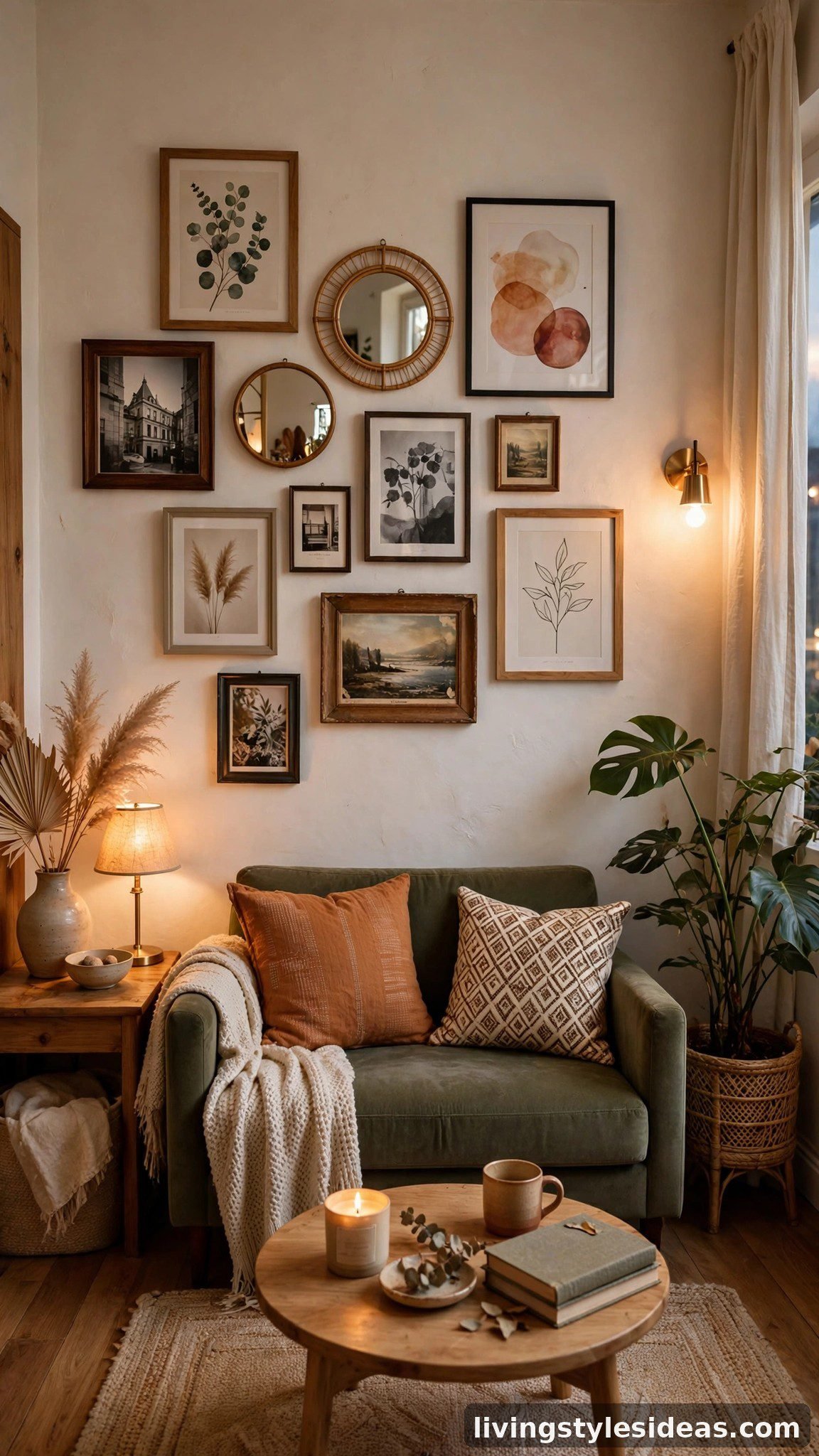
A gallery wall is personality in its purest form, and it takes zero floor space. Mix framed prints, photos, and small mirrors in an arrangement above the sofa or along a hallway wall. Lay the layout on the floor first, then hang. A gallery wall turns a generic studio into unmistakably yours — the finishing touch that makes the whole space feel like home.
FAQ
How do you make a studio apartment feel bigger?
Keep the color palette light, use one large mirror to bounce daylight, choose leggy furniture that shows floor underneath, and zone the space with rugs instead of bulky dividers. Clearing visual clutter and running curtains ceiling-high also stretch the room visually.
What’s the best layout for a studio apartment?
Divide the open plan into zones: sleeping, living, working, and dining. Use rugs, curtains, shelving, or a slim island as soft dividers. Keep the bed in the quietest corner, float the sofa to face the room, and tuck the desk near a window for natural light while you work.
How can I add privacy to a studio apartment?
Ceiling-mounted curtains are the most flexible option — close them at night, open them by day. Tall open shelving, folding screens, and canopy-style bed drapes also create separation without blocking light or making the space feel cramped.
What furniture is essential for a small studio?
Prioritize multifunctional pieces: a sleeper sofa or daybed, a storage ottoman, a drop-leaf or extendable dining table, a tall dresser instead of a wide one, and nesting side tables. Every item should serve at least two purposes to earn its footprint.
Final Thoughts
A studio apartment isn’t a compromise — it’s a chance to live intentionally. When every piece is chosen with purpose and every zone is styled with care, small becomes an advantage: easier to clean, easier to love, and full of character. Pick the ideas that fit your space and start with the biggest win — usually zoning or lighting — and watch your studio transform. Your dream small home is closer than you think.