
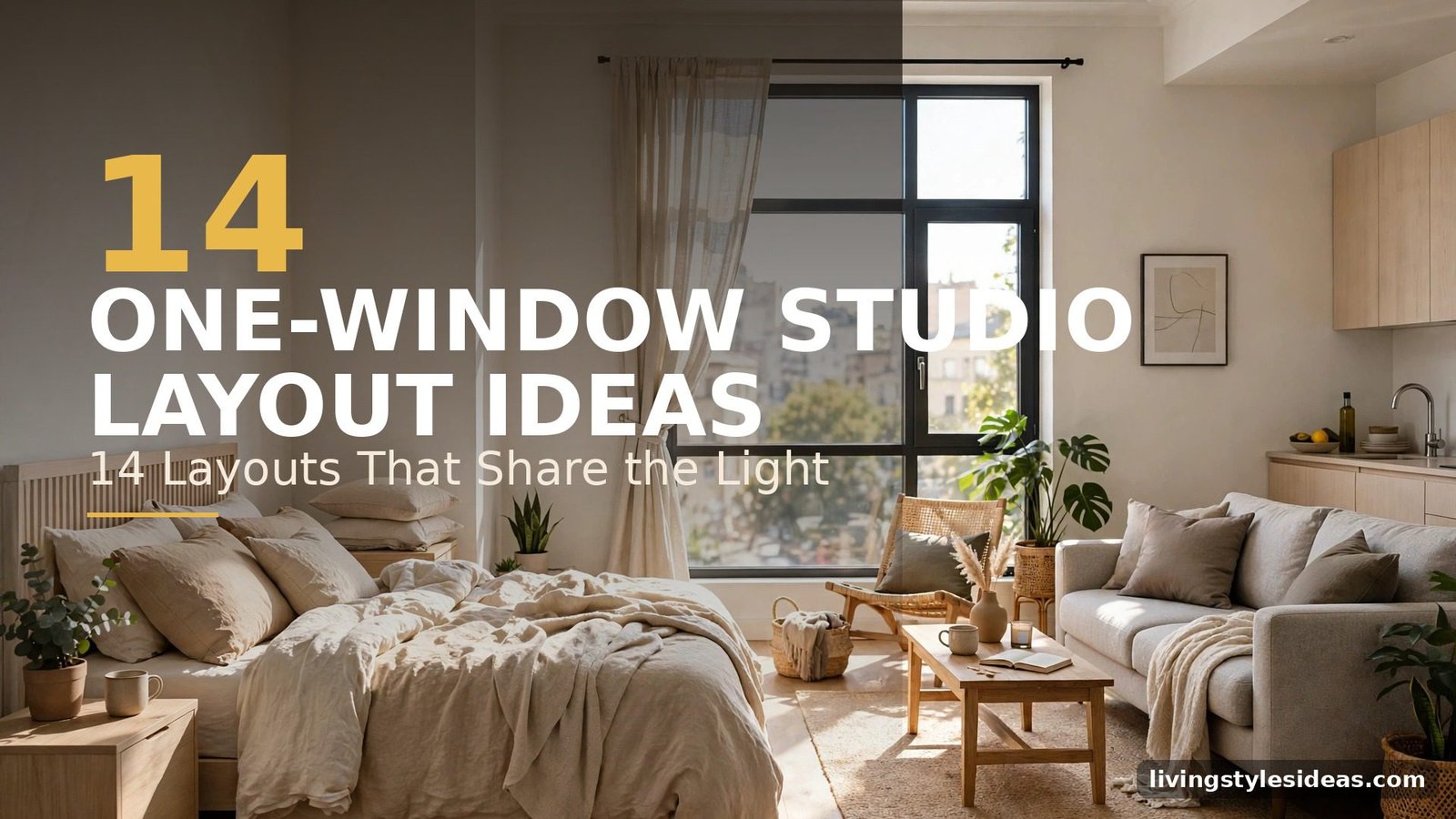
14 studio apartment layouts with one window
One window is the defining challenge of studio living. All your daylight, fresh air, and view have to serve a bedroom, living room, kitchen, and workspace at once — and where you place each zone decides whether the room feels bright and calm or dim and crowded. Push the wrong piece under the window and you can block the only light source you have.
These 14 studio apartment layouts with one window show you exactly where to put the bed, sofa, desk, and dividers so light travels as far as possible. Every layout is renter-friendly, works in a real one-room rental, and needs no renovation — just smart furniture placement that shares one window across your whole day.
1. Put the Bed Right Under the Window
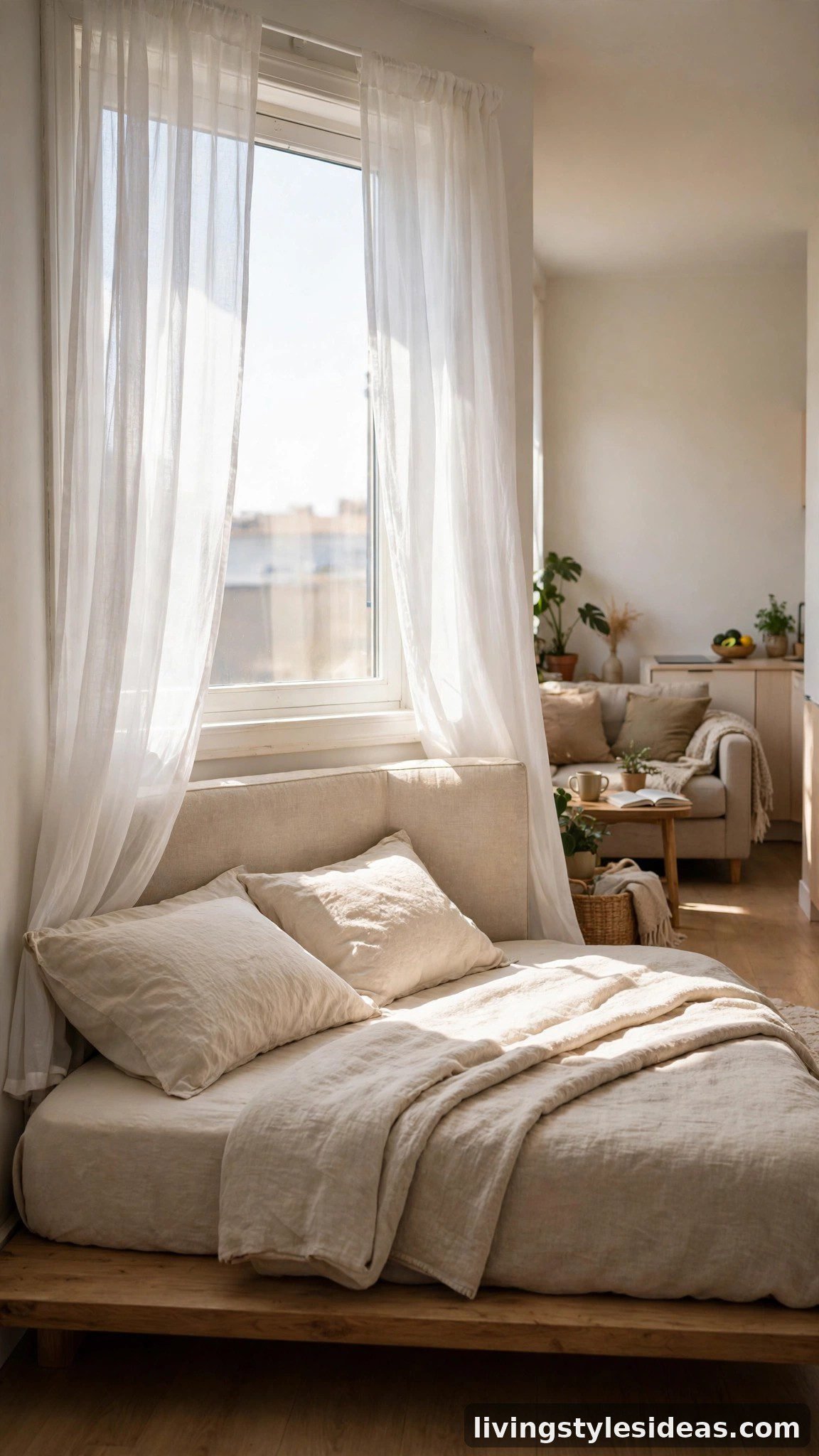
Placing the bed directly under the window is the classic one-window move, and it works because the bed is low. Daylight pours over the headboard and reaches deep into the room instead of hitting a tall wardrobe. You wake with natural light, the living zone stays at the far end, and a low frame keeps sightlines open. Add sheer curtains for privacy without losing the glow, and keep nightstands slim.
2. Flip It: Bed Opposite the Window
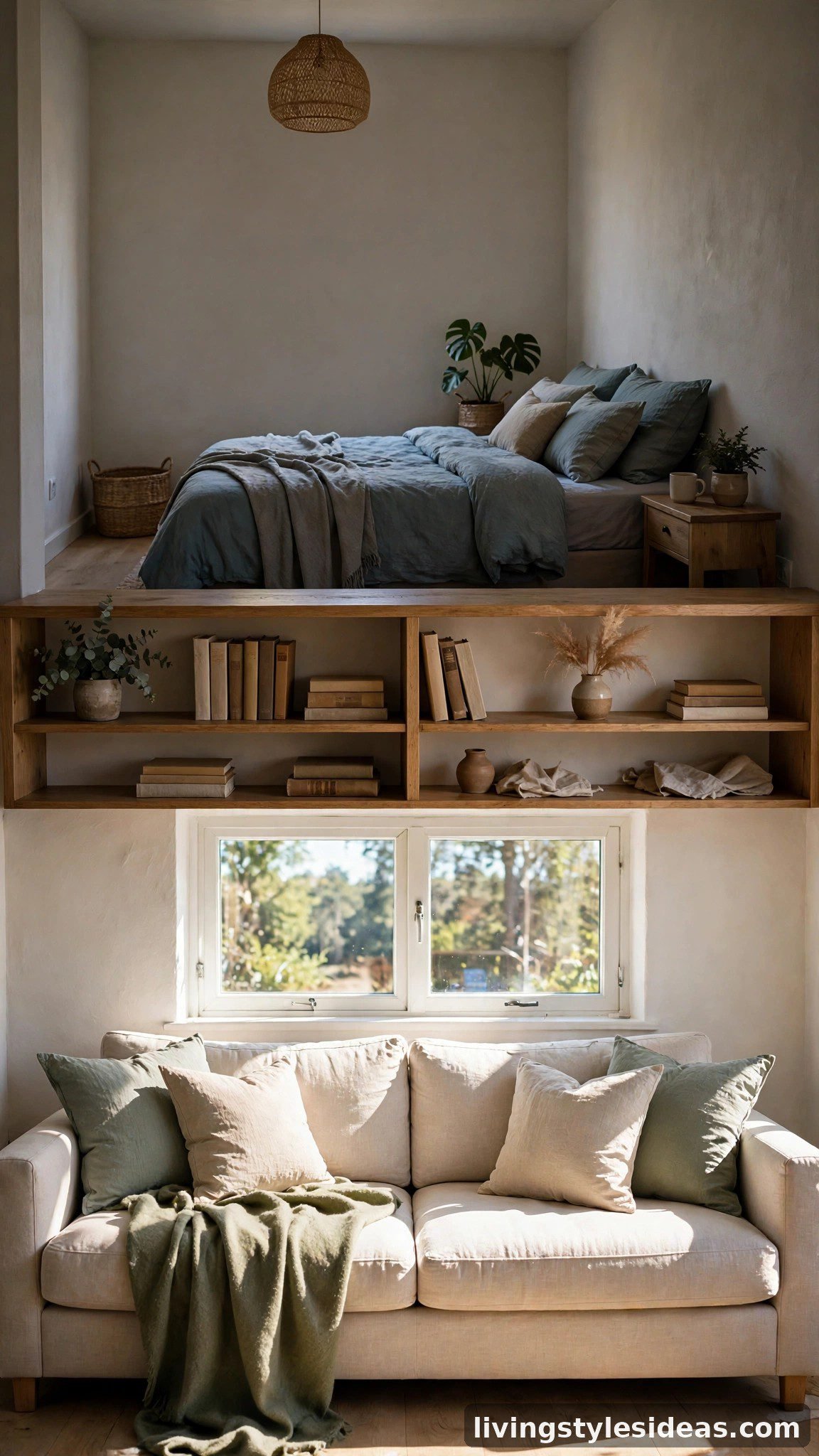
If you prefer to sleep in relative shade, put the bed on the wall opposite the window and give the window wall to your sofa. Light lands on the living zone where you spend your waking hours, while the bed sits in the calmer, dimmer end. A low bookcase or rug marks the halfway point. This layout suits night owls and anyone who works late and sleeps in.
3. Build an L-Shape with Bed and Sofa
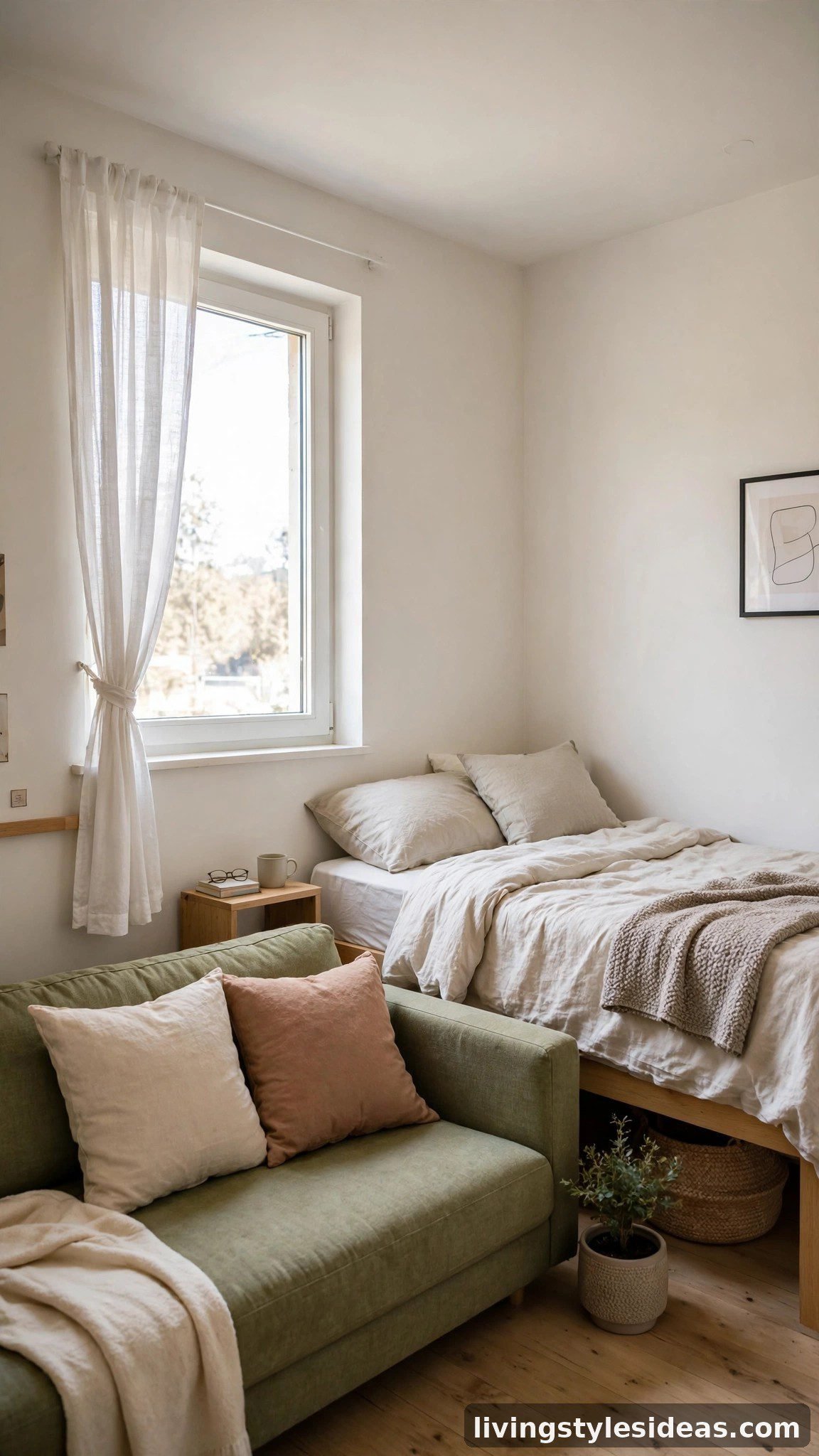
An L-shape is the smartest geometry for a one-window studio. Place the bed along one wall and the sofa perpendicular to it, forming an L that naturally splits sleep from living without any divider. The corner where they meet holds a small table or plant. Light enters from the window end and washes across both arms of the L, so neither zone feels like a cave.
4. Divide the Middle with an Open Shelf
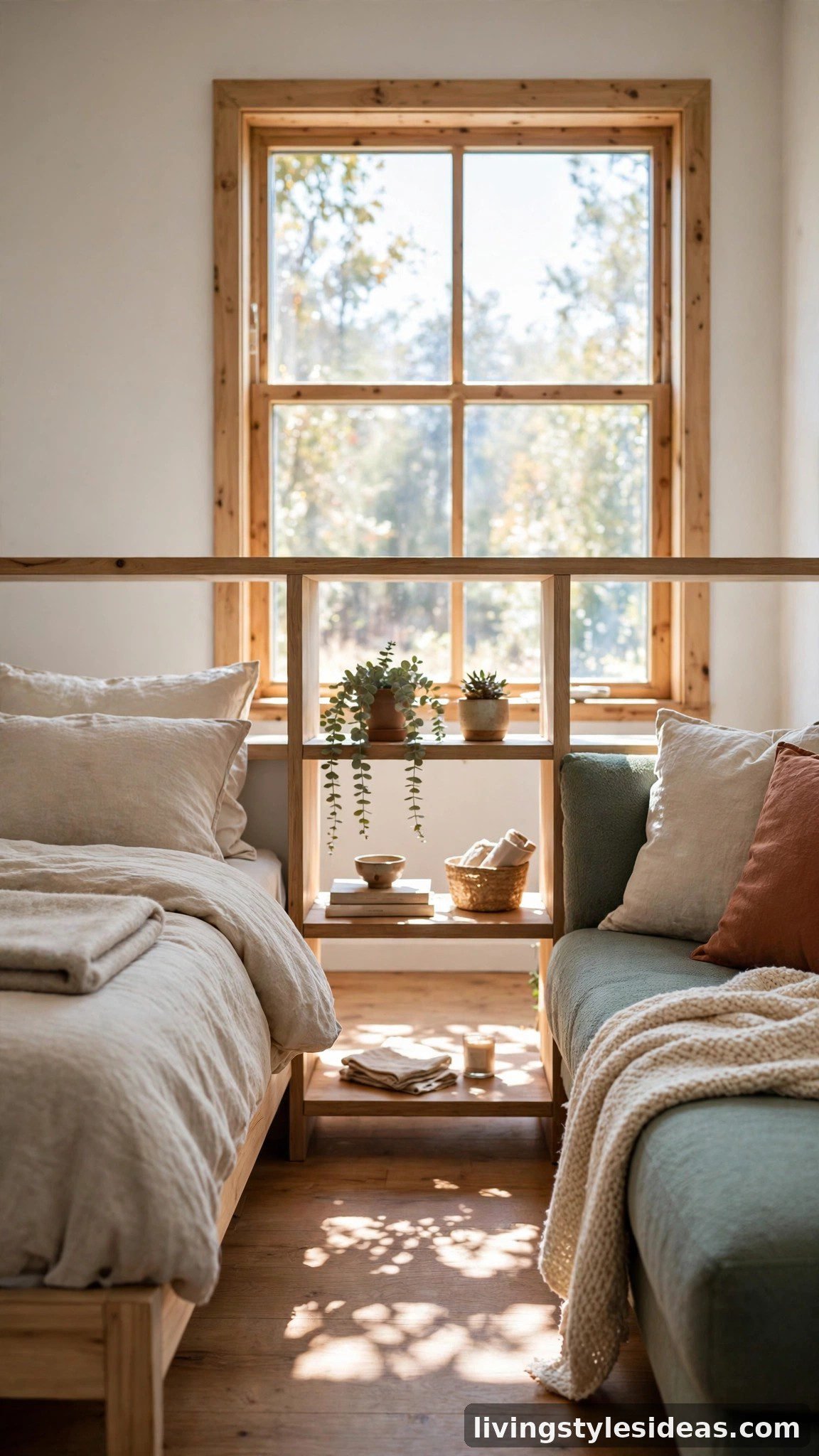
An open-backed shelf placed mid-room is the one-window hero: it divides bed from sofa while letting daylight pass straight through the gaps. Keep the top shelves mostly empty and style low — books, one plant, woven baskets. Air and light keep moving, yet your brain reads two rooms. Choose a unit under five feet tall so it never shadows the far side.
5. Use the Sofa Back as Your Divider
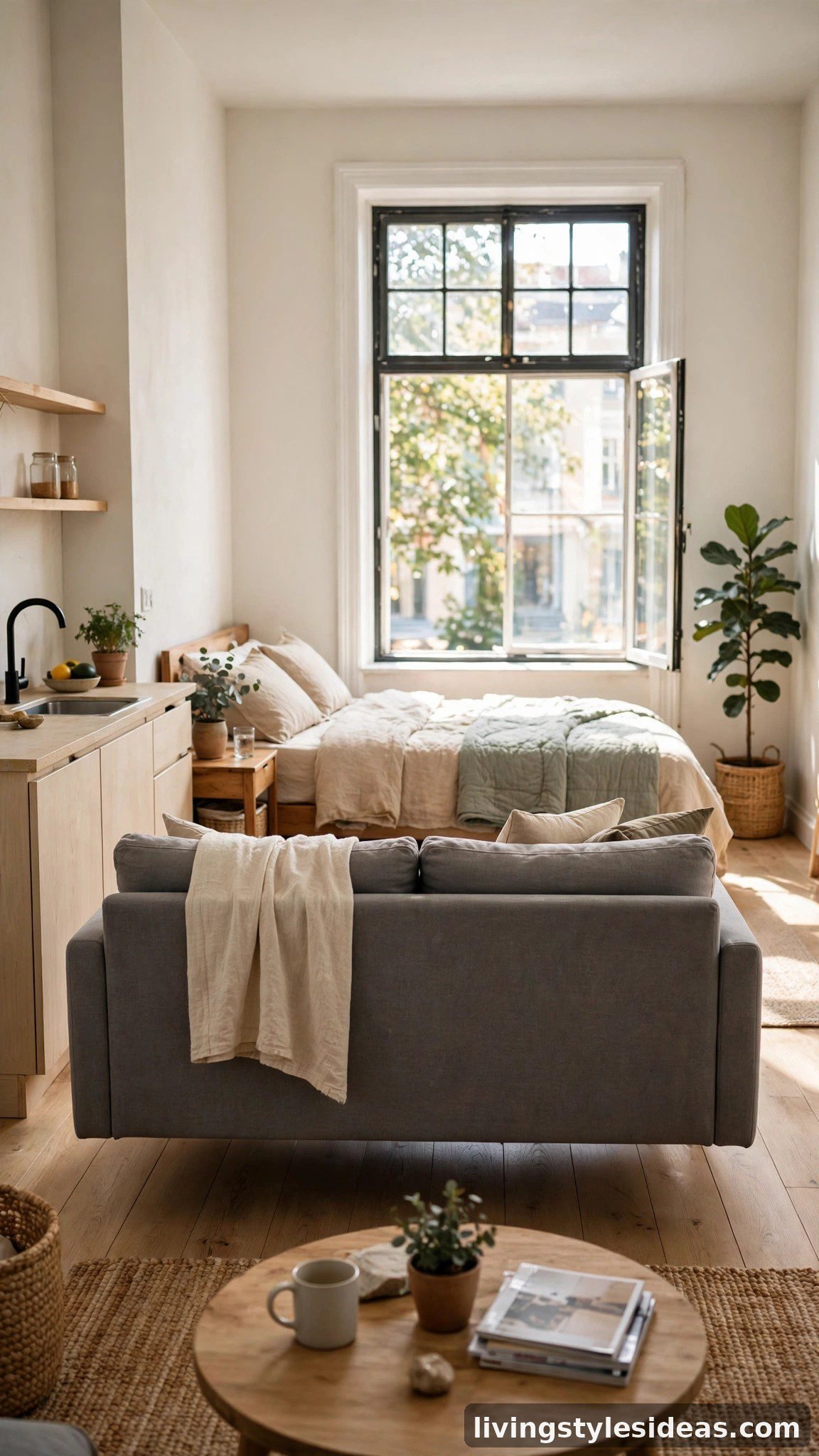
No space for a shelf? Float the sofa mid-room with its back to the bed. That single move creates a living room facing the window and a bedroom behind it, with zero extra furniture. A console table or slim bench behind the sofa softens the back view from the bed. Light flows over the low sofa back, and each zone gets a clear front door feeling.
6. Claim the Window for a Work Desk
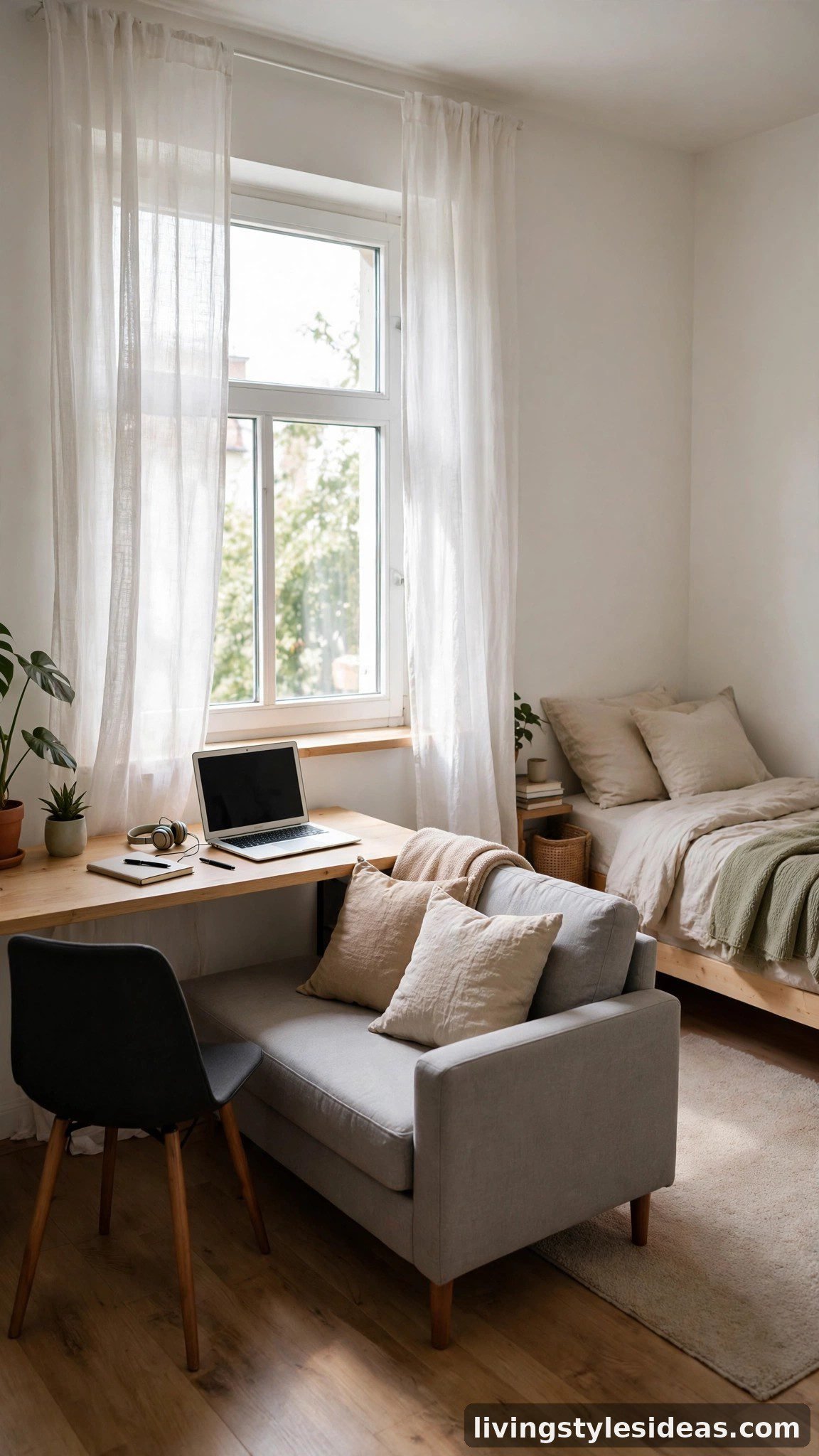
If you work from home, the window belongs to your desk. Natural light on your face is flattering on calls and keeps you alert, while a slim desk blocks almost no light because it sits low and narrow. Tuck the bed into the opposite corner and float the sofa between them. Add a sheer roller shade for screen glare, and your office, lounge, and bedroom finally stop fighting.
7. Tuck the Bed into the Darkest Corner
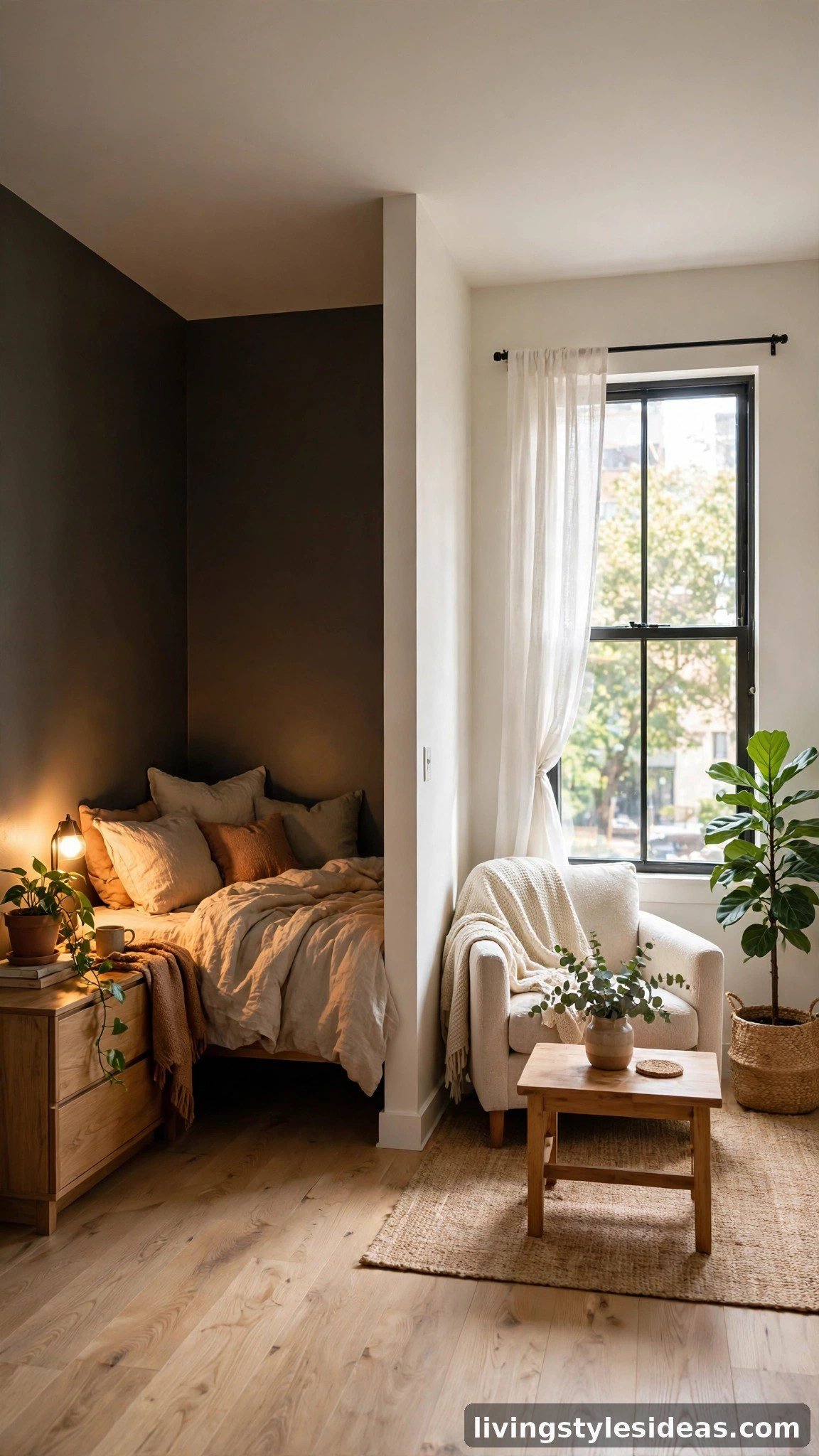
Sleep actually prefers darkness, so give the bed the corner farthest from the window and let living spaces claim the light. Frame the nook with a curtain rail, tall plant, or low dresser so it feels intentional, not forgotten. Warm bedside lighting makes it cocoon-like at night. By day, your sofa and desk enjoy full sun while the sleep zone stays cool and restful.
8. Go Murphy Bed for a Real Living Room
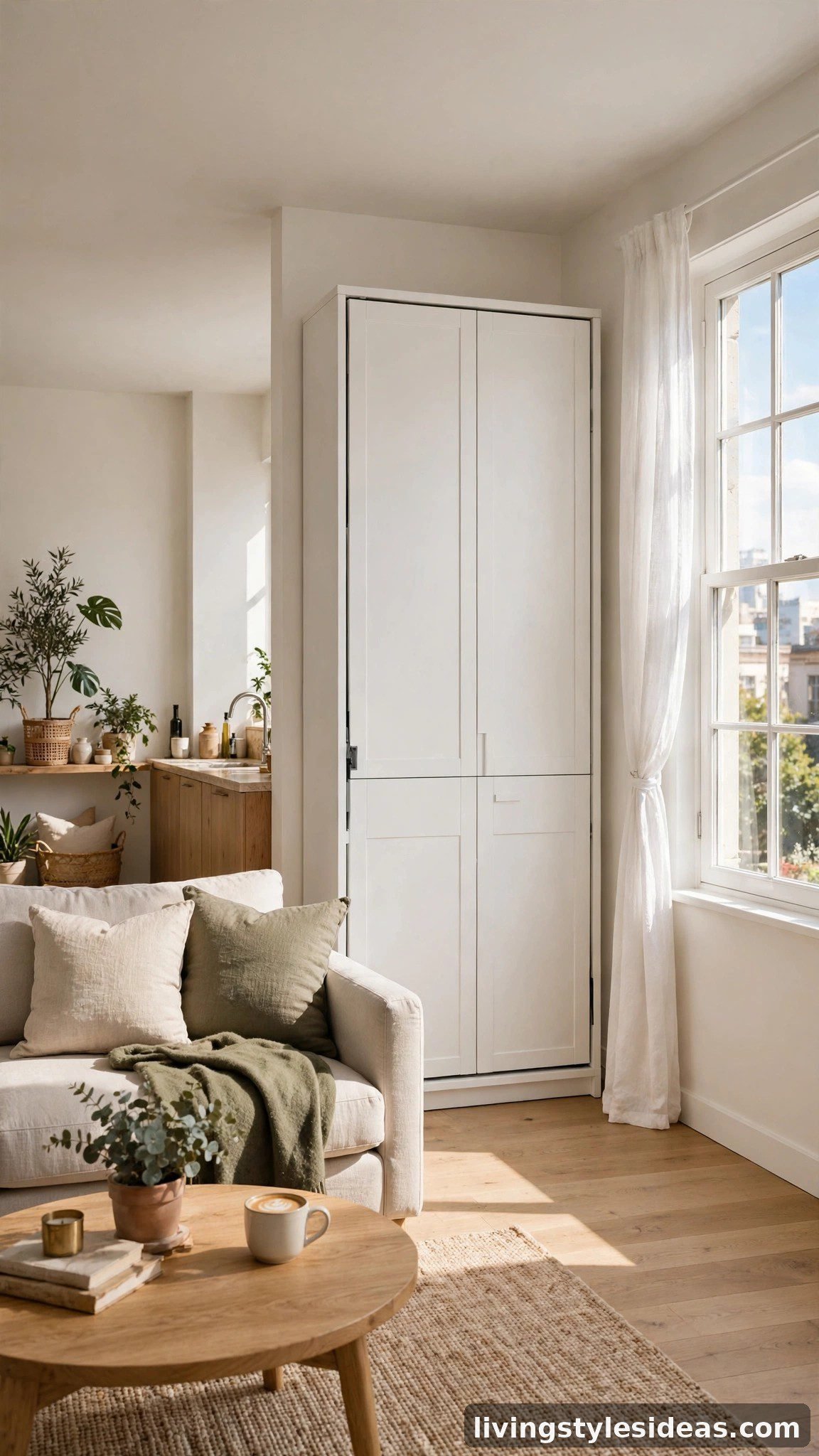
A murphy or fold-down bed solves the one-window dilemma completely: by day the room is a sunlit living room with nothing blocking the light path; by night the bed folds down wherever you placed the cabinet. Mount it on the wall beside the window rather than under it. Freestanding rental-friendly versions exist, and the reclaimed floor makes even a 250-square-foot studio feel generous.
9. Zone It All with Rugs, No Divider Needed
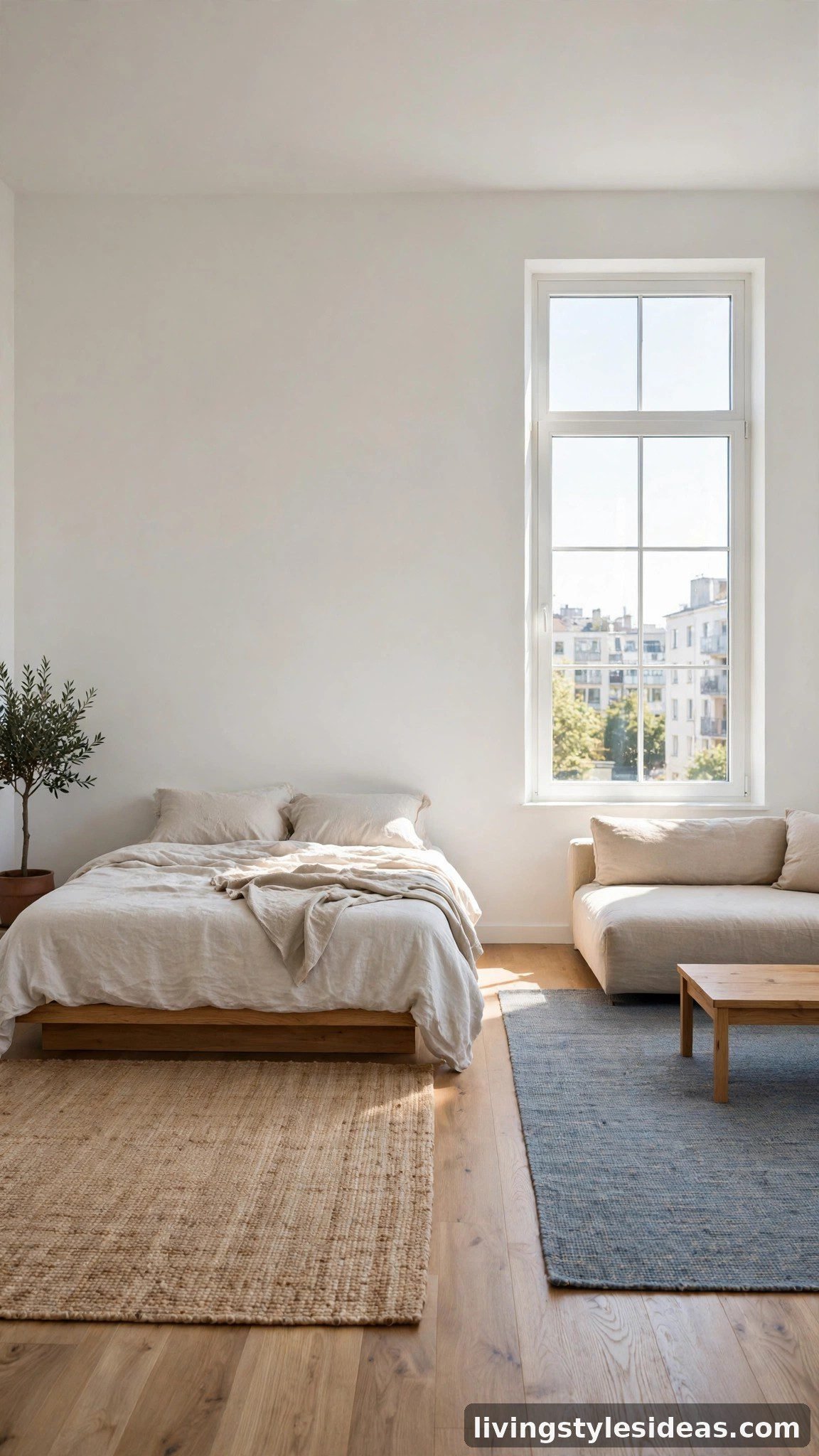
Sometimes the best divider is no divider at all. Two rugs — one under the bed, one under the sofa — define zones visually while light moves completely unobstructed from the single window to the back wall. Keep furniture low and legs visible so the floor plane reads as one bright surface. This is the most renter-friendly layout of all: nothing to buy but textiles, nothing blocking your only light.
10. Line Up a Low Bookshelf Partition
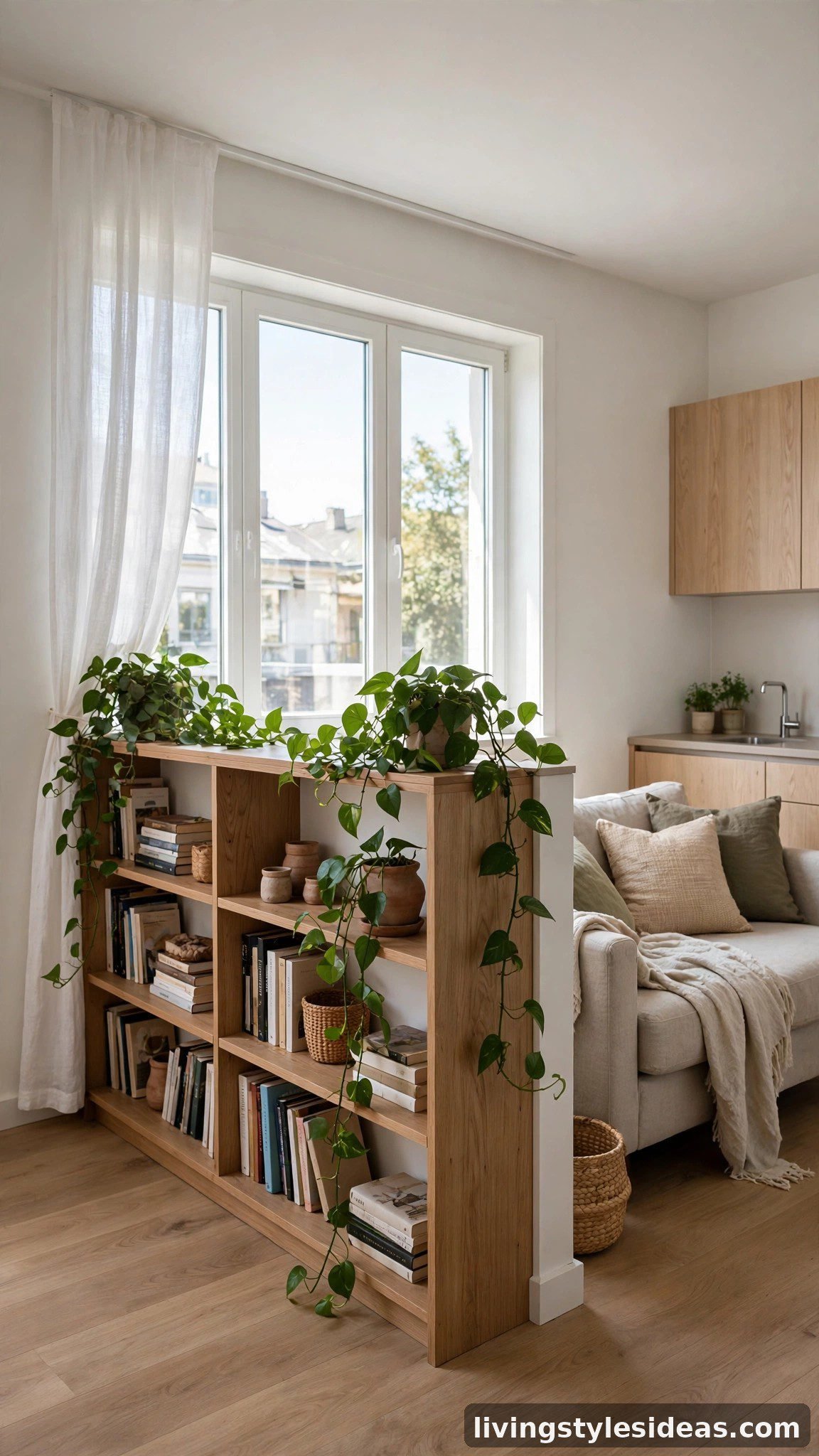
A row of low bookshelves, set perpendicular to the window wall, works like a half-wall that never steals your light. At waist height it hides bed clutter from the living side, offers real storage, and keeps the upper half of the room fully open to daylight. Style the top with a plant that trails toward the sun. Push two cube units together for a longer studio.
11. Hang a Curtain for a Sleep Cocoon
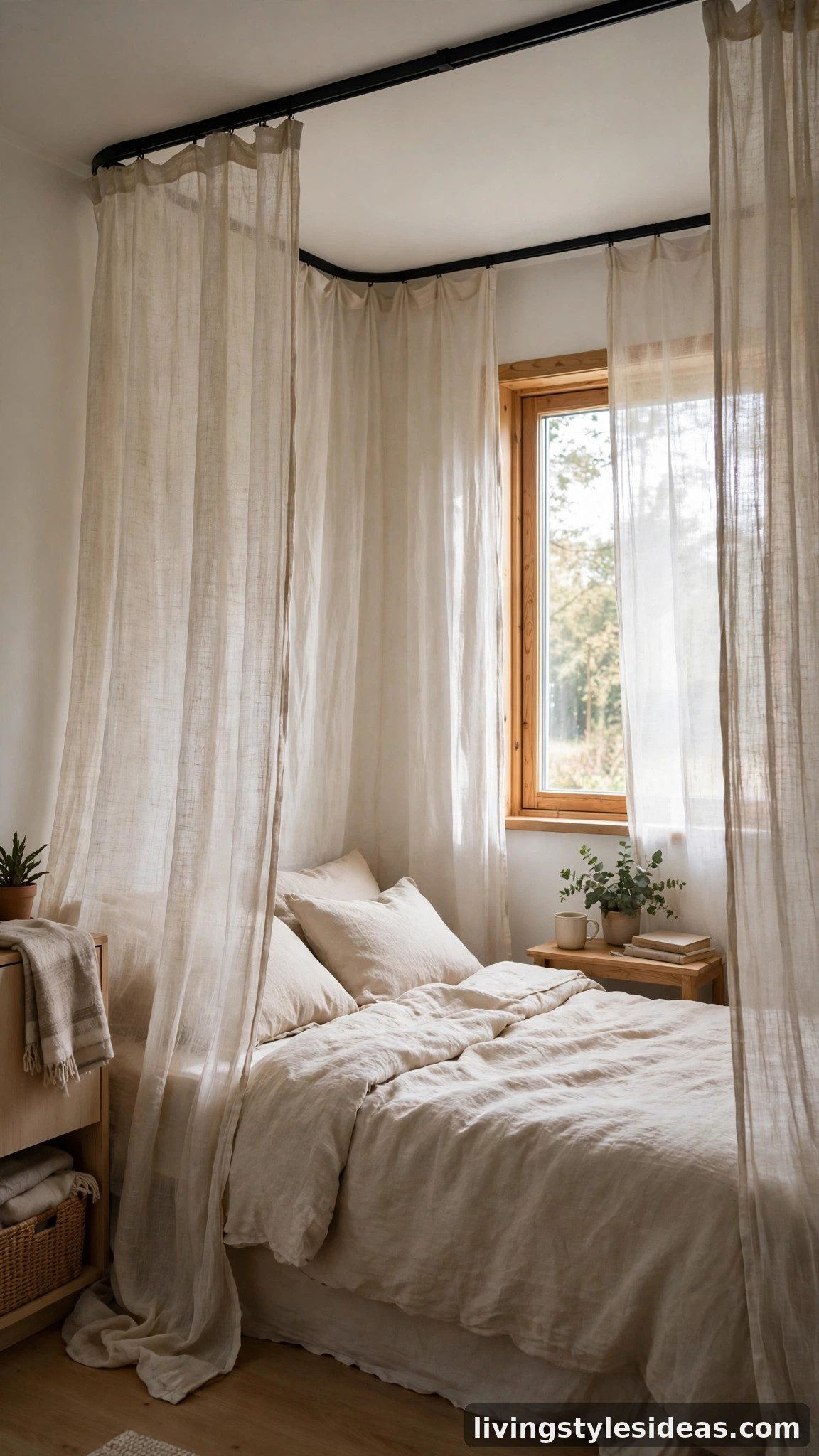
A ceiling-track or tension-rod curtain around the bed gives you a soft room within the room. Choose sheer or light linen so the bed nook never becomes a black hole — diffused light still filters through while privacy becomes total. Pull it closed at night, open every morning to let the window breathe. It is cheap, reversible, and landlords almost never object to it.
12. Run Furniture Along Parallel Walls
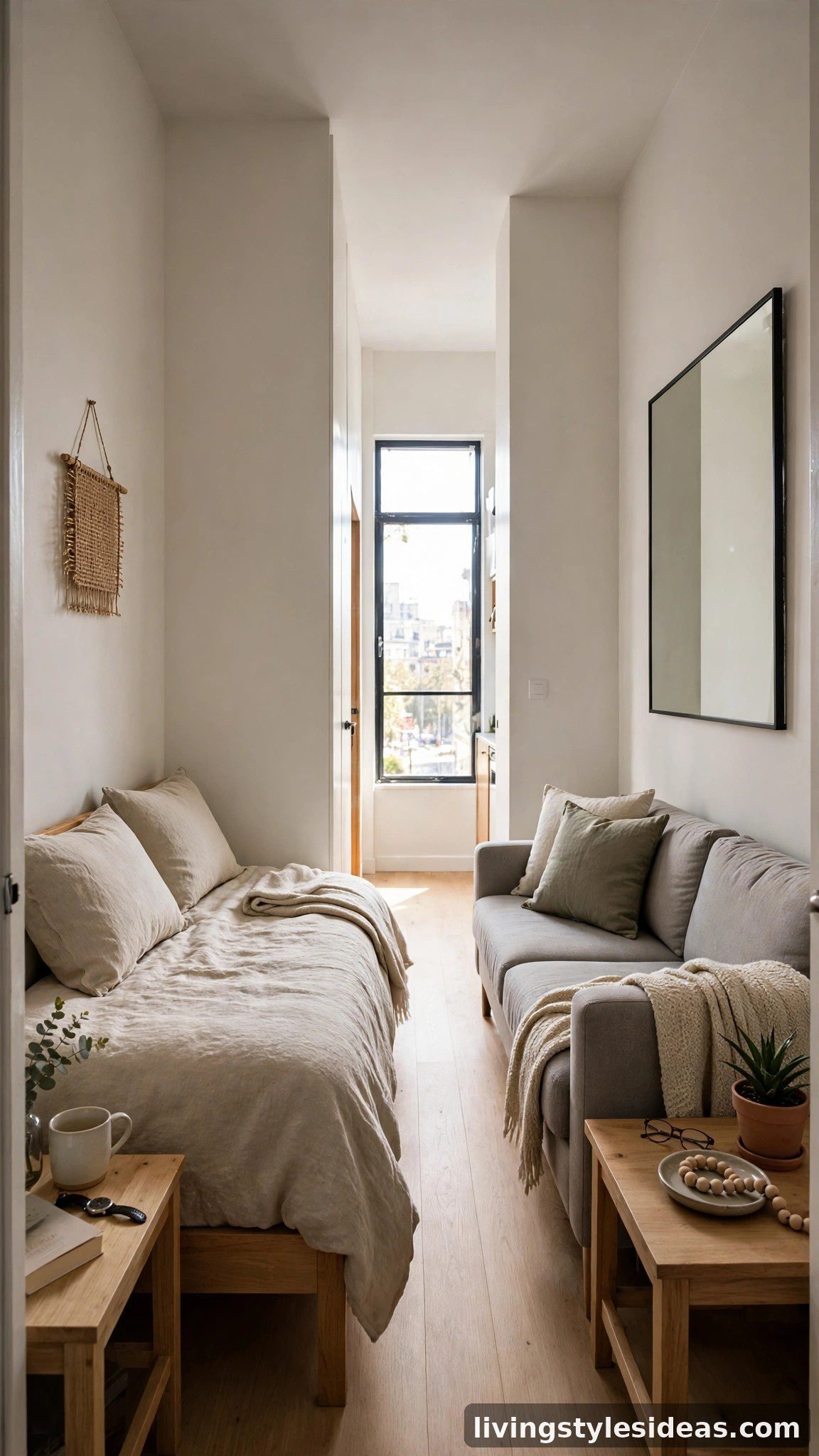
In a long, narrow studio, line the bed along one long wall and the sofa along the other, leaving a clear central lane from door to window. That open corridor is a light highway — nothing interrupts it, so brightness reaches every corner. A coffee table on casters keeps the lane flexible. Mirrors on the wall opposite the window double the effect and bounce light back down the room.
13. Give the Window to the Living Area
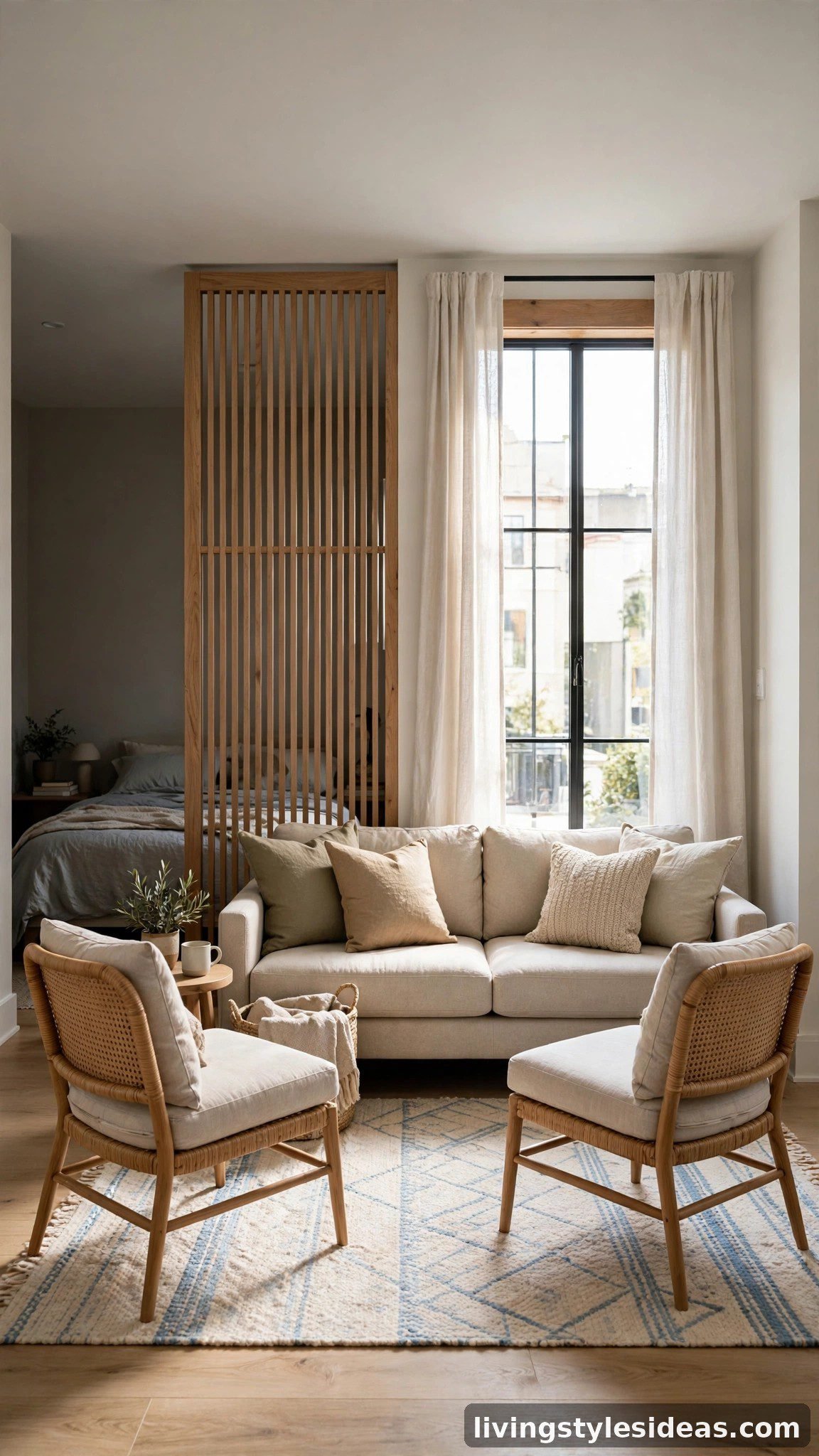
Entertain often? Claim the window end as a proper living room: sofa facing the light, two small chairs, a bright rug. Push the bed behind a divider at the dim end, near the kitchen or door. Guests get the best seat in the house and never sit staring at your bed. Blackout curtains at the sleep end fix early sunrises, and the studio suddenly hosts like a one-bedroom.
14. Push the Bed into a Corner to Max the Floor
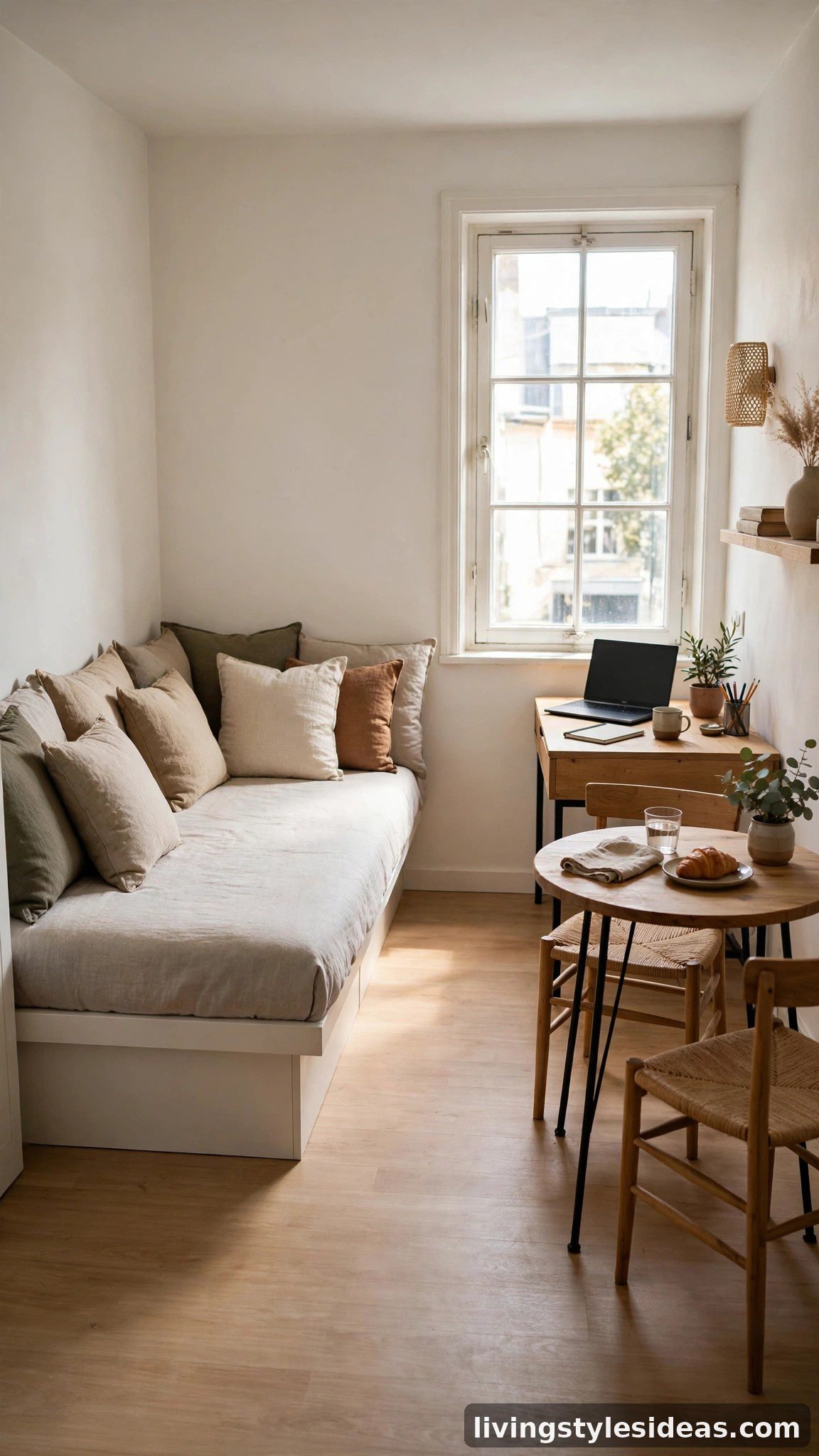
Pushing the bed fully into a corner, long side against the wall, frees the maximum continuous floor in the middle of the studio. Daybed styling — cushions along the wall — lets it moonlight as a deep sofa under or near the window. The open center fits a desk, dining table for two, or workout mat. For tiny one-window rentals, this corner-bed layout is the space multiplier that makes everything else possible.
FAQ
Where should the bed go in a studio with one window?
Under the window or in the far corner are the two best spots. Under the window works because a low bed barely blocks light and you wake up bright. The far corner suits light-sensitive sleepers: it keeps the bed dim and restful while your sofa and desk claim the daylight. Avoid tall headboards or wardrobes on the window wall either way.
How do I divide a one-window studio without losing light?
Choose dividers light can pass through or over: open-backed shelves, low bookcases, sheer curtains, or simply the back of your sofa. Keep any divider under about five feet tall and leave gaps at the top. Rugs alone can define zones with zero light loss. The rule is simple — divide the floor plan, never the window’s path into the room.
What furniture should never go in front of the only window?
Anything tall or bulky: wardrobes, high bookcases, tall headboards, and large TV units all swallow your single light source. Even a tall plant can cast a long shadow. Keep the window wall for low pieces only — a desk, daybed, low dresser, or sofa back under the sill — and store tall furniture along the side walls instead.
How can I make a one-window studio feel brighter?
Keep the layout low and open, use sheer curtains instead of blackout drapes on the main window, and place a large mirror on the wall opposite the window to bounce light back. Light-colored rugs define zones while reflecting brightness downward. Glass or open-leg furniture lets light pass underneath, and warm-white bulbs extend the daylight feel into the evening hours.
Final Thoughts
One window is not a limitation — it is a layout brief. Put low furniture under it, let living or work claim the light, tuck sleep into calm shade, and divide with pieces daylight can travel through. Pick the layout above that matches how you actually spend your day, and your single window will suddenly feel like it is doing the work of three.