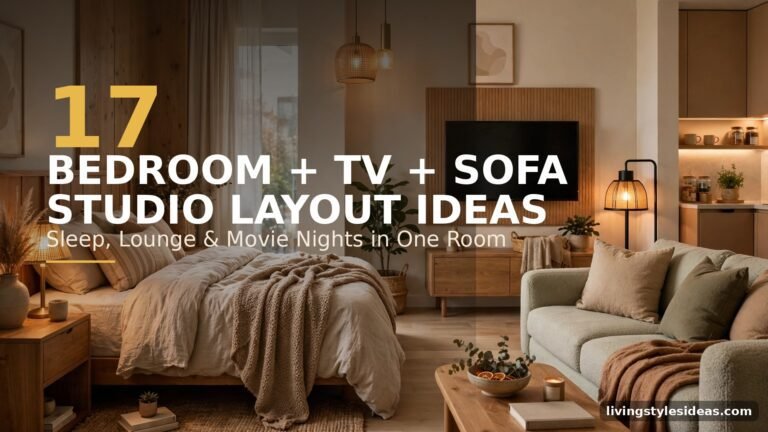

What Is the Best TV Placement in a Studio Apartment: 11 Layout Ideas
Finding the perfect spot for your TV in a studio apartment can feel like solving a puzzle — one where the sofa, the bed, and the kitchen all share the same four walls. Put the screen in the wrong place and the whole room feels cramped, glare-ridden, or just plain awkward. The good news? A little strategy goes a long way in a small footprint.
Below, you’ll find 11 smart TV placement ideas designed specifically for studio layouts. Whether you want to mount, divide, swivel, or hide your screen, these layouts help you see everything from every seat — without sacrificing an inch of precious floor space.
1. Wall-Mount It on the Longest Empty Wall
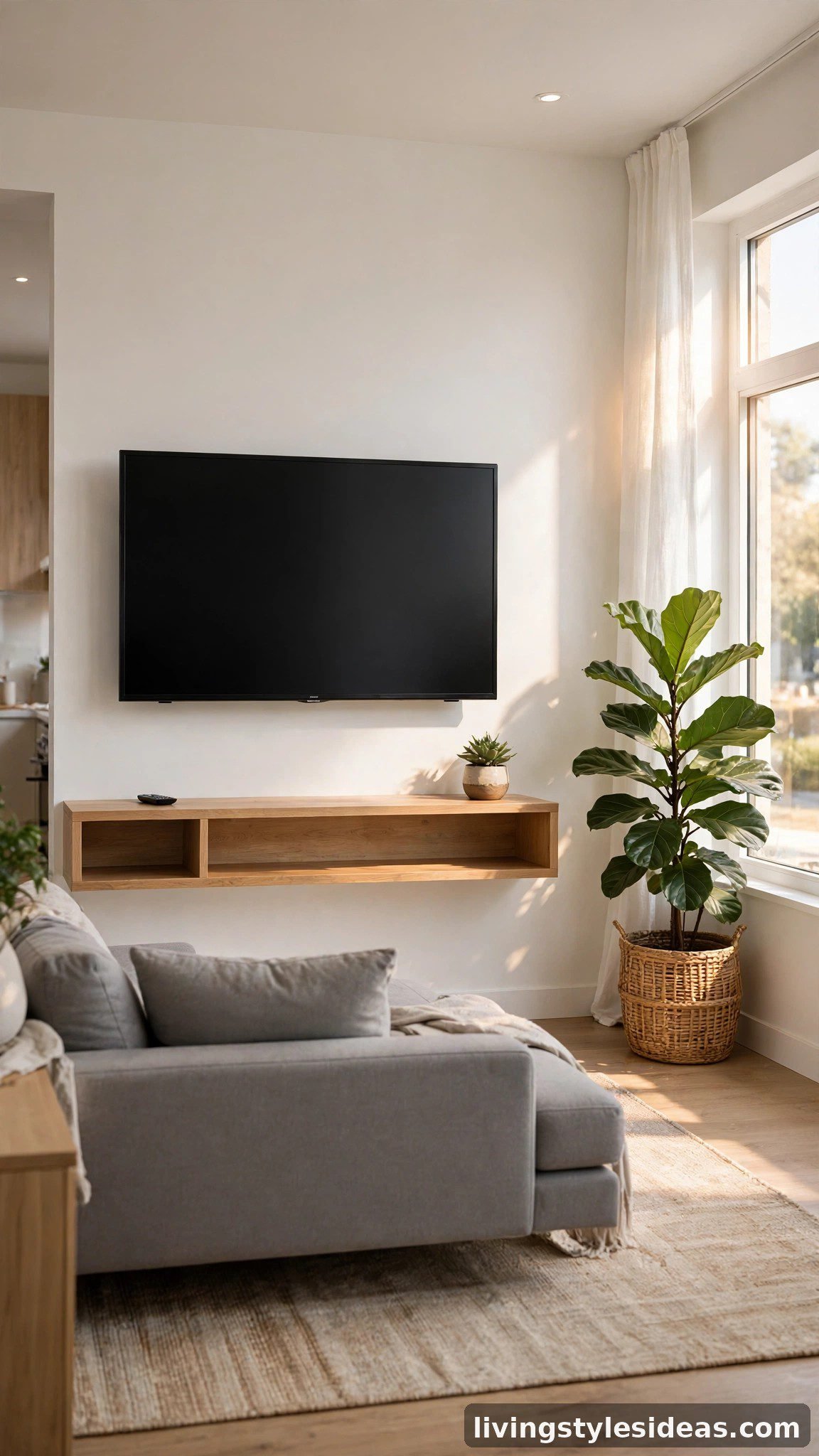
The longest empty wall is almost always your best bet. Wall-mounting the TV frees up every square inch of floor beneath it, so your studio breathes instead of feeling stuffed with furniture. Mount the screen at seated eye level — roughly 42 to 48 inches from the floor to the center — and keep a slim floating console underneath for the remote, a soundbar, and a small plant. Bonus: a mounted TV makes the wall feel longer, which visually stretches a narrow studio.
2. Use a Low Media Console as a Room Divider
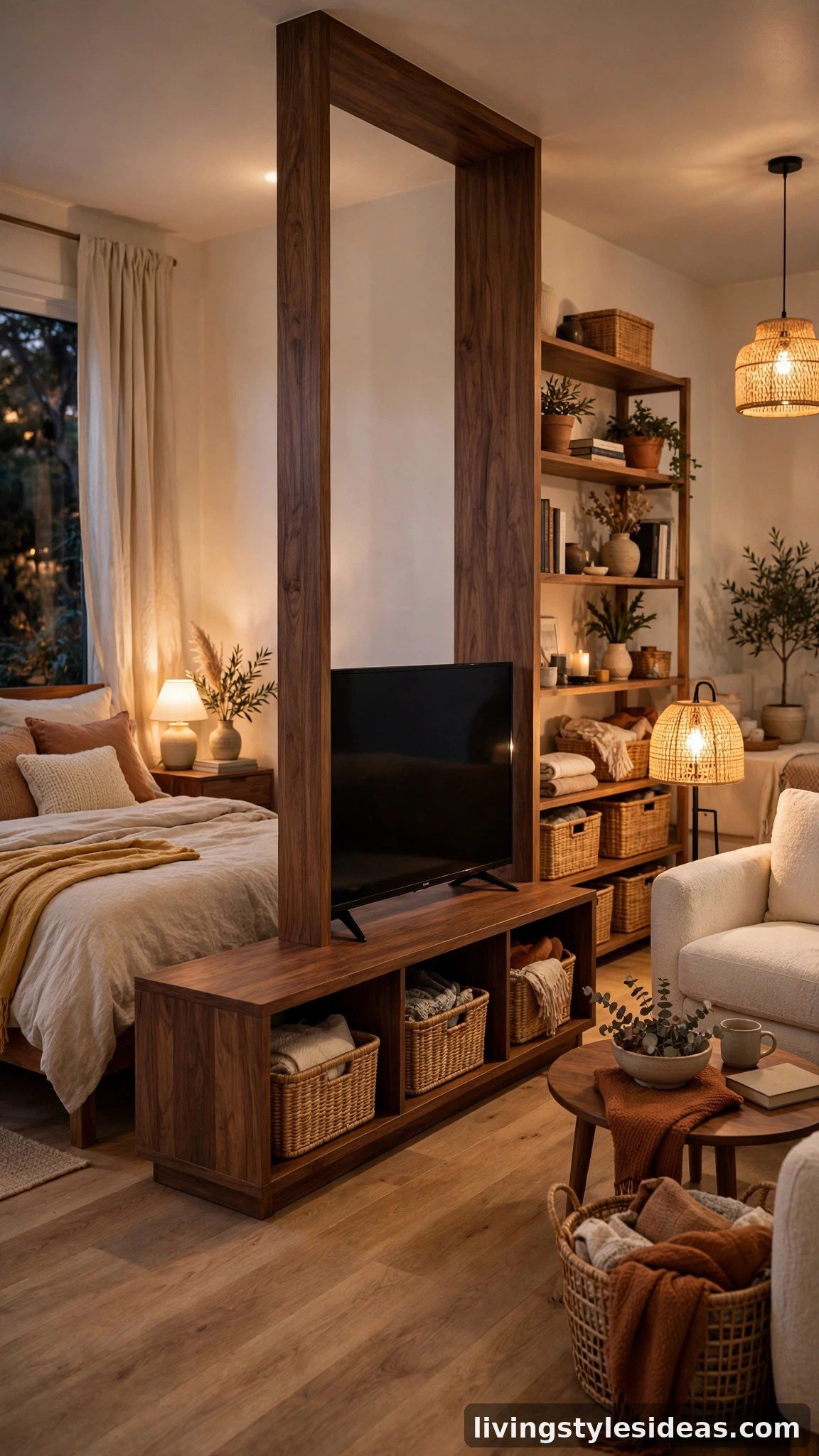
In a studio with no walls to speak of, a low media console holding the TV can do double duty as a room divider. Place it between the sleeping area and the living zone so the screen faces the sofa while the back of the console faces the bed. Choose a console around 28 inches tall so sightlines stay open above it — the studio still feels airy, but each zone gets its own identity. Add baskets in the cubbies for hidden storage.
3. Place the TV at the Foot of the Bed
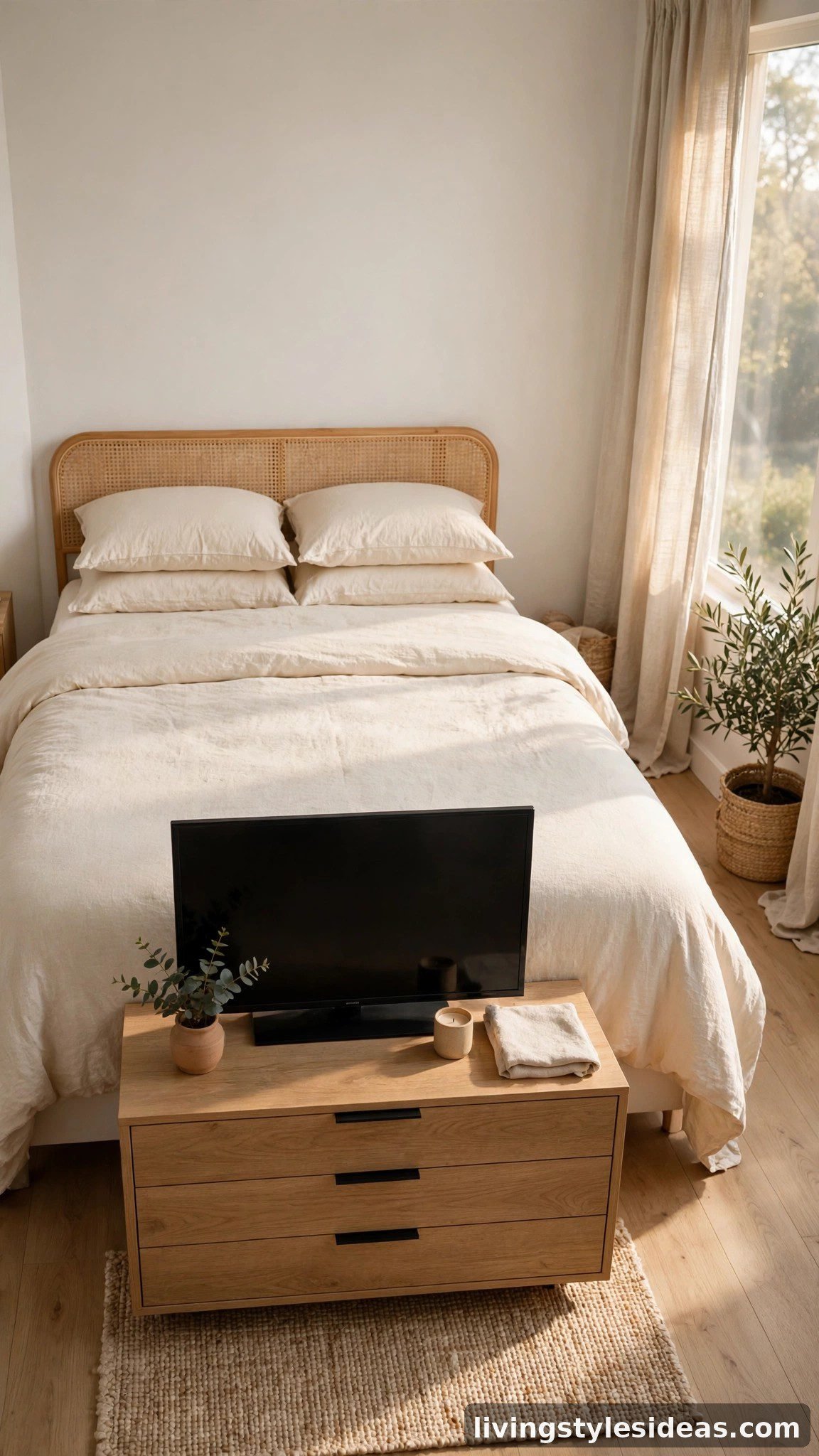
If movie nights in bed are non-negotiable, position the TV directly across from your bed — on a dresser, a small stand, or wall-mounted above it. This setup works beautifully in studios where the bed sits at one end of the room with no sofa nearby. Keep the viewing distance at least three times the screen’s diagonal size to protect your eyes, and pick a slim dresser so it doubles as clothing storage without jutting too far into the walkway.
4. Mount It in the Corner with a Swivel Bracket
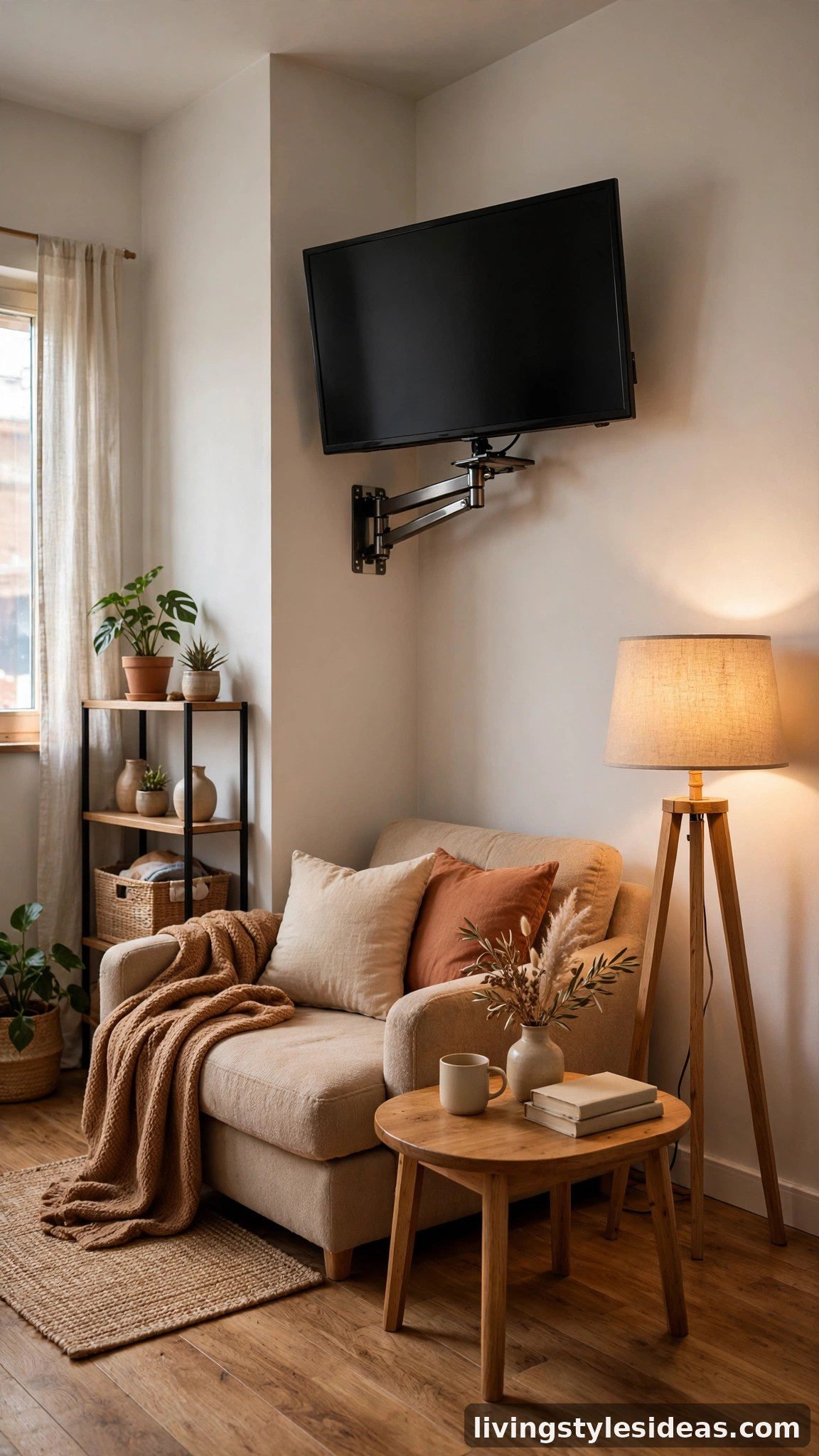
Corners are wasted space in most studios — until you put the TV there. An angled corner mount with a full-motion swivel bracket lets you pull the screen out and aim it at the sofa for movie night, then push it flat and rotate it toward the bed or desk for a lazy afternoon. This one screen can genuinely serve two seating zones, which is a lifesaver when your living room and bedroom are the same room.
5. Face the TV Toward the Kitchenette Dining Nook
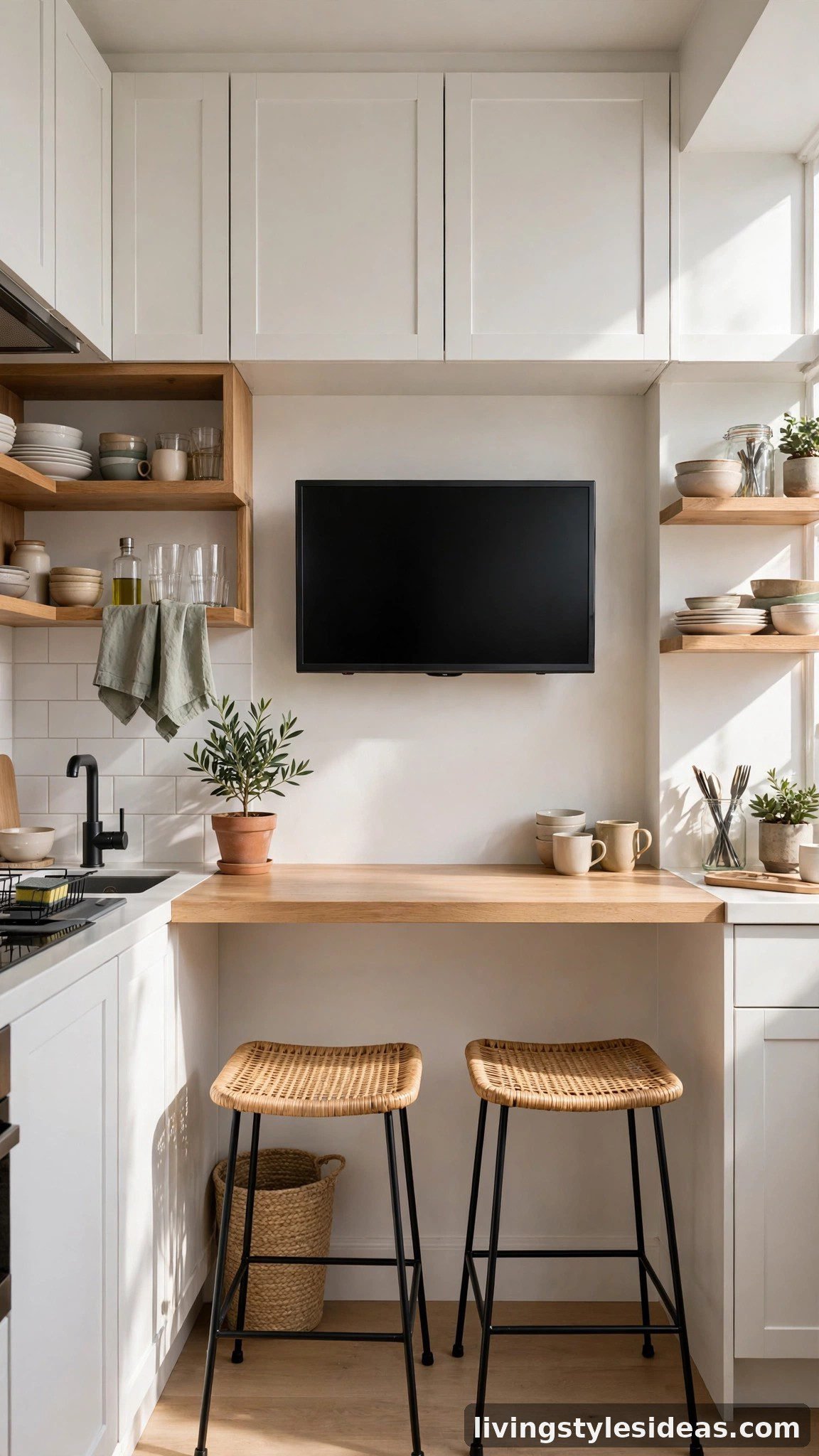
Mount a compact TV above the breakfast bar or dining nook and it becomes breakfast-table entertainment. This placement shines in studios where you eat most meals at the counter — morning news with coffee, a show while you cook. Keep the screen size modest (32 to 40 inches) so it doesn’t overwhelm the kitchenette, and choose a tilting mount so glare from nearby windows never ruins your view.
6. Put It on the Entryway Wall Above a Slim Console
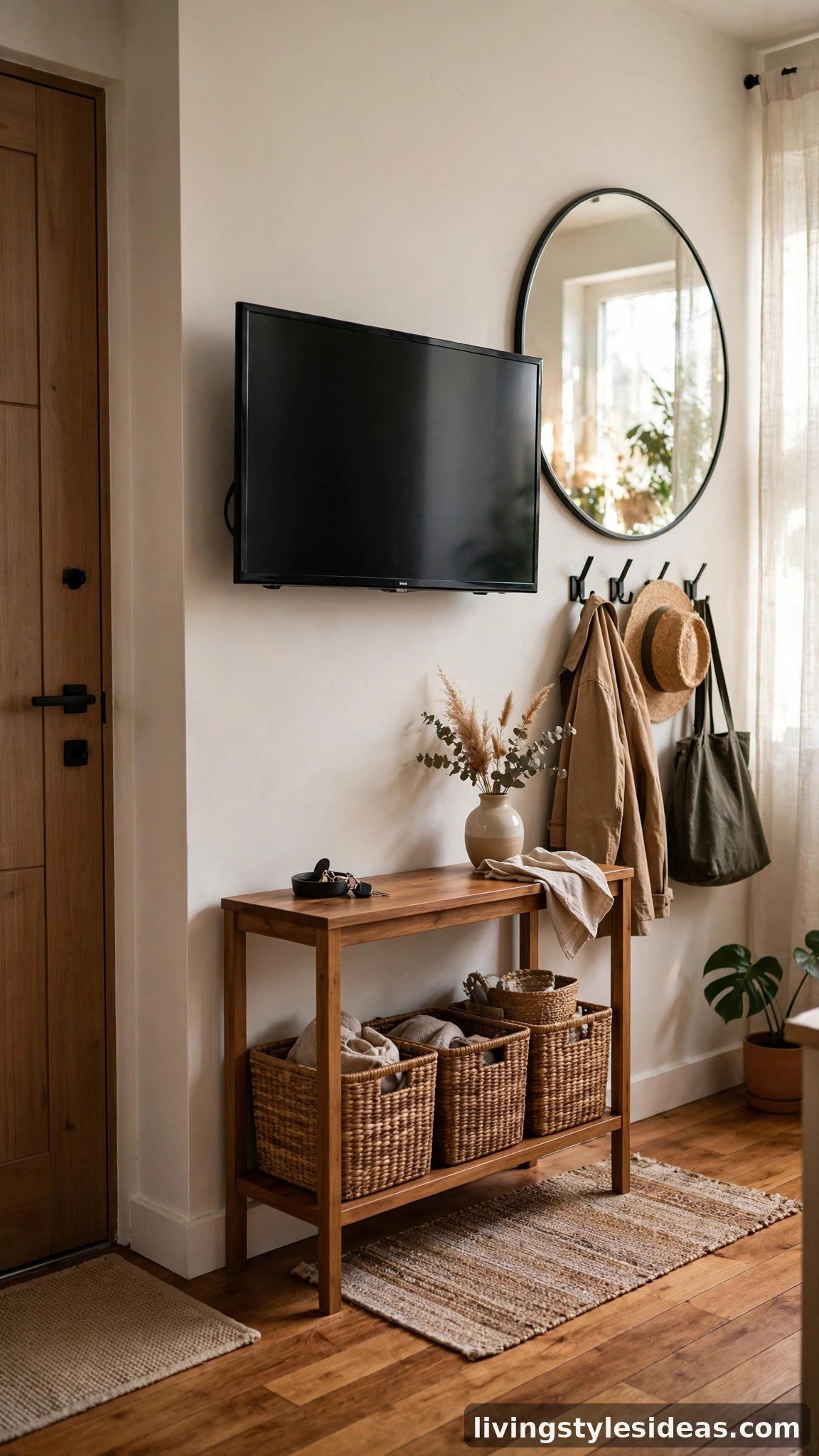
The wall right inside your front door is prime real estate most renters ignore. A TV mounted here, above a narrow console with storage baskets, anchors the living zone and gives guests an instant focal point when they walk in. Because this wall often runs the full length of the studio, you’ll get excellent viewing angles from both the sofa and the bed. Just keep cords hidden in a cable raceway so the entry looks tidy.
7. Roll It Around on a Mobile TV Stand
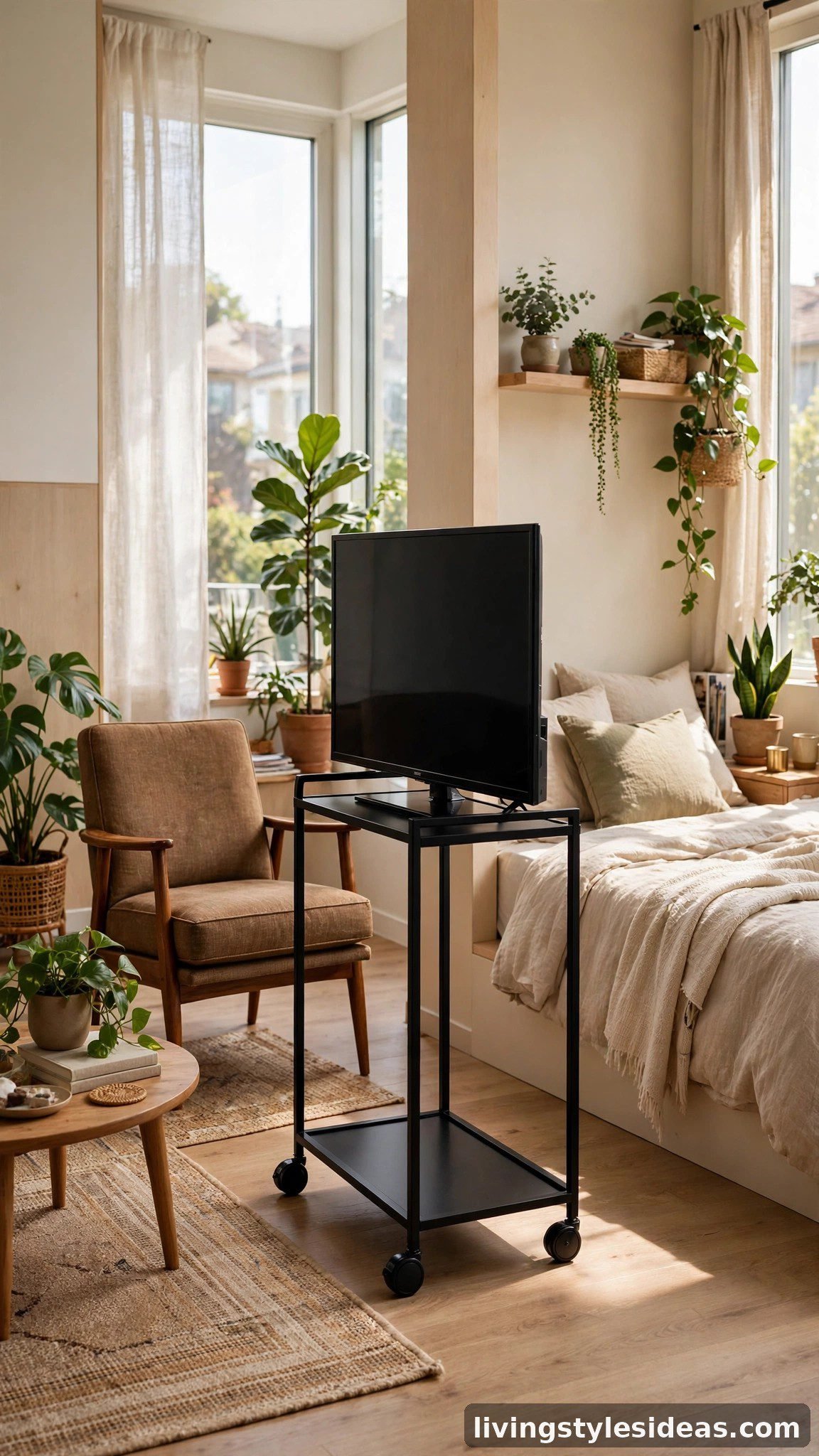
When one fixed spot can’t serve every mood, a rolling TV cart is the studio dweller’s secret weapon. Wheel the screen to the sofa for Friday movie night, over to the bed for a slow Sunday, or even near the kitchen while you’re cooking. Look for a cart with locking wheels and a sturdy base so it’s safe around pets and kids. It’s also renter-friendly — no holes in the walls, ever.
8. Pair the TV with a Loveseat Instead of a Full Sofa
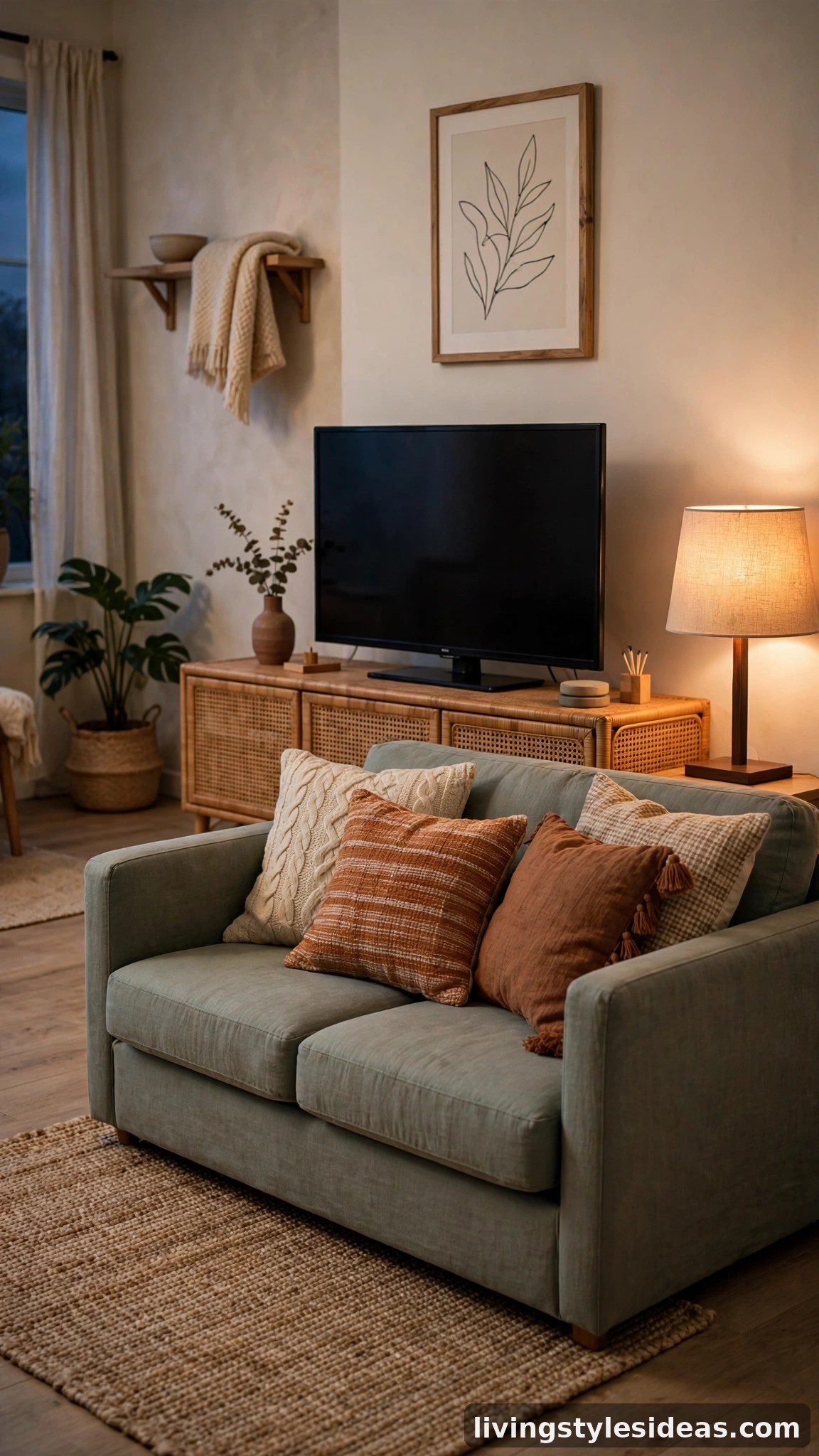
A full-size sofa plus a TV can swallow a studio’s living zone whole. Swap in a loveseat or a pair of compact armchairs and the whole arrangement shrinks to fit. Position the seating about six to eight feet from the screen for a comfortable view, and float a low rattan or upholstered media cabinet beneath the TV. The lighter scale keeps the walkway open and the room feeling balanced instead of bulky.
9. Build the TV Into a Bookshelf Wall
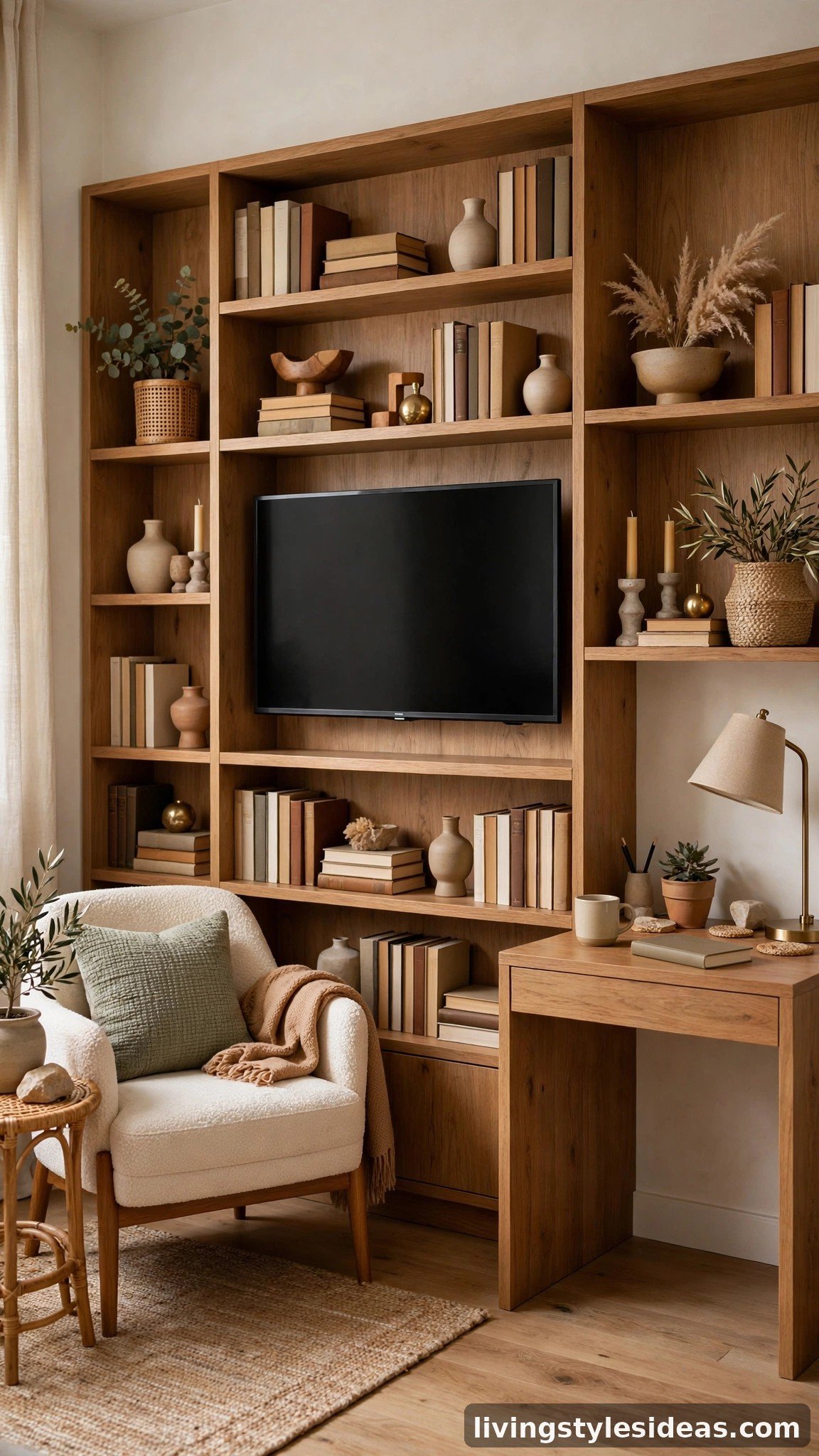
Mounting the TV in the center of a bookshelf wall turns a big black rectangle into part of the decor. Surround the screen with styled shelves — books, plants, ceramics, framed prints — and the TV blends into a curated gallery wall rather than dominating it. This works especially well on the long wall opposite the bed or sofa. Add picture lights or LED strips on the shelves for a warm, cinematic glow after dark.
10. Hide the TV Behind Sliding Cabinet Doors
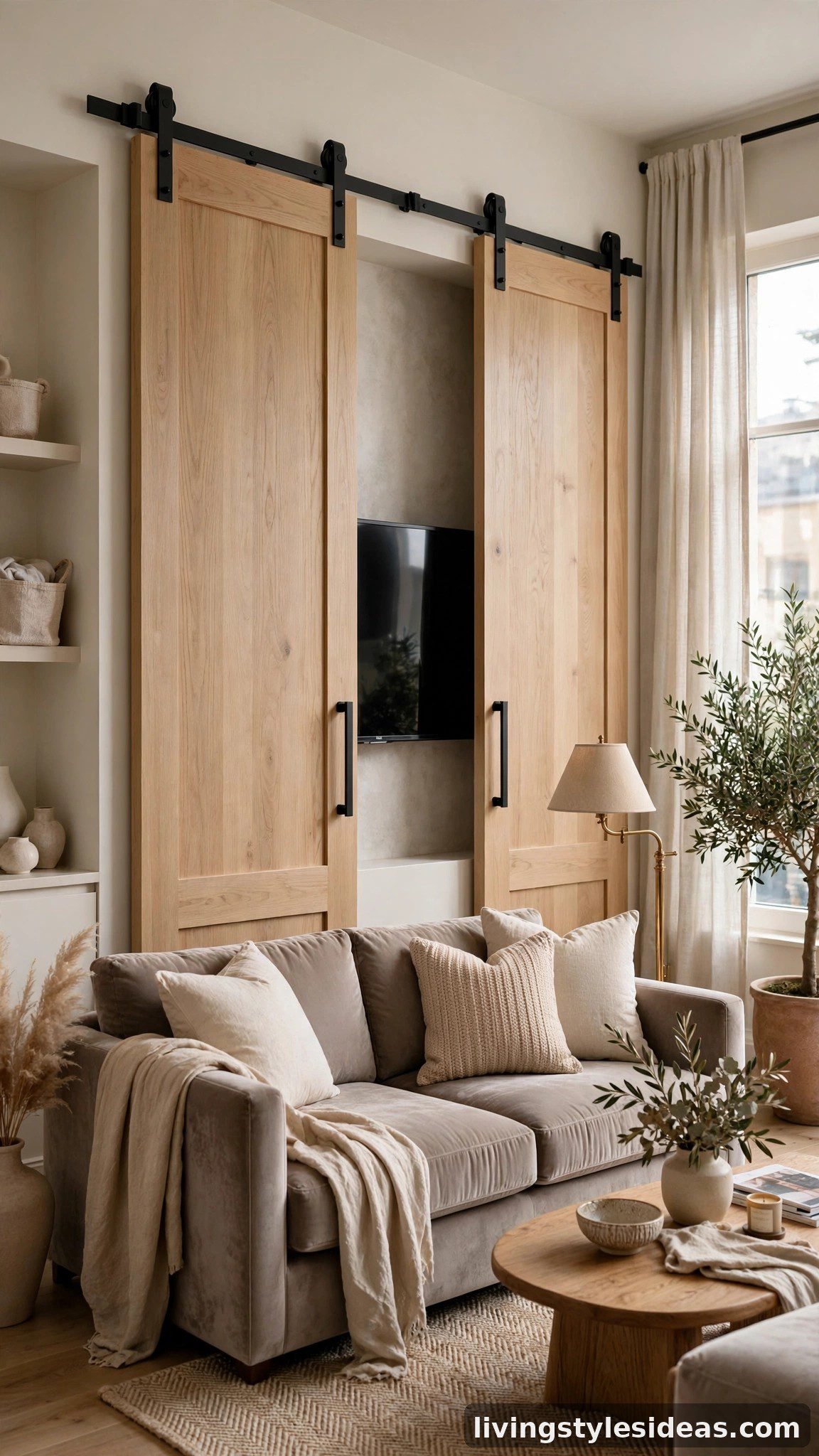
Some days you want a screen; other days you want your studio to look like a serene, screen-free retreat. A media cabinet with sliding barn doors gives you both — open the doors for movie night, close them for a clean, minimal look. Choose a cabinet at least as wide as your TV plus six inches on each side so the doors have room to slide fully clear. It’s the ultimate solution when the TV has to share a wall with art or a window.
11. Angle the TV Into the Bedroom Nook
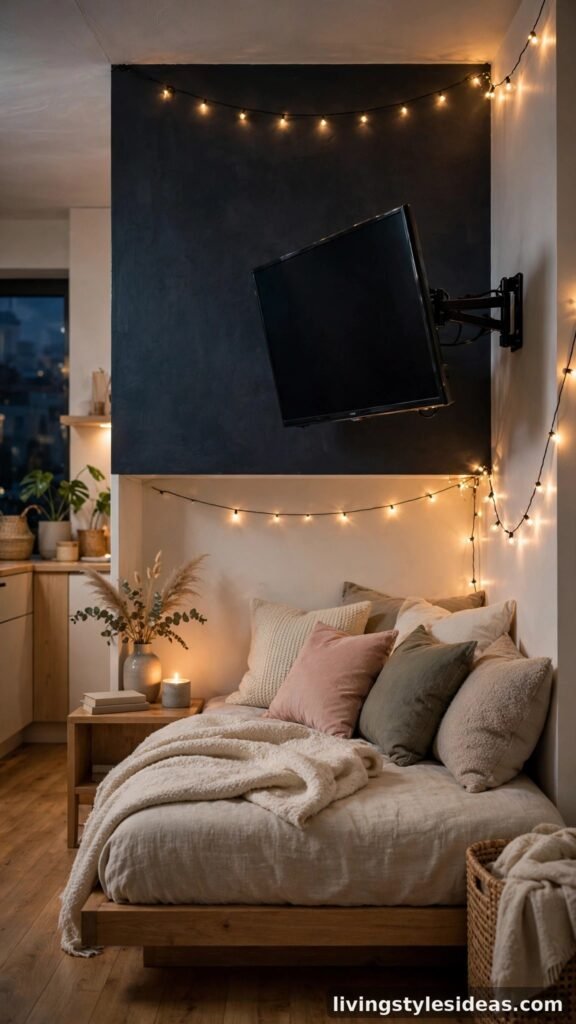
If your studio has an alcove, recess, or bedroom nook, angle the TV so it points straight into it. A dark accent wall behind the screen cuts reflections and makes the nook feel like a private little theater, while the main living area stays bright and open for daytime use. Pair it with a daybed or a chaise so the nook doubles as a reading spot by day and a binge-watching den by night.
FAQ
What is the best height to mount a TV in a studio apartment?
Mount the TV so the center of the screen sits at your seated eye level, typically 42 to 48 inches from the floor. In a studio where you watch from both the sofa and the bed, aim for the midpoint between the two eye levels, and use a tilting mount to fine-tune the angle from each spot.
How far should I sit from the TV in a small studio?
A good rule of thumb is a viewing distance of about three times the screen’s diagonal size — so a 43-inch TV works best around nine to eleven feet away. In a studio, measure from your usual seat to the wall and choose a screen size that fits the space rather than squeezing in the biggest TV possible.
Can I put the TV in front of a window in a studio apartment?
You can, but glare will be a constant battle. If a window wall is your only option, use a blackout roller shade behind the TV for daytime viewing and an anti-glare screen protector. Most renters get better results by placing the TV on a wall perpendicular to the window instead.
What’s the best TV placement if my studio has an open layout?
For fully open studios, anchor the TV on the longest wall or use a low media console as a divider between the bed and living zones. A swivel mount or a rolling cart adds flexibility so one screen can comfortably serve the sofa, the bed, and even the dining nook.
Final Thoughts
The best TV placement in a studio apartment is the one that fits how you actually live — movie marathons from the sofa, late-night shows from bed, or breakfast news at the counter. Measure your space, test your sightlines from every seat, and don’t be afraid of a corner mount or a rolling cart if a classic setup won’t fit. With the right placement, even the smallest studio can feel like it has a home theater built in. Happy watching!