

How to Pick the Right Rug Color for Your Studio Apartment
Picking a rug for a studio apartment feels harder than it should be. In a one-room home, the rug doesn’t just sit under the sofa — it touches the bedroom, the dining spot, and every view from the front door. One wrong color choice and the whole space feels smaller, darker, or just slightly off, and you’ll notice it every single day.
The good news is that you don’t need a design degree to get this right — you just need a process. Instead of guessing, work through these 10 decision steps in order. Each step narrows your choices a little further, so by the end you’ll know exactly which rug color belongs in your studio, and why.
1. Step 1: Assess Your Natural Light
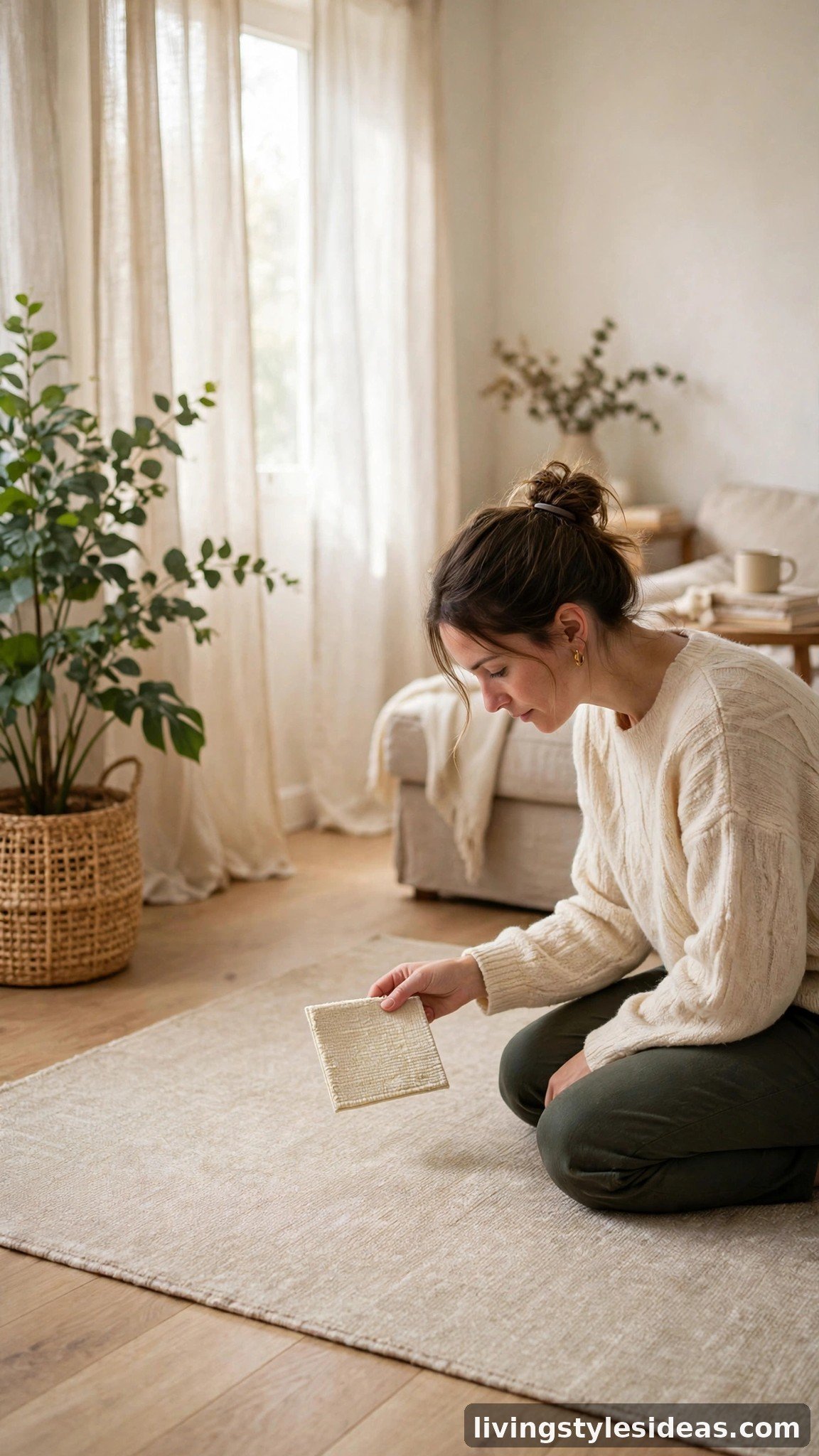
Before you look at a single rug, spend one day watching your light. North-facing windows cast cool, grayish light that dulls warm colors, while south-facing sun floods the room with warm gold that deepens beiges and terracottas. Cool, dim light calls for lighter, warmer rug tones that bounce brightness back; strong warm sun gives you freedom to go deeper or cooler. Light is the invisible color in every room — decide with it, not against it.
2. Step 2: Read Your Floor Color First
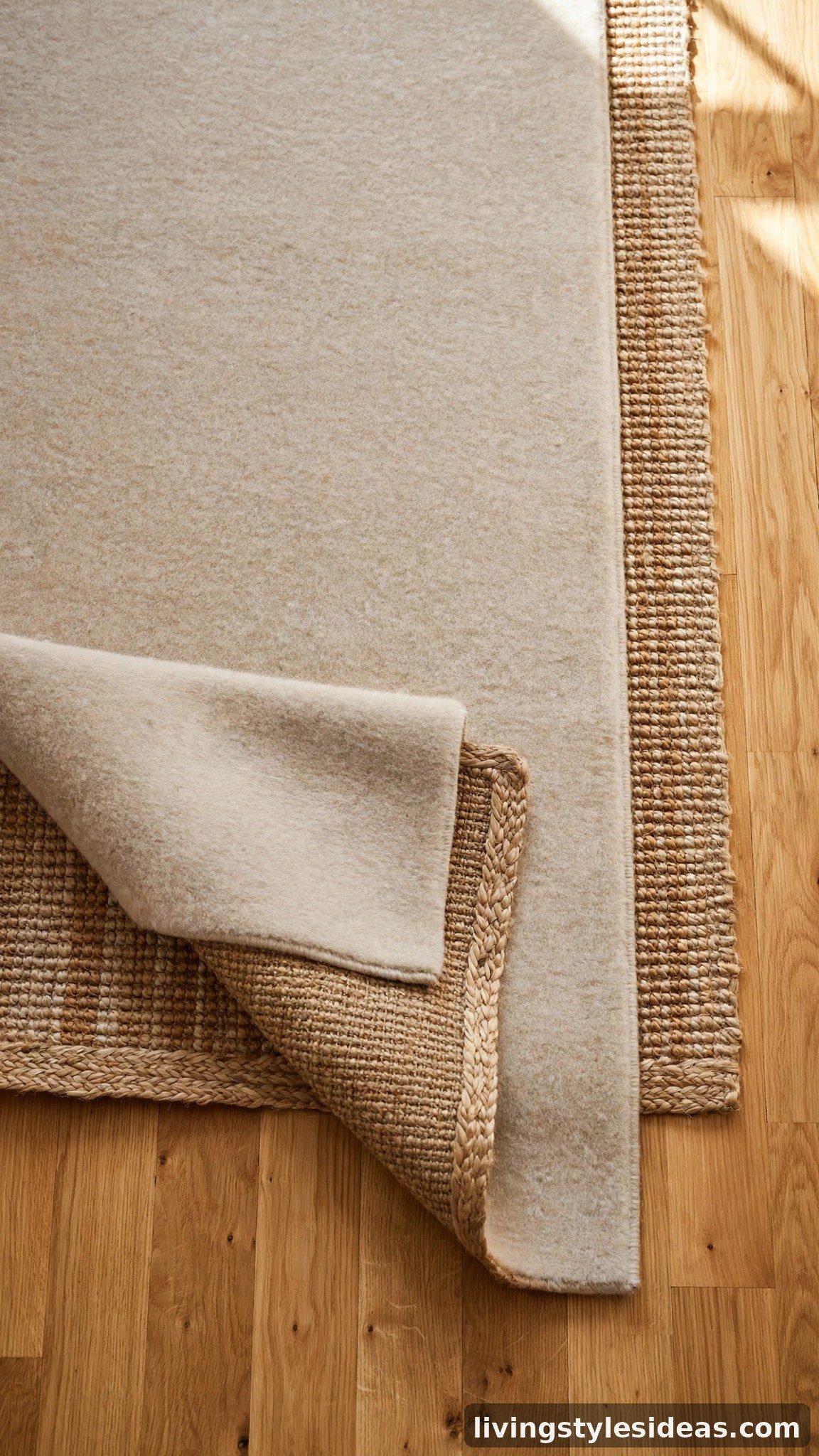
Your floor is the canvas the rug will sit on, so name its color honestly. Honey-toned oak, ashy gray laminate, and warm cherry wood each pull a rug’s color in a different direction — a cream rug looks brighter on dark walnut and slightly dingy on pale ash. In a studio, floors usually run wall to wall, so whatever tone dominates has to harmonize with your rug choice. Match the rug to the floor family, or choose a deliberate contrast; never ignore it.
3. Step 3: Match the Rug to Your Sofa, Not the Floor
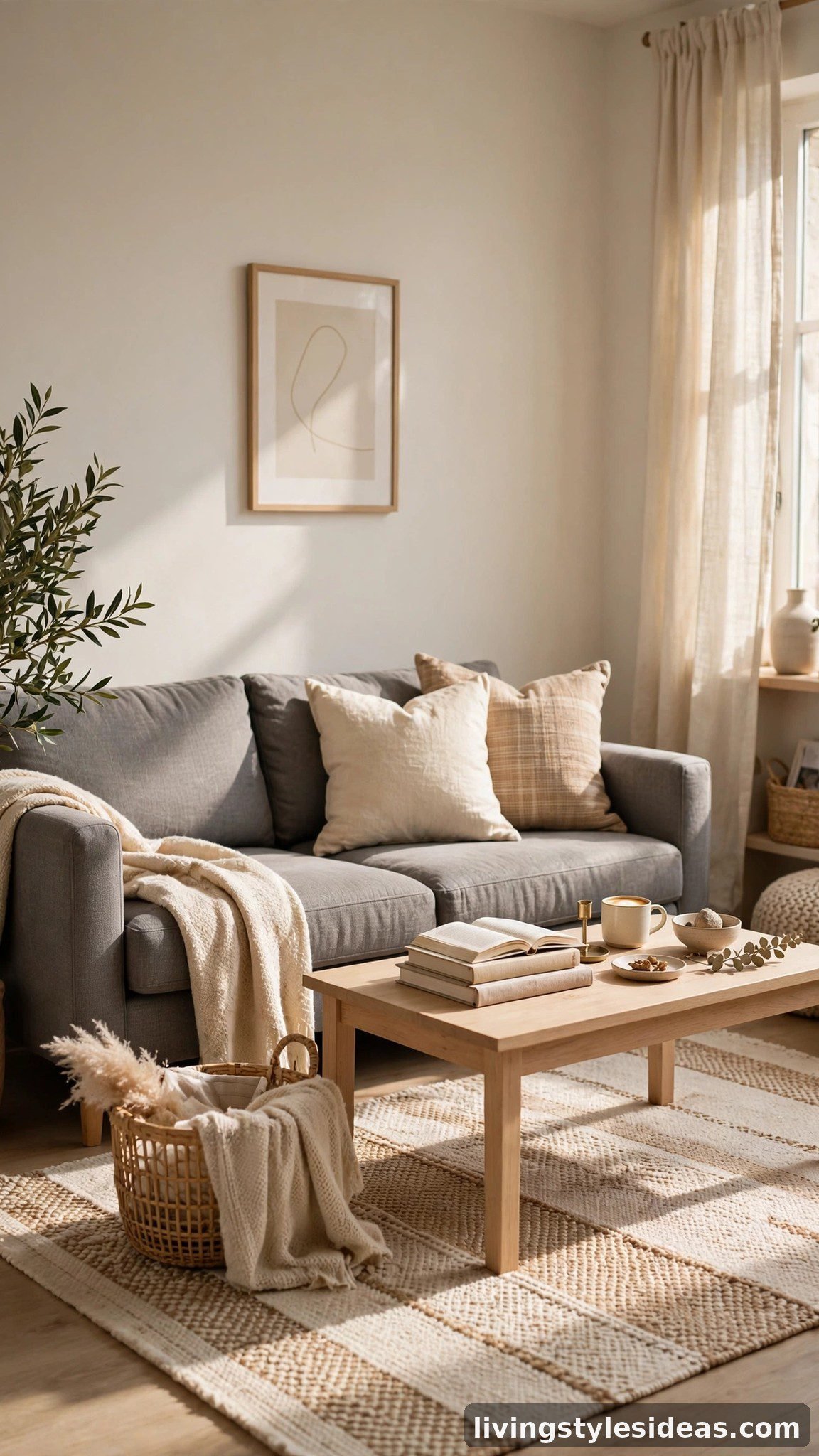
Here’s the decision most people get backward: your rug’s most important partner is the sofa, not the floor. The two sit side by side in the largest visual block of your studio, so their colors need a clear relationship — either close cousins (gray sofa with a greige rug) or a confident contrast (navy sofa with a warm cream rug). When sofa and rug agree, the whole open room feels intentional; when they fight, nothing else you buy can fix it.
4. Step 4: Choose Your Mood Palette
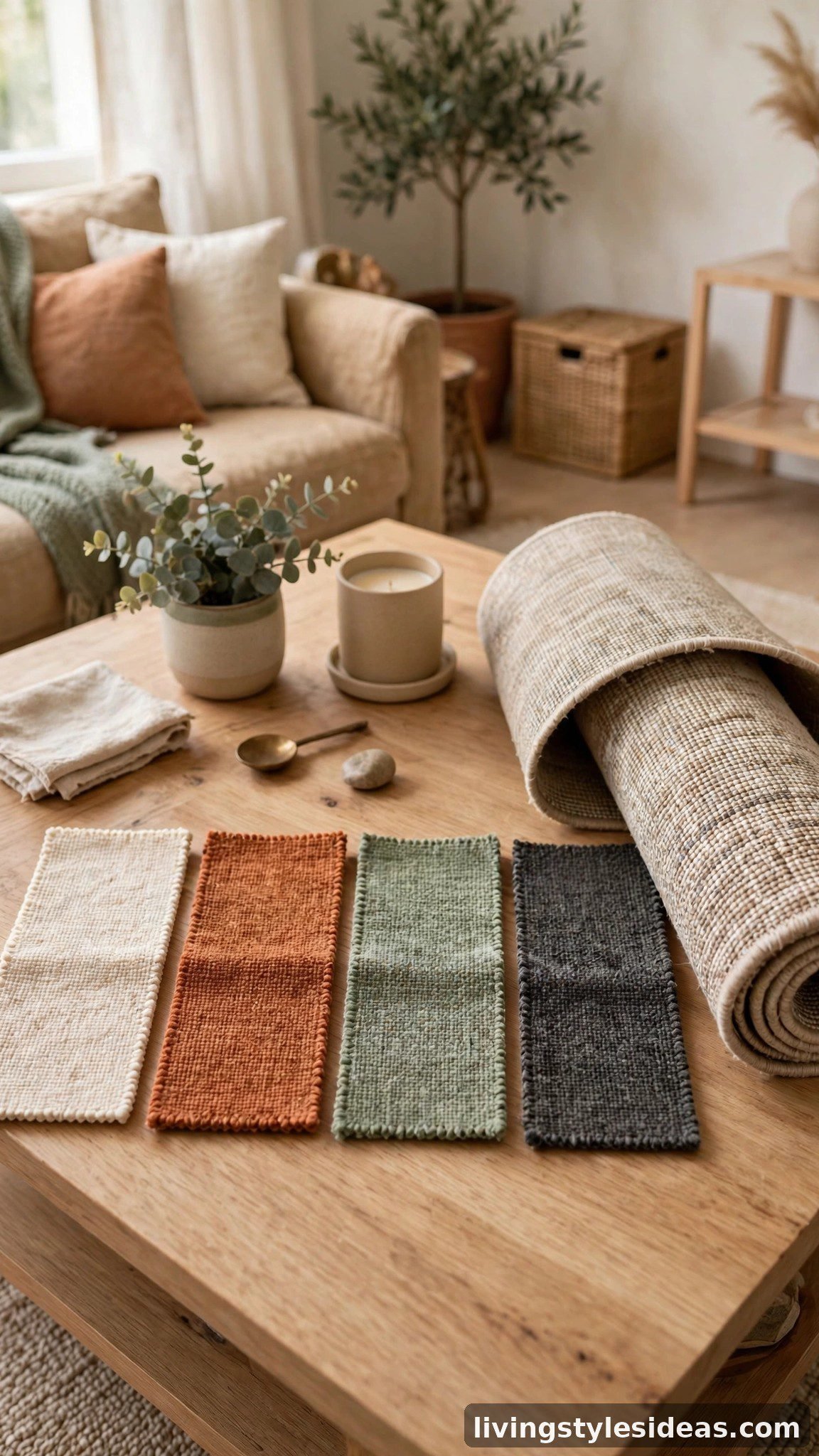
Before comparing specific rugs, decide the mood you want the studio to give you. Calm and airy? Stay in the cream, beige, and soft white family. Cozy and grounded? Lean into camel, rust, and warm browns. Fresh and modern? Sage, slate, and cool grays work beautifully. Write down three palette words and filter every rug option through them. This one step eliminates eighty percent of choices instantly and keeps impulse buys out of your cart.
5. Step 5: Zone the Room With Rug Color
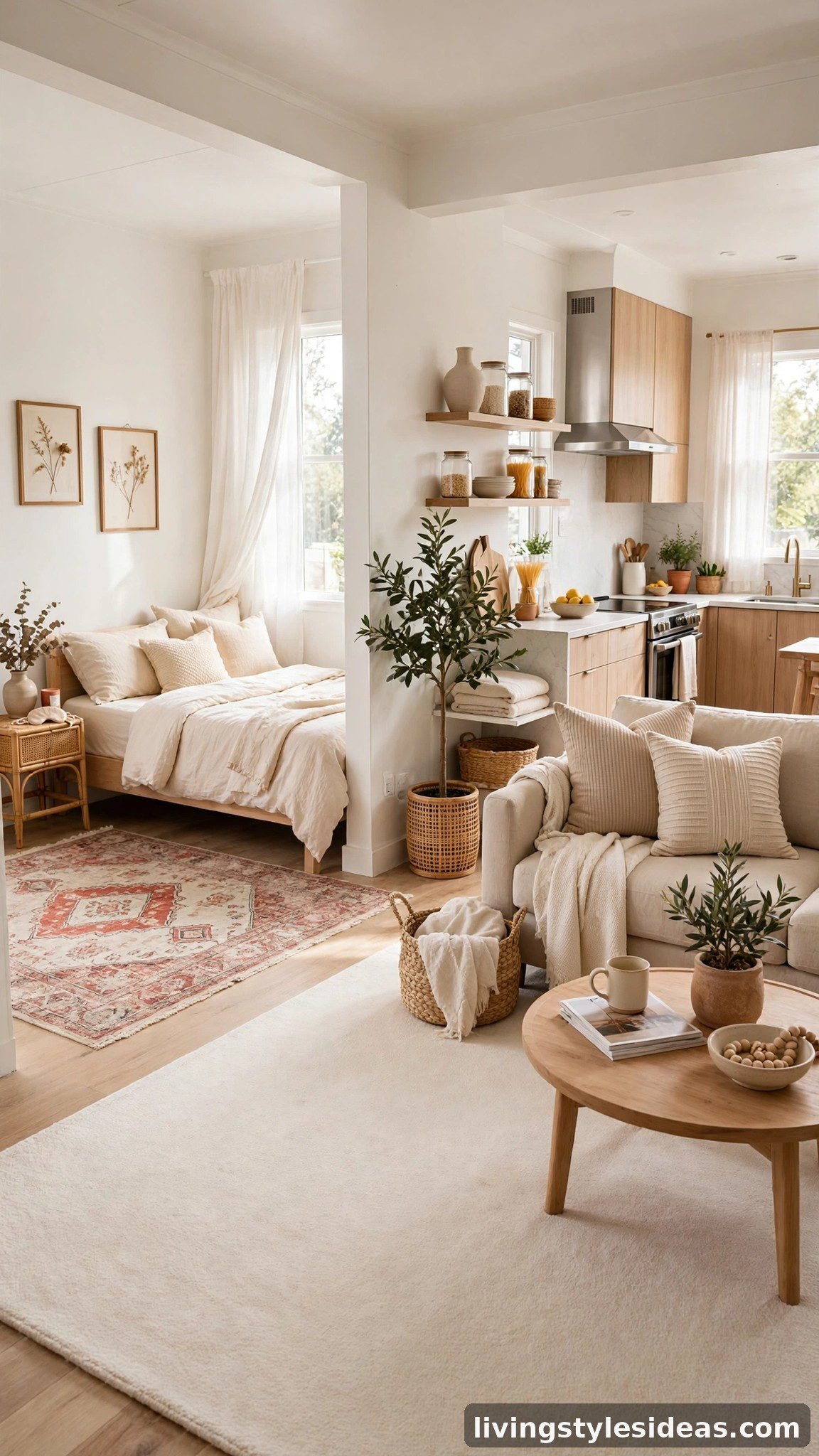
In a studio, a rug is a room divider without walls. If you have two rugs — one for the living corner, one under the bed — their colors should relate without matching exactly, like a cream rug paired with a muted patterned one. Same family, different voice. One large rug can also do the zoning job alone if it covers the main living area and leaves the sleeping corner on bare floor. Either way, let the rug colors quietly tell the eye where each zone begins.
6. Step 6: Decide Between Pattern and Solid
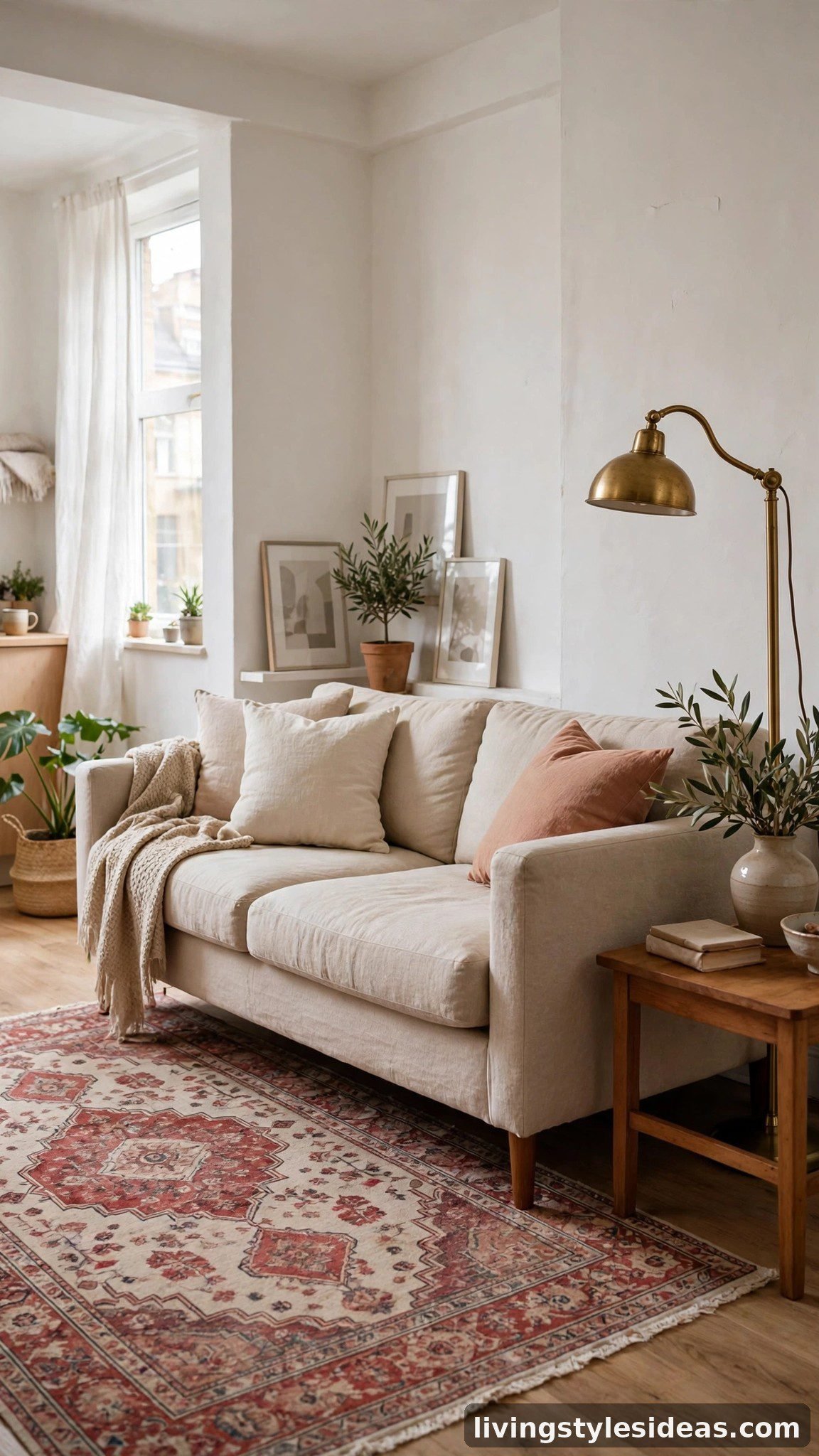
This step changes everything about color, so make it now. Patterned rugs — Persian-style, vintage, or geometric — bring multiple colors at once, which makes them forgiving: a busy roommate can pick up a color from the pattern and instantly look right. Solid rugs are calmer but demand a more exact color choice, since there’s nothing to hide behind. Small studios with lots of furniture usually feel calmer with solids or subtle patterns; minimal studios can carry a bold pattern beautifully.
7. Step 7: Set Your Boldness Level
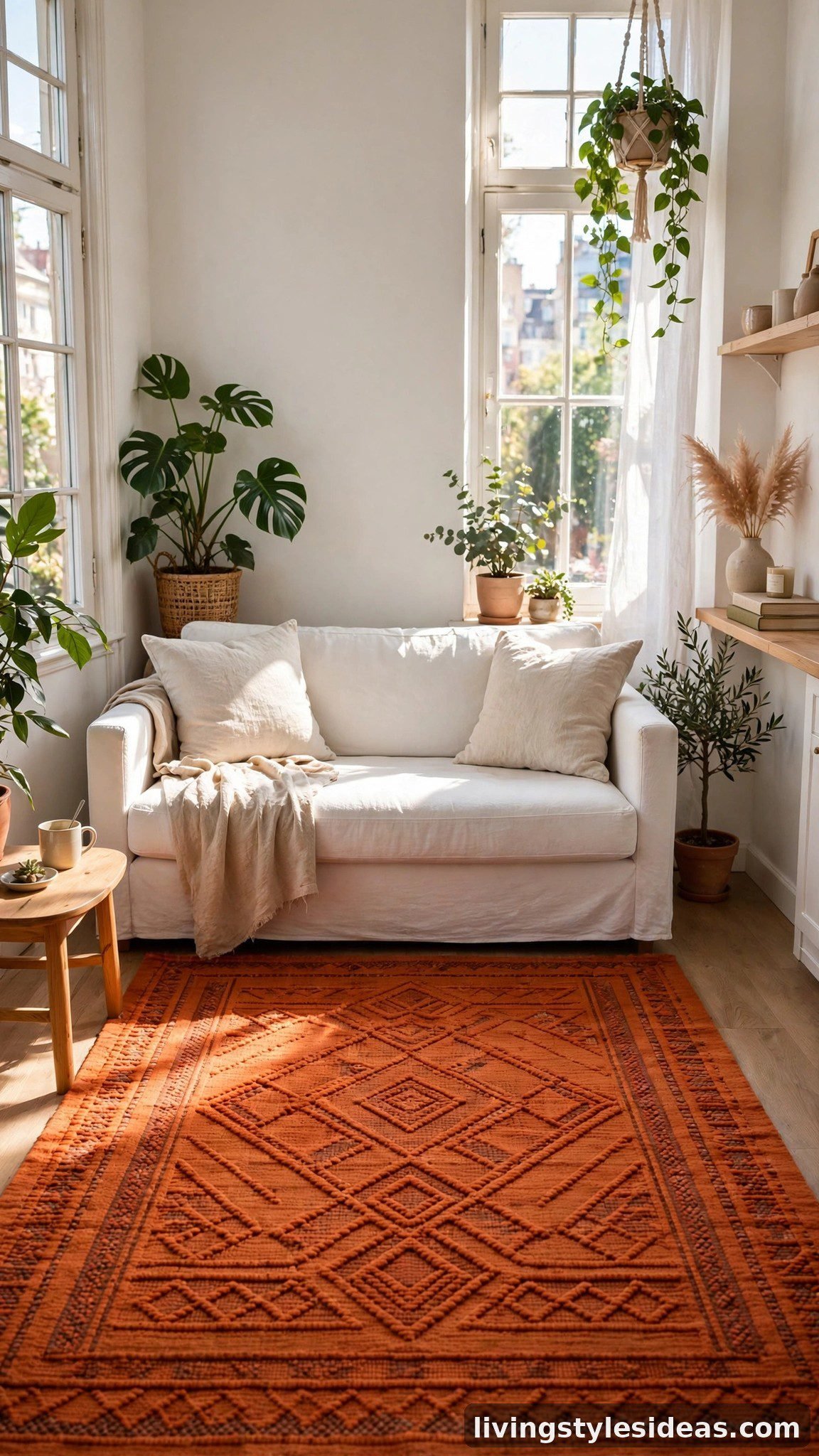
Ask yourself one honest question: do I want the rug to blend in or stand out? A blending rug stays within two shades of your sofa and floor, making the studio feel larger and calmer. A statement rug goes one strong color — terracotta, deep green, navy — and becomes the artwork of the room. Neither choice is wrong, but you must pick one on purpose. The worst rugs are the accidental ones: too bold to disappear, too timid to impress, and silently wrong every day.
8. Step 8: Test Swatches in Real Daylight
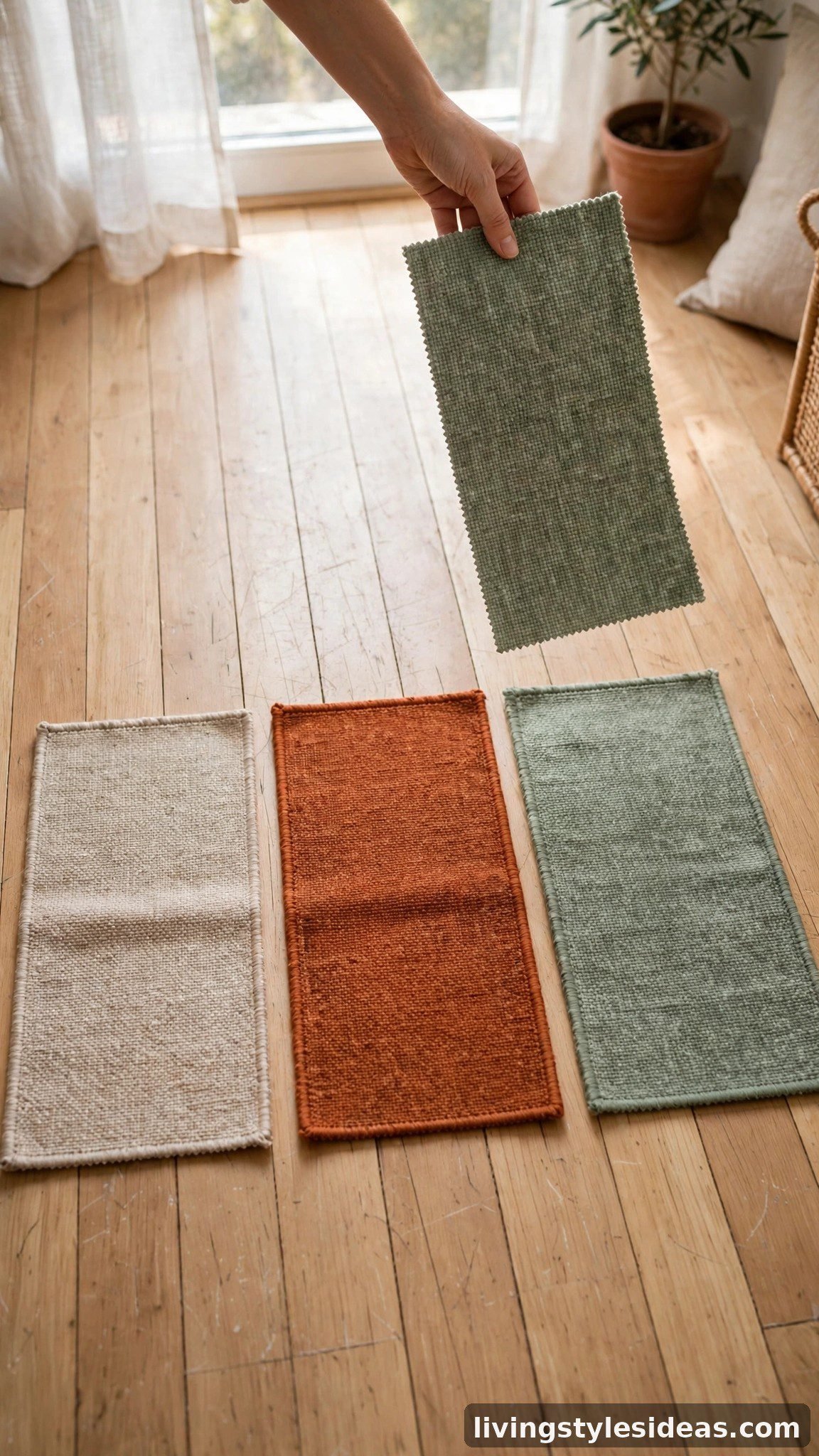
Never buy a rug color you haven’t seen in your own light. Order swatches — most retailers send them free or cheap — and lay them on your floor next to the sofa for at least two days. Check them in harsh morning sun and in warm evening lamplight, because a beige that glows at noon can turn muddy at night. Photograph them too; the camera reveals color casts your eyes forgive. Only the swatch that looks right at every hour earns a place on your floor.
9. Step 9: Lock in Size and Shape Before the Shade

Strange but true: size changes how a color reads. A small rust rug becomes a bright accent island, while a wall-to-wall rust rug becomes a mood — same dye, completely different effect. Before you finalize the shade, tape the outline on your floor and confirm the rug will hold at least the front legs of the sofa and chairs. In studios, one large rug almost always looks better than two small floating ones, and larger rugs make bold colors feel intentional rather than accidental.
10. Step 10: Buy It, Layer It, Live With It
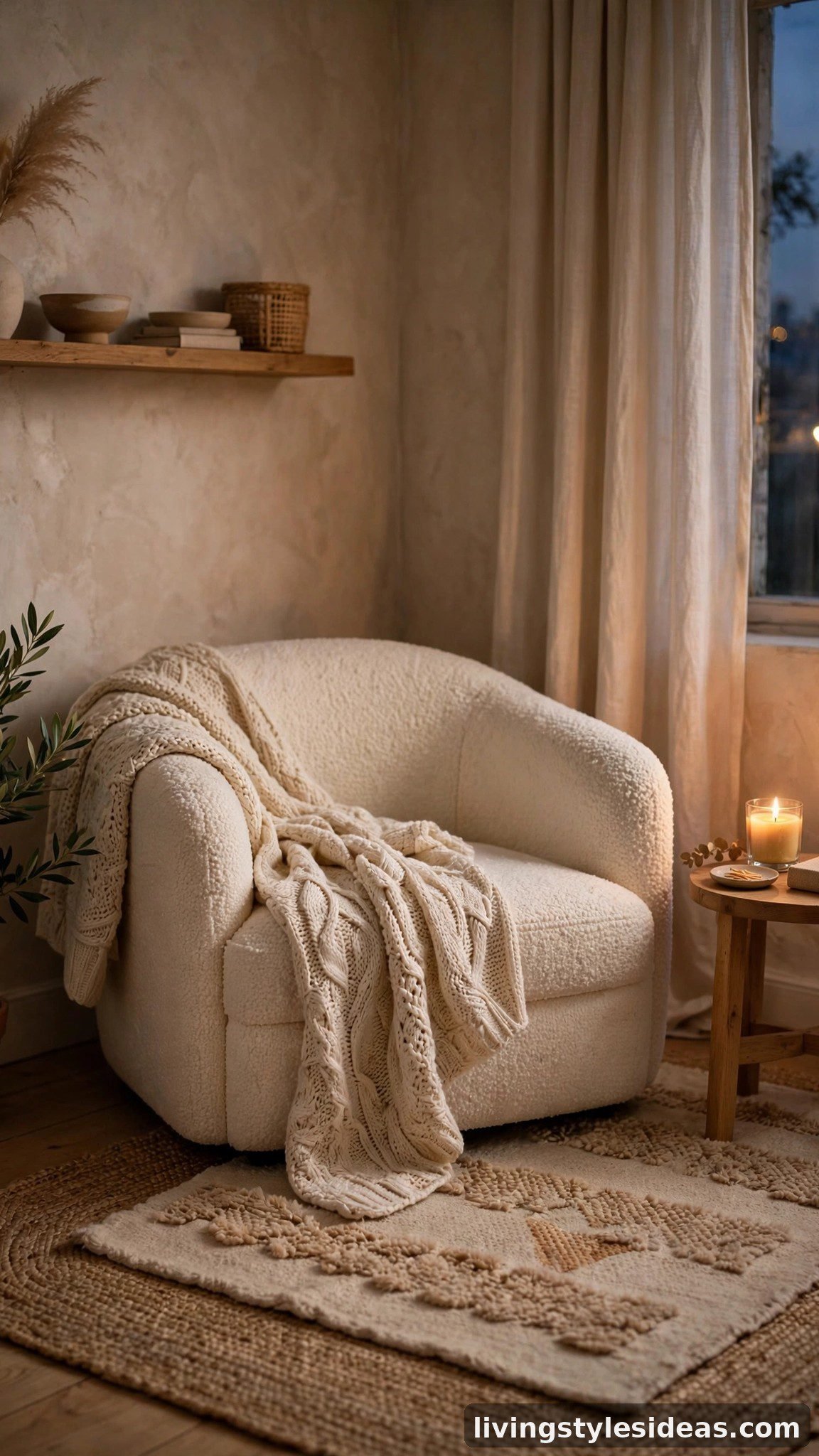
Make the purchase — then give it a week before judging. A new rug color always looks startling on day one because your eyes are calibrated to the old floor. Add the finishing touches that complete the choice: a throw pillow that echoes the rug’s tone, a plant beside it, a lamp warming it at night. If it still feels wrong after a week of real living, most rug stores accept returns. But more often than not, following the steps above means you’ll just feel relieved.
Frequently Asked Questions
What rug color makes a studio apartment look bigger?
Lighter rugs in warm neutrals — cream, warm beige, light greige — make a studio feel larger because they blur the line between the rug and the floor. A large rug in a light tone also unifies the open layout instead of chopping it into pieces. Just avoid anything too close to your exact floor color, which can look washed out; aim for one or two shades lighter or darker.
Should my rug match my sofa or my curtains in a studio?
Match the sofa first — the rug and sofa form the largest color block in the room, and their relationship decides whether the space feels calm or chaotic. Curtains are a secondary partner; picking up one secondary color from a patterned rug for the curtains is a nice touch, but getting sofa and rug wrong can’t be saved by curtains. Prioritize the big pairing, then echo it elsewhere.
Can I use two different rug colors in one studio apartment?
Yes, as long as they belong to the same palette family. A cream rug in the living zone and a muted vintage rug with cream in its pattern in the sleeping zone works beautifully, because the shared tone connects them. Avoid two unrelated bold colors — in one open room, they compete and shrink the space visually. Think harmony across zones, variety within the palette.
How do I know if a rug color will look right before buying?
Order swatches and test them on your own floor in your own light for at least two days — morning sun and evening lamplight can completely change a color. Photograph the swatches too, since cameras reveal casts your eyes forgive. If swatches aren’t available, hold up a large fabric sample or return-friendly option; most online rug retailers allow free returns within 30 days.
Final Thoughts
Choosing a rug color for a studio apartment isn’t about finding the one perfect shade — it’s about following a sequence that eliminates the wrong ones. Light, floors, sofa, mood, zones, pattern, boldness, swatches, size, and patience: ten steps, and the right color practically chooses itself. Trust the process, give the swatches their two days in your light, and you’ll end up with a rug that makes your whole one-room home feel exactly like you.