
17 bedroom with tv and sofa layout ideas for a studio apartment
Fitting a bedroom, a TV setup, and a sofa into one studio apartment sounds impossible — until you see how the right layout makes it work. When your whole home is a single open room, every piece of furniture has to earn its spot, and the relationship between the bed, the sofa, and the TV decides whether the space feels like a cozy home or a cluttered dorm room.
The good news is that small-space designers have solved this puzzle many times over. From wall-mounted TVs that swivel between zones to sofas that double as room dividers, these 17 bedroom with TV and sofa layout ideas for a studio apartment show you exactly how to arrange one room so you can sleep, lounge, and host movie nights without compromise.
1. Mount the TV at the Foot of the Bed
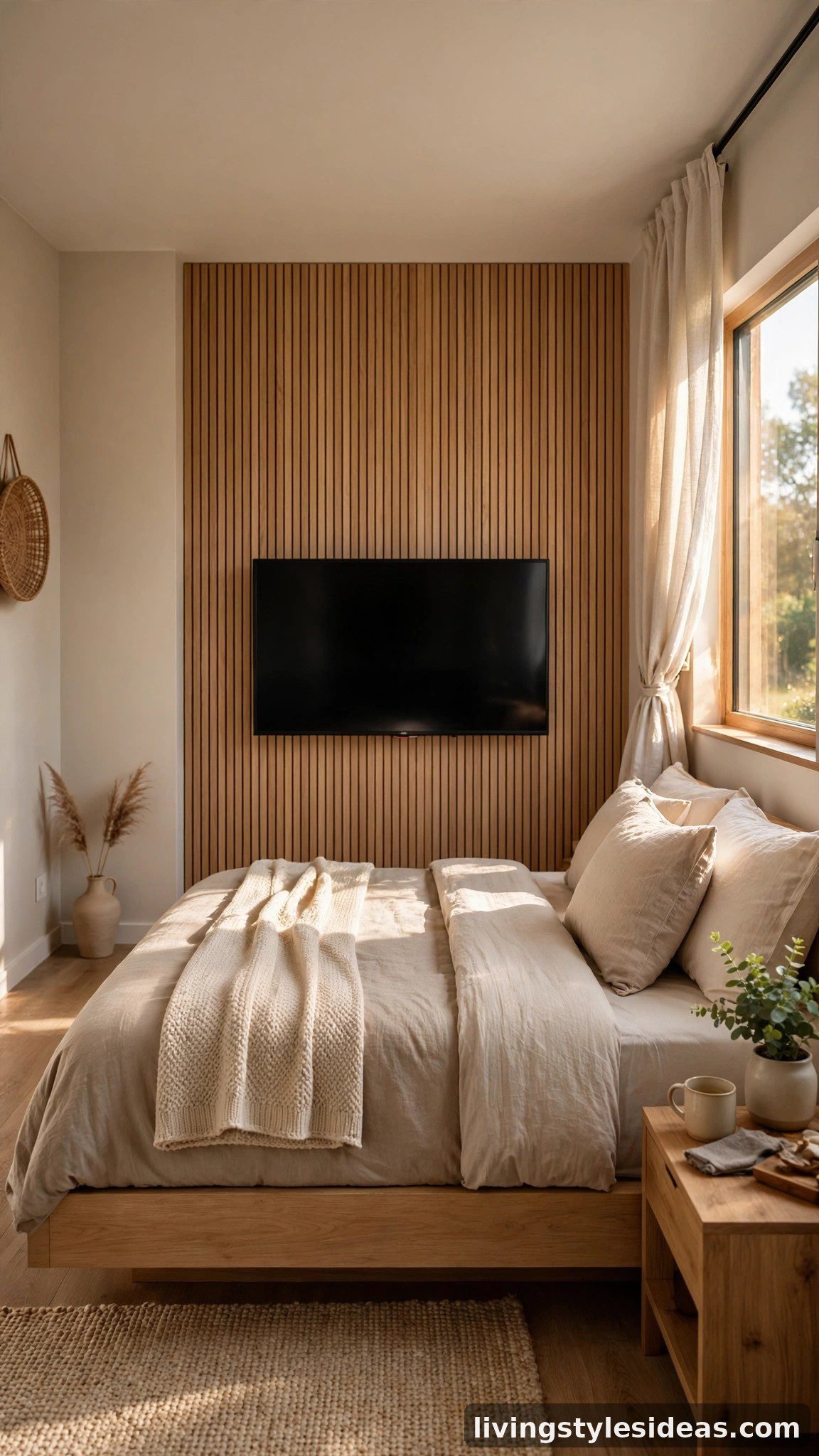
The simplest layout puts the TV on the wall directly at the foot of the bed, turning your sleeping area into a mini home theater. This works beautifully when the bed sits against one wall with a clear wall or windowless stretch opposite. Keep the TV at eye level from a reclined position — usually a little lower than a standard living-room mount. Add a slim soundbar or Bluetooth speaker and your bed becomes the best seat in the house for late-night streaming.
2. Use an L-Shaped Sectional as a Room Divider
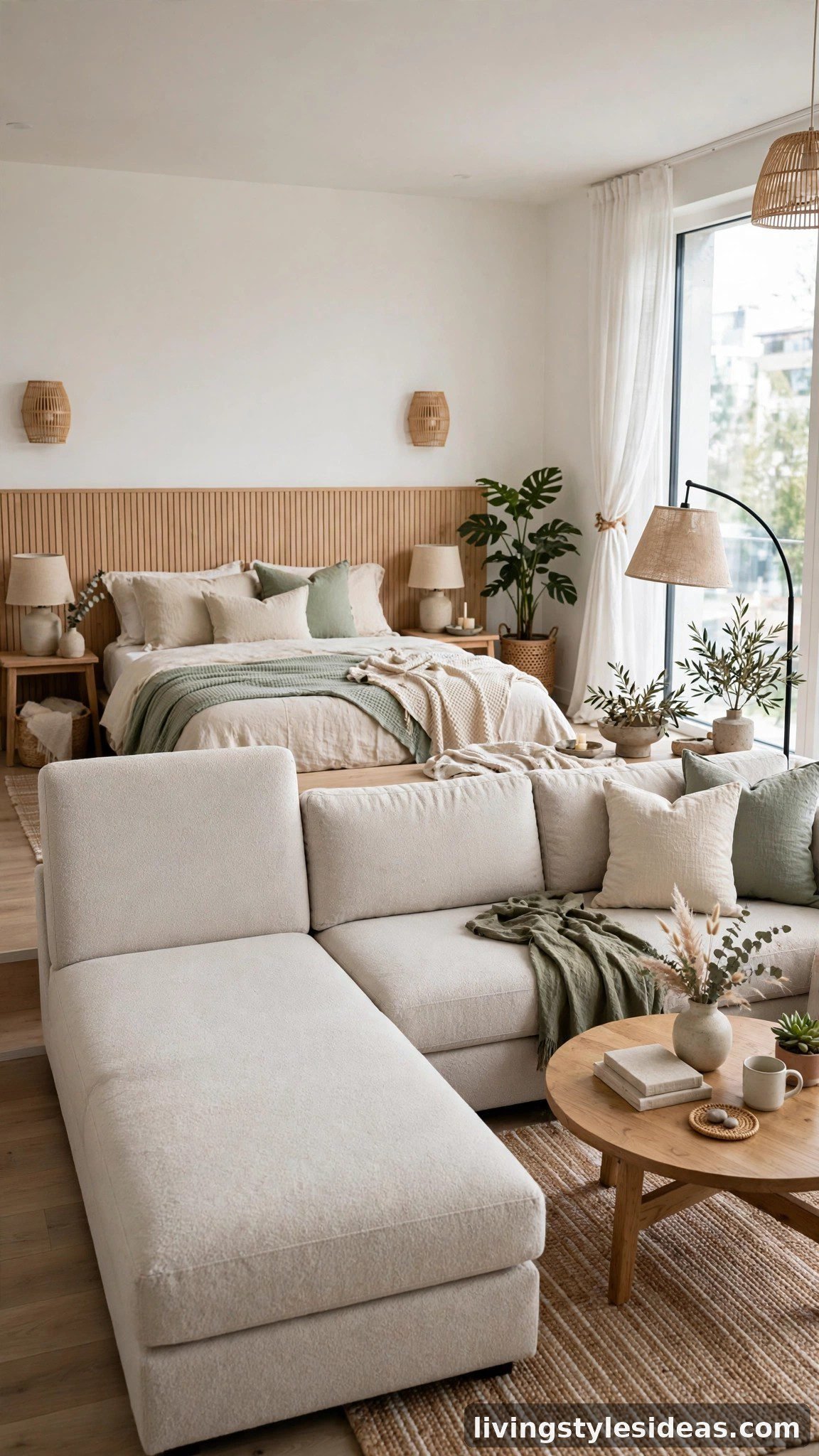
An L-shaped sectional does two jobs at once: it gives you real living-room comfort and visually splits the studio into sleeping and lounging zones. Place the back of the chaise toward the bed area so the sofa’s bulk creates a natural boundary without blocking light. This trick is perfect for square studios where a single straight sofa would look lost. Bonus: the chaise end becomes prime napping real estate on lazy afternoons.
3. Place the Sofa Back-to-Back With the Bed
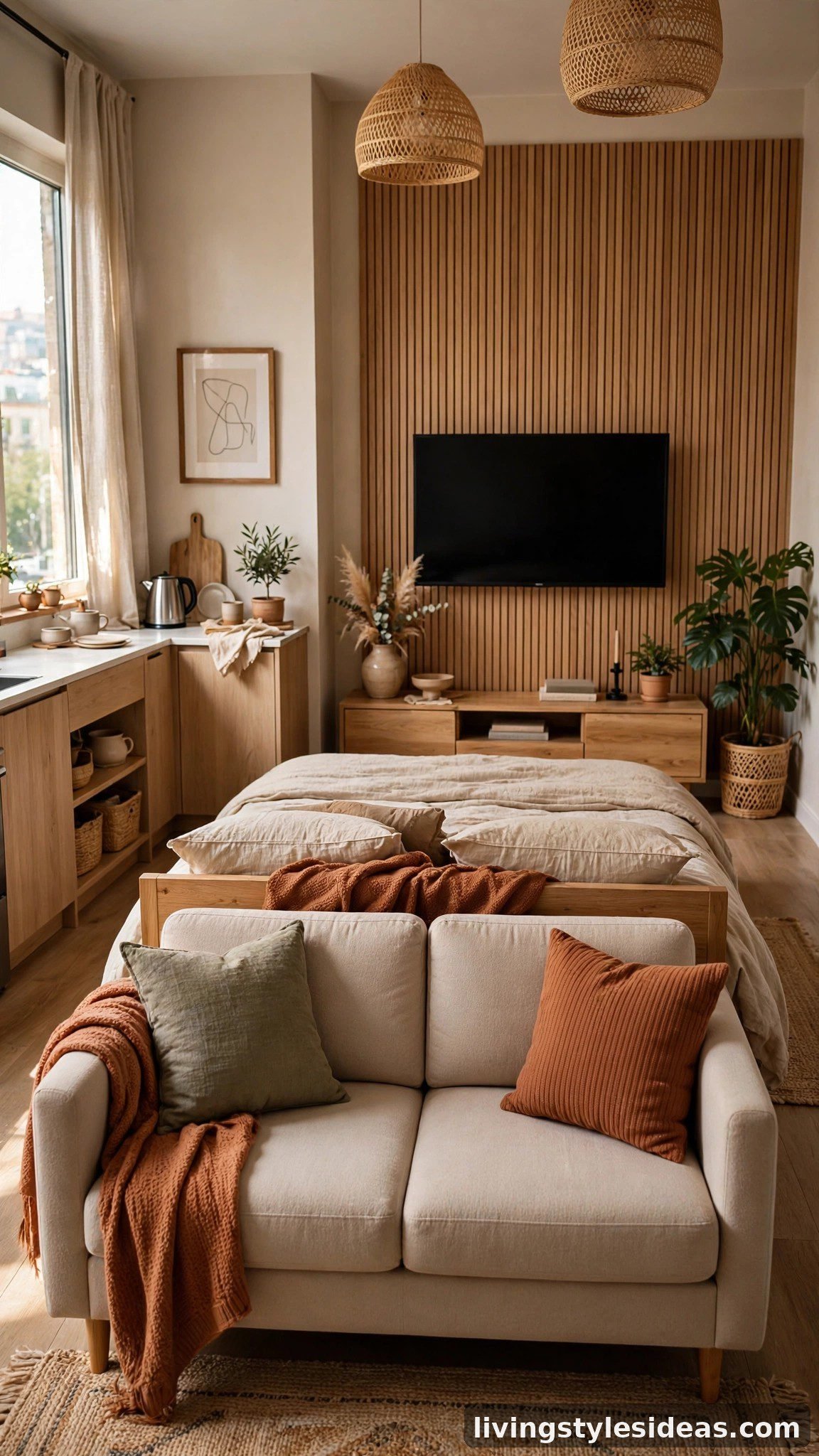
Push the sofa’s back right up against the foot or side of the bed and you instantly get two distinct zones sharing one piece of furniture as a divider. The bed stays private on its side while the sofa faces the TV wall on the other, giving you a proper living room feel. Add a narrow console table behind the sofa for lamps and books, and the two zones feel intentional rather than cramped. It is the fastest way to make a studio feel like a one-bedroom.
4. Let a Media Console Double as the Divider
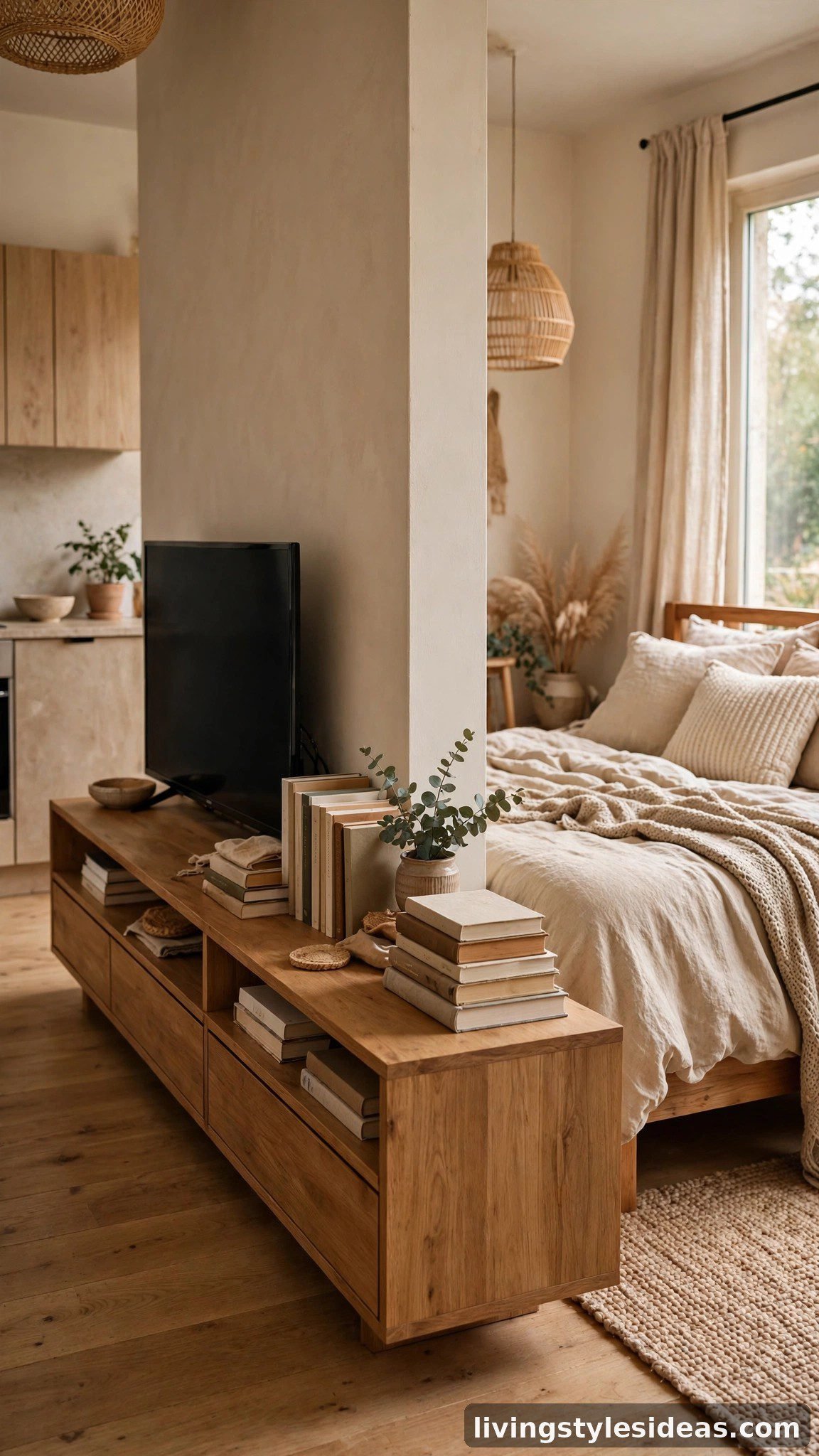
A low, wide media console placed perpendicular to the wall creates a hallway-like divide between your bed and living zones while holding the TV at perfect viewing height. Style the side facing the bed with books or plants so it looks finished from both directions. Because the console is low, sightlines stay open and the studio still feels airy. Choose one with closed storage to swallow remotes, game controllers, and charging cables.
5. Try a Swivel TV Mount Between Two Zones
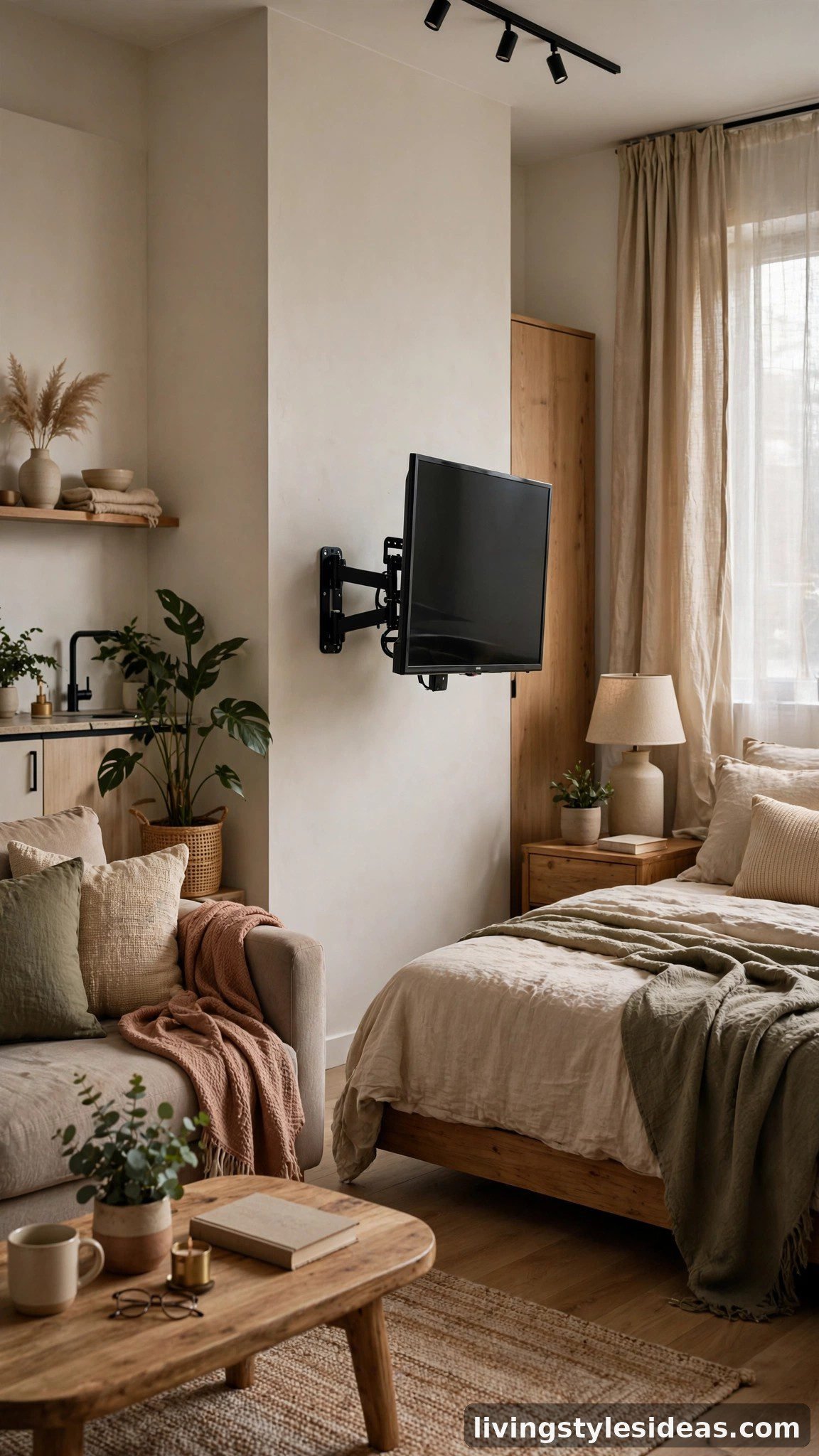
A full-motion swivel wall mount is the ultimate studio hack: angle the TV toward the sofa for movie nights, then swing it toward the bed for late-night episodes. Mount it on the wall or a sturdy column between the two zones so both seats get a clear view. Pair it with a long HDMI or wireless casting setup so your streaming stick reaches no matter which way the screen faces. One TV, two perfect viewing angles, zero wasted space.
6. Float the Sofa Facing the TV Wall
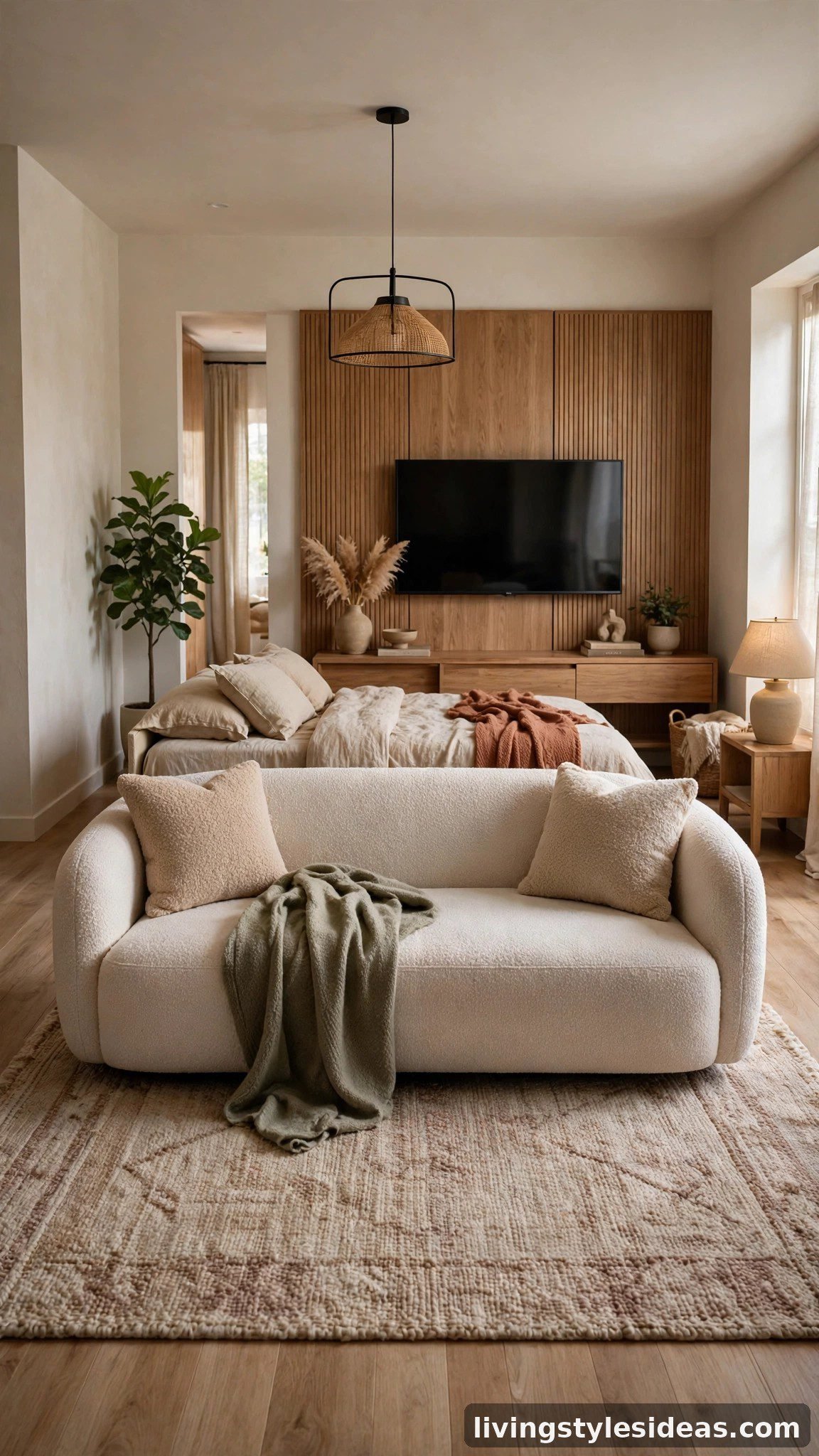
Instead of shoving the sofa against a wall, float it in the middle of the room facing a TV wall, with the bed tucked behind it. This creates a genuine living room zone with breathing space on all sides, and the bed zone stays calm and separate behind the sofa’s back. Anchor the arrangement with a rug under the sofa and coffee table. The key is leaving enough walkway behind the sofa so you can reach the bed without squeezing.
7. Pick a Sleeper Sofa That Does Double Duty
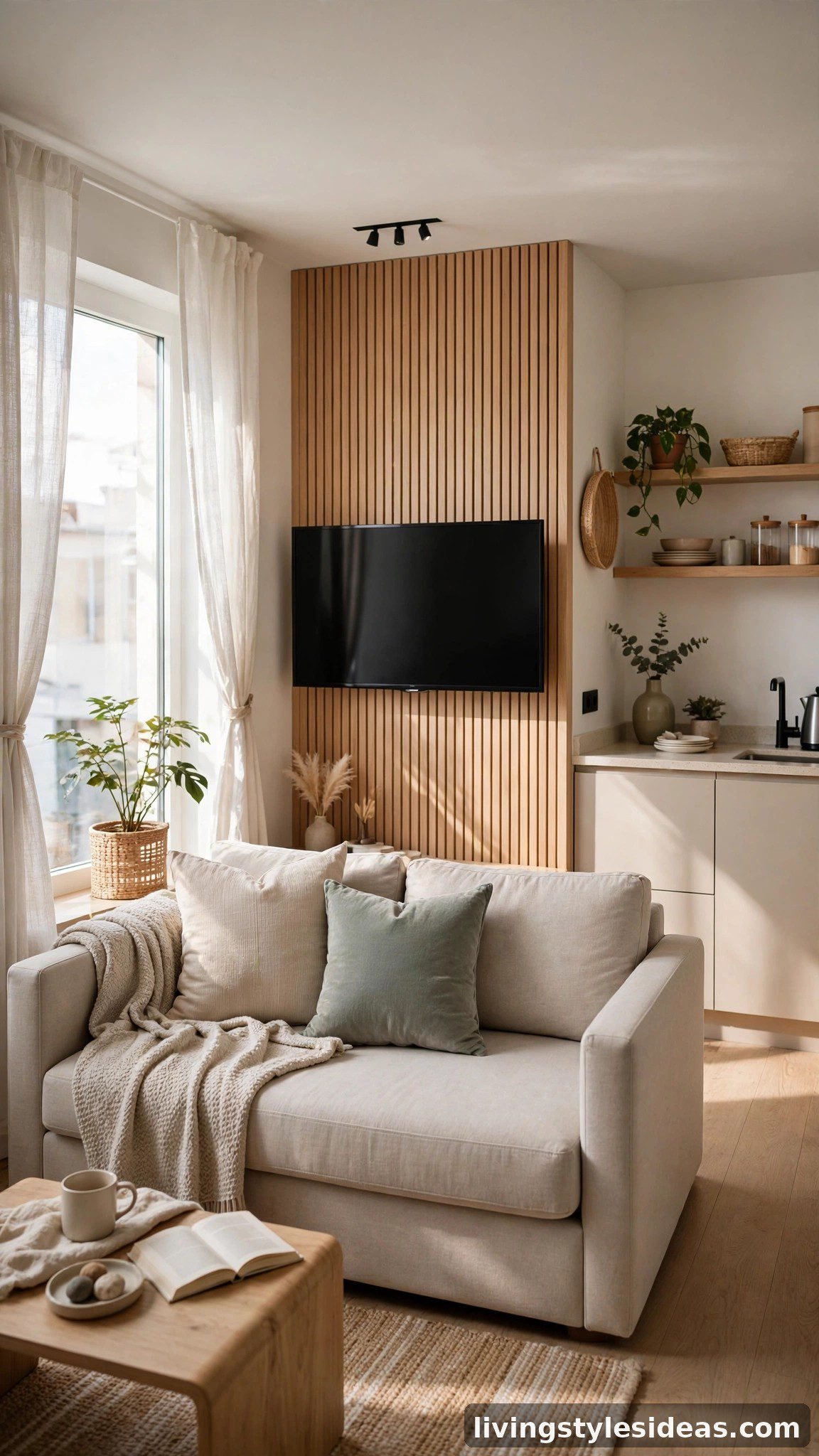
If your studio is truly tiny, a quality sleeper sofa can be both your lounge seat and your actual bed, freeing the whole room for a generous TV setup. Modern sleepers open in seconds and sleep far better than the lumpy pull-outs of the past. By day it is a stylish sofa facing the TV; by night it unfolds into a full bed. You gain floor space, simplify the layout to two pieces of furniture, and never worry about where the bed zone ends.
8. Tuck the Bed in the Corner, Loveseat Opposite
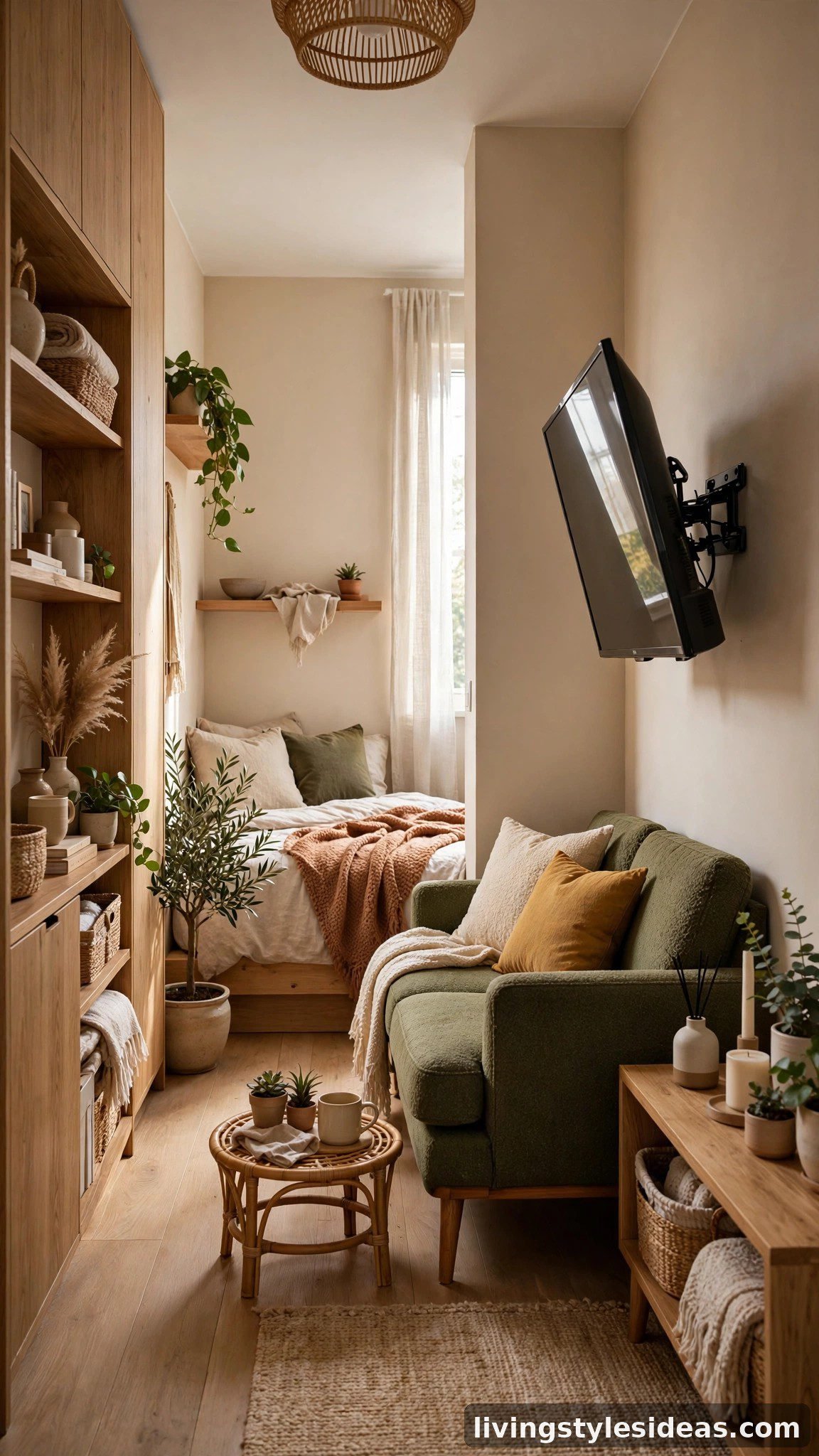
Push the bed into a far corner and place a compact loveseat on the opposite wall, with the TV mounted between them on the perpendicular wall or a stand angled to face both. The corner position keeps the bed out of the main traffic path while the loveseat claims the living zone near the door or window. This layout shines in long, narrow studios where a full sofa would block the walkway. A round side table softens the tight corner geometry.
9. Zone the Living Corner With a Rug
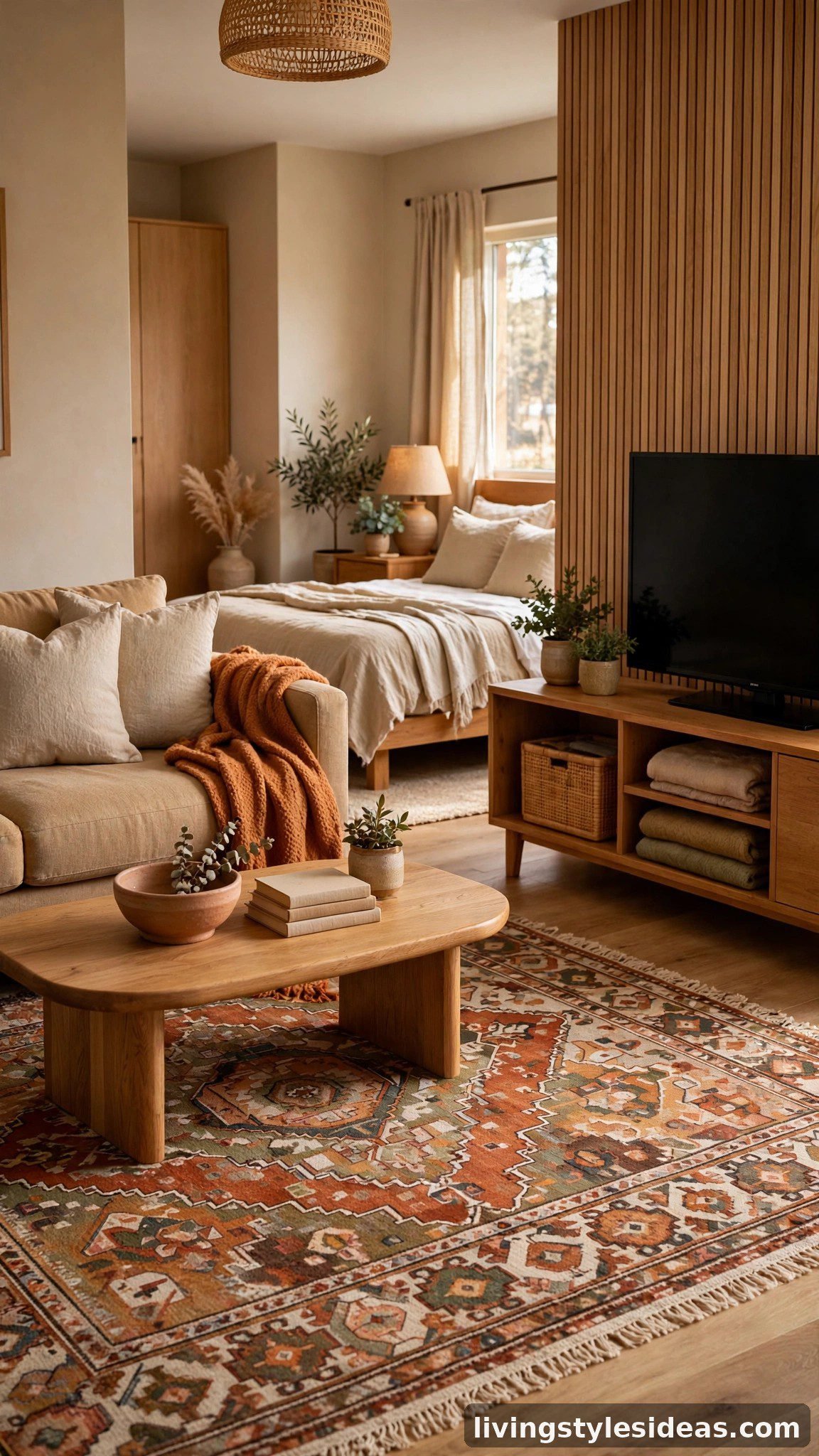
Sometimes zoning is just visual: a large area rug under the sofa and coffee table tells the eye where the living room begins, even with no physical divider. Choose a rug big enough to hold the sofa’s front legs and the TV stand’s feet if it sits in the zone. A bold pattern or contrasting color makes the living corner feel deliberate and grounded. This is the cheapest, renter-friendliest way to separate bed and lounge zones in a studio.
10. Mount the TV on the Kitchen Divider Wall
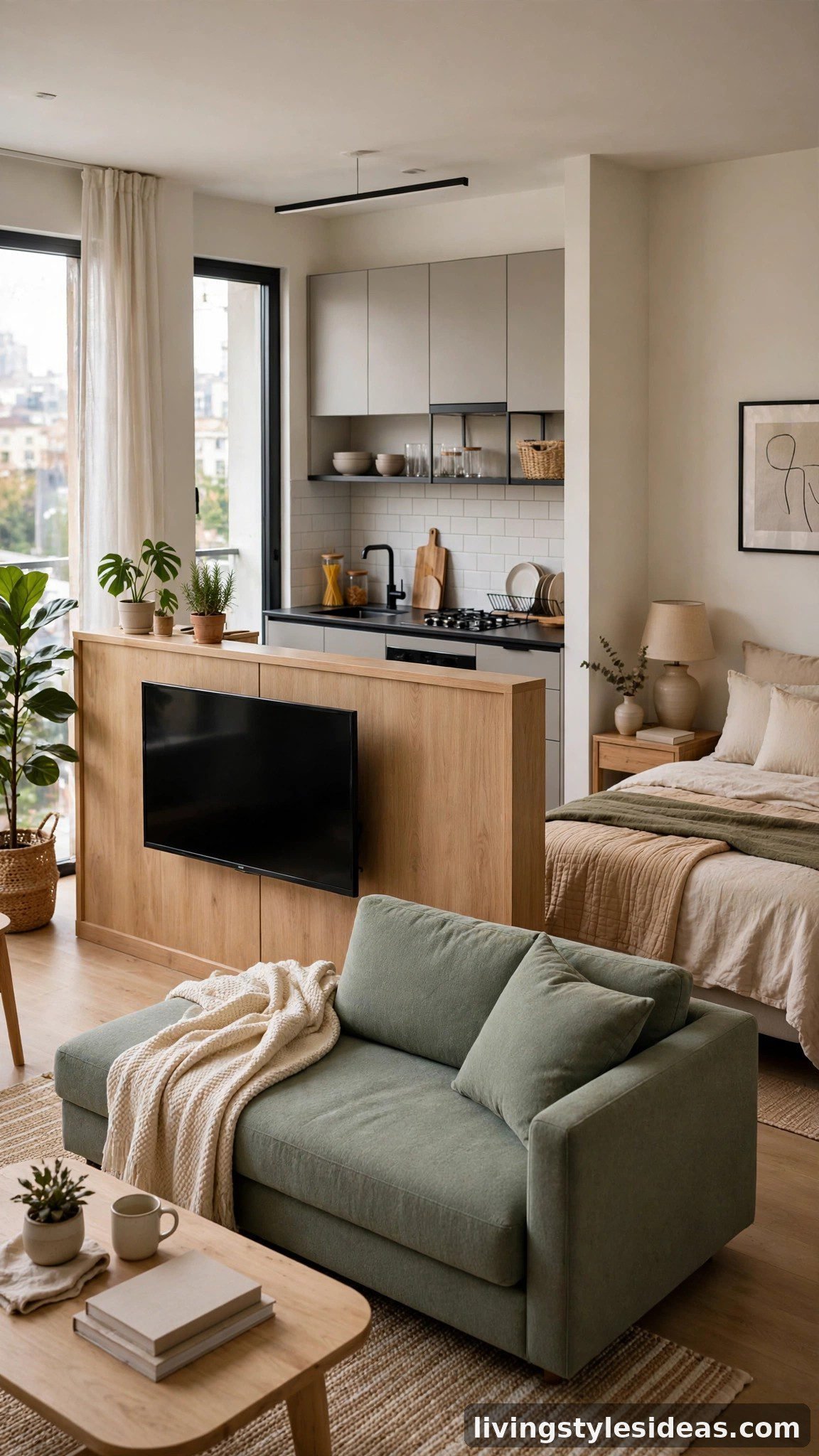
Many studios have a half-wall, peninsula, or column separating the kitchenette — put it to work by mounting the TV on the living-room side. The sofa faces this wall while the bed stays behind or beside the sofa, completely out of the TV’s sightline. You gain a natural media wall without sacrificing any furniture wall, and the kitchen side can hold art or open shelving. It turns dead architectural space into your entertainment center.
11. Set the Sofa Under the Window, TV Opposite
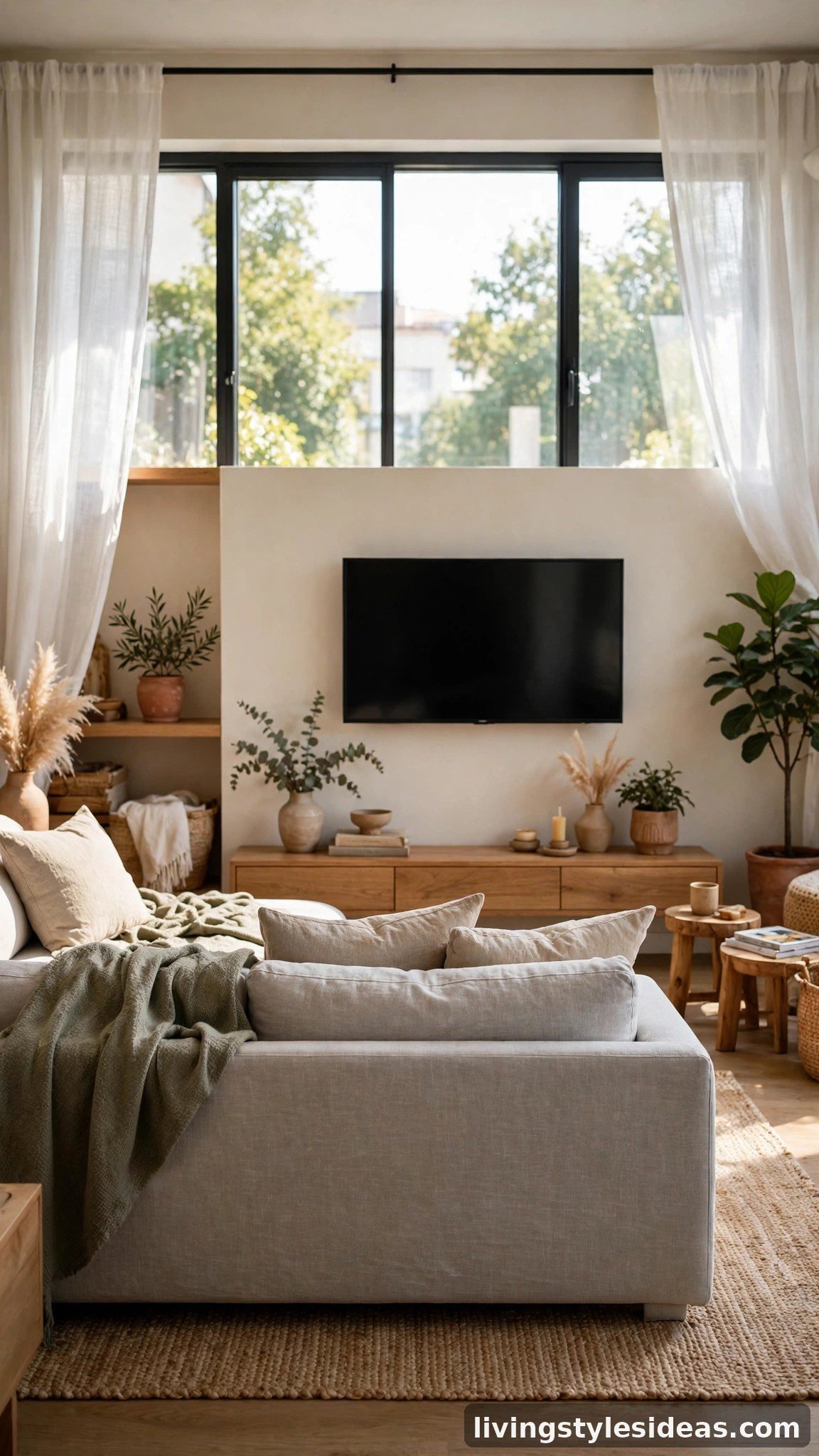
Place the sofa with its back to the window so natural light floods over your shoulder during the day, and mount the TV on the opposite wall with the bed off to one side. Daylight makes the living zone feel open and cheerful, and at night the curtains close for perfect movie ambiance with zero glare on the screen. Keep the sofa low-profile so it never blocks the window. This layout is ideal for studios with one big window wall.
12. Build a Fold-Down Media Wall
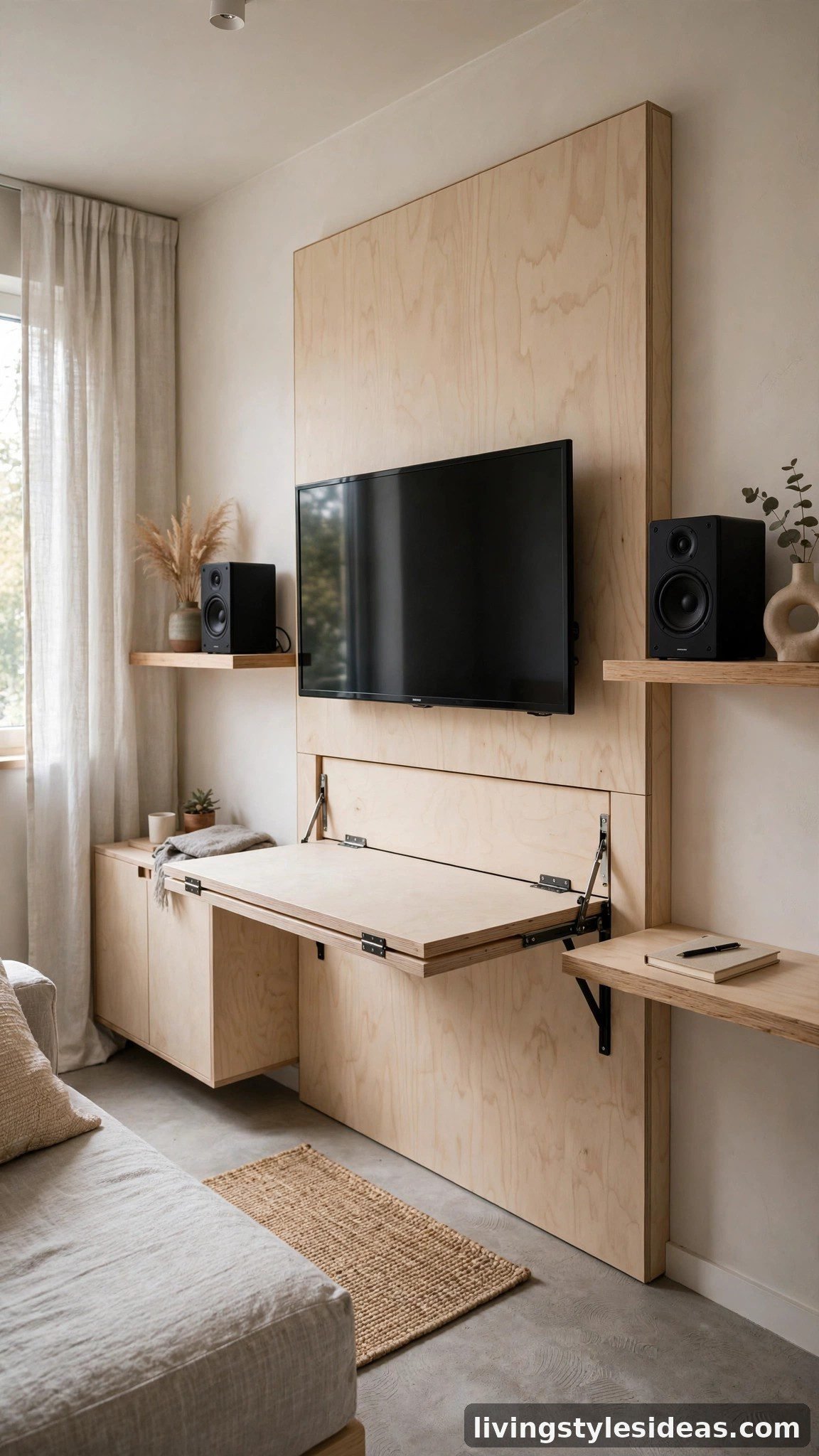
For the ultimate space saver, pair a wall-mounted drop-leaf desk or fold-down table with a TV mounted above it, creating a media wall that transforms as needed. By day the folded table disappears and the wall holds just the TV facing the sofa; unfold it for meals or laptop work. Behind or beside this wall, the bed zone stays untouched. Add floating shelves for speakers and decor so the wall earns its keep around the clock.
13. Hang Curtains to Divide Sleep and Lounge Zones
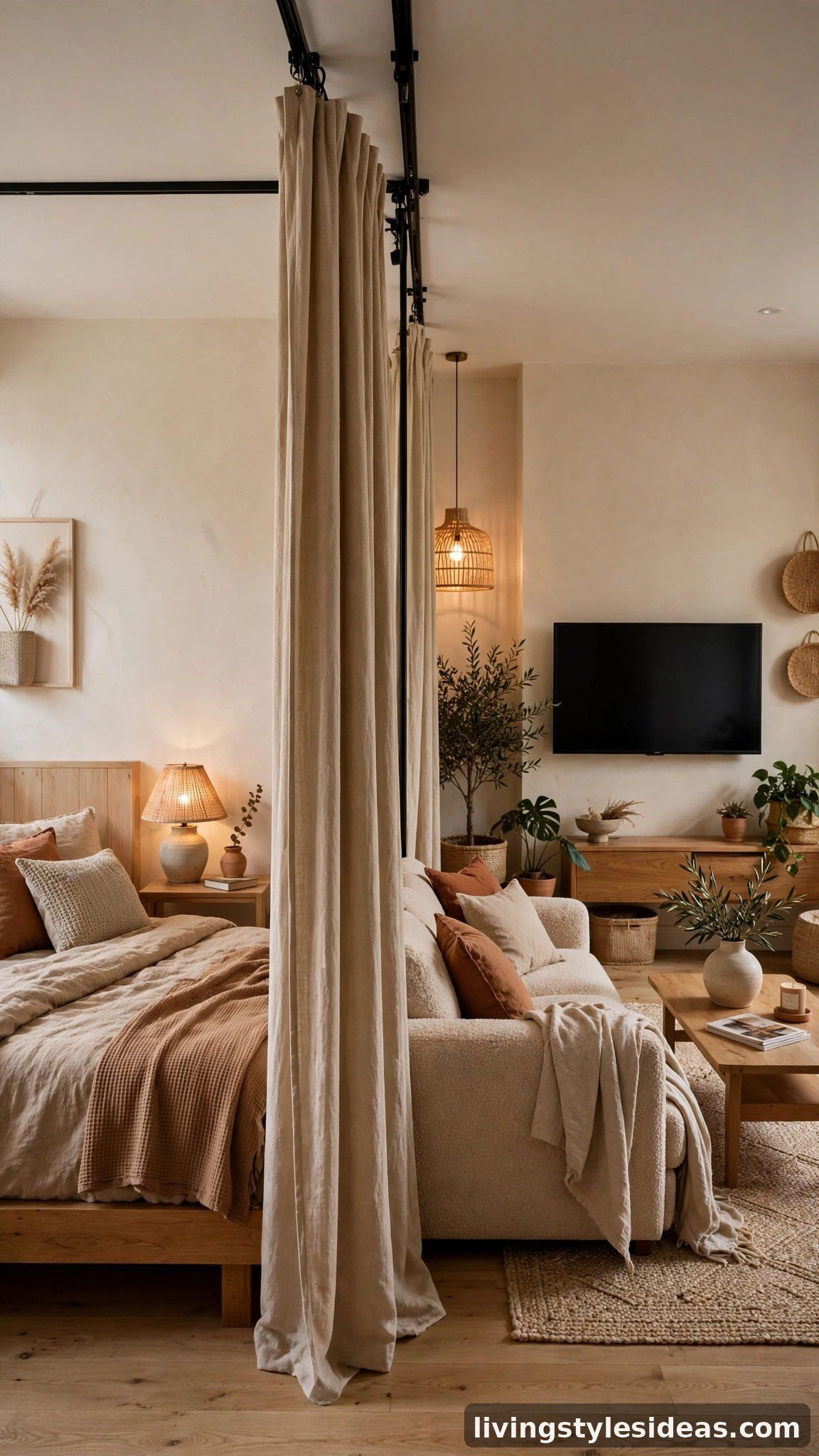
Ceiling-mounted curtains on a track give you a bedroom wall on demand: draw them closed and the bed zone disappears for movie nights or guests, open them to keep the studio airy. Hang the TV on the living-room side facing the sofa, and position the curtain track to cut the room roughly in half. Choose heavy, light-blocking fabric so the divider also dampens sound and TV glow while you sleep. It is the renter-friendly alternative to building a wall.
14. Keep Sightlines Open With a Low Platform Bed
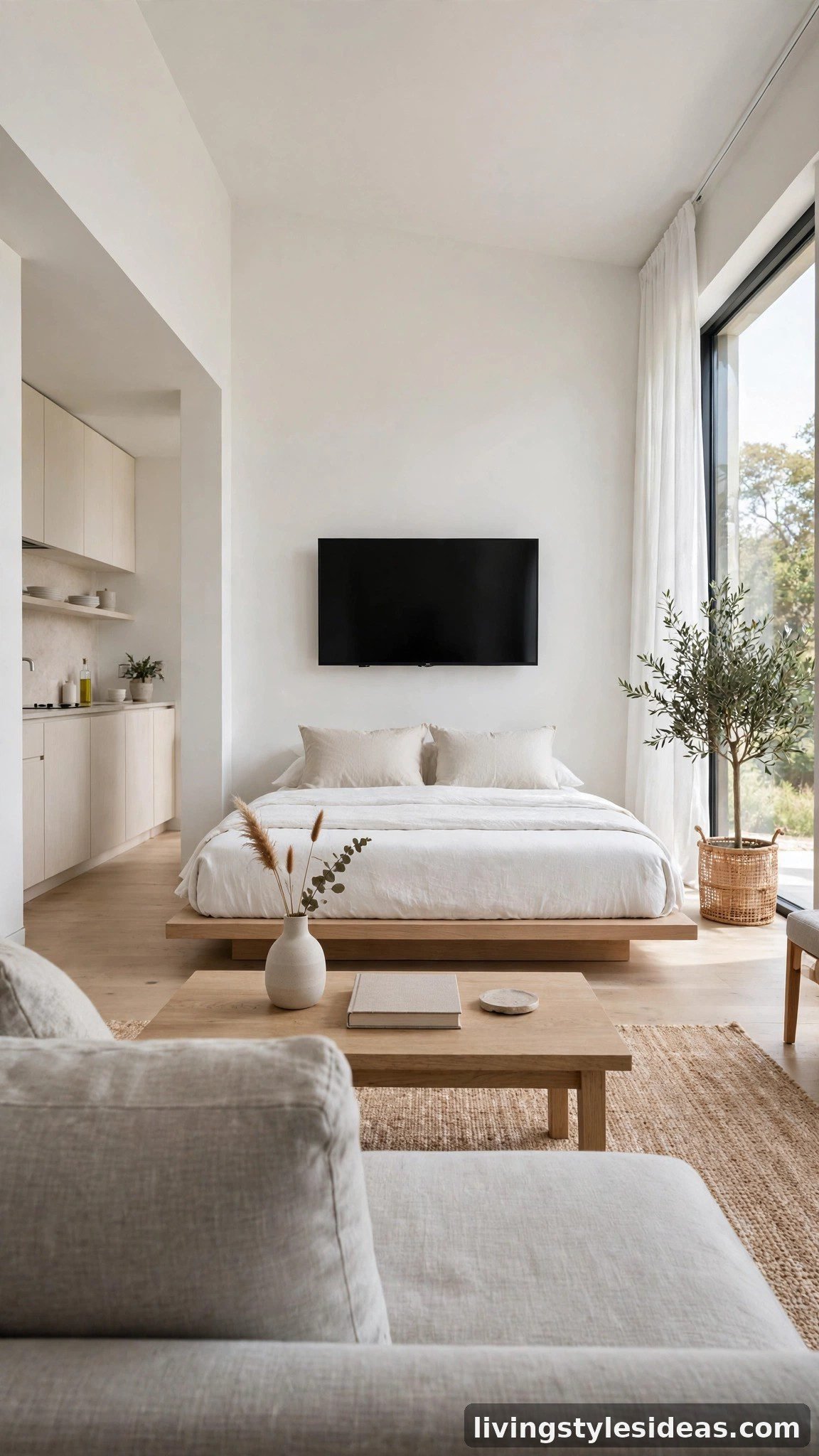
A low platform bed changes everything in a small studio: because it sits close to the floor, the TV stays visible over it from the sofa, and the whole room keeps its open, airy sightlines. You can watch from the sofa right over the foot of the bed with no blocked view. Low beds also make ceilings feel higher and the room feel larger overall. Add under-bed storage drawers and the low profile pays off twice with hidden organization.
15. Divide With a Bookshelf That Frames the TV
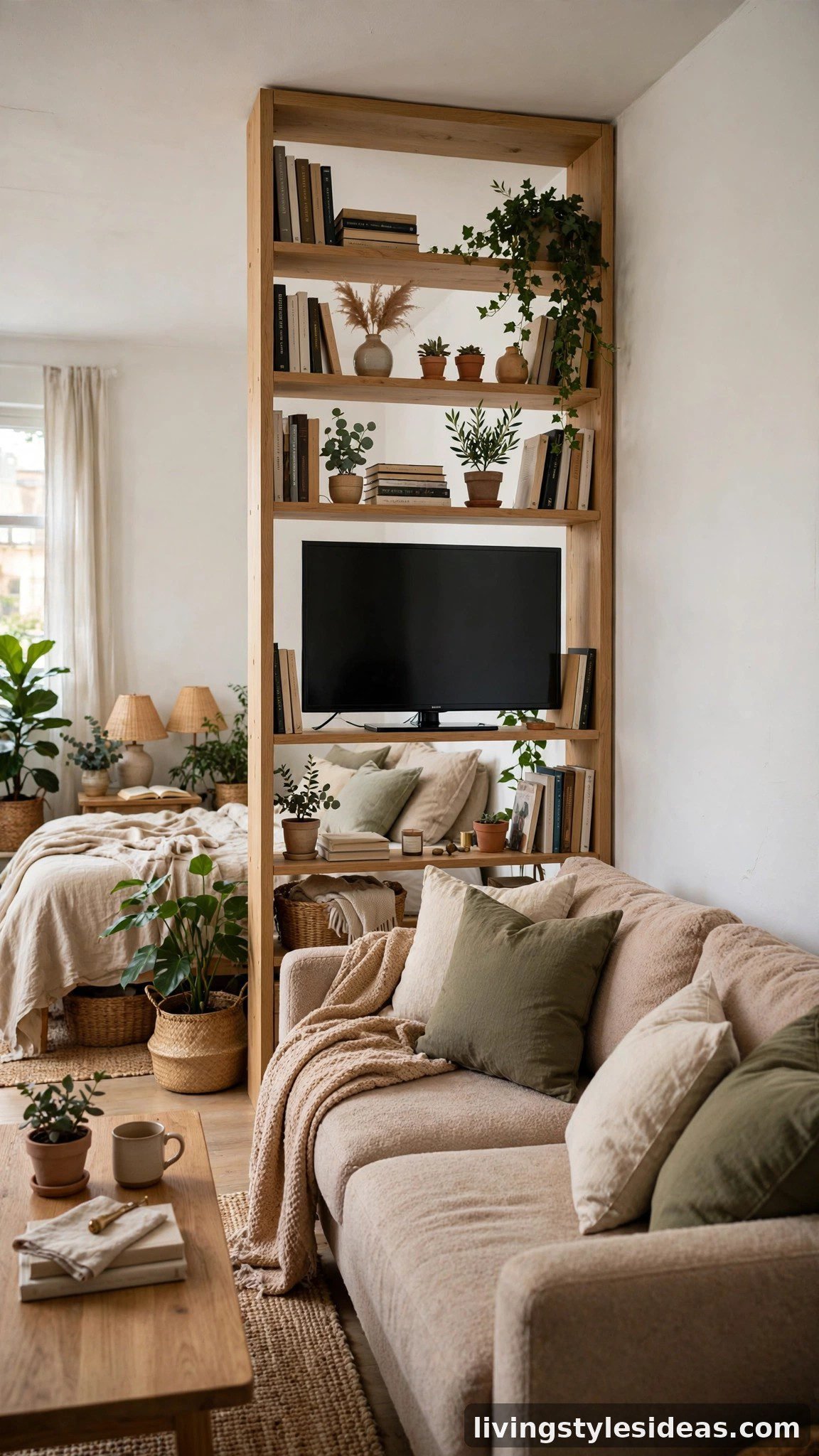
An open-back bookshelf standing perpendicular to the wall splits the studio while framing the TV in its center cubbies — a divider and media wall in one. The sofa faces the bookshelf-TV unit, and the bed tucks behind it in its own cozy zone. Because the shelves are open, light flows through and the room never feels chopped in half. Style the shelves with books, baskets, and plants so it reads as intentional decor, not just a barrier.
16. Angle the TV Into an Awkward Corner
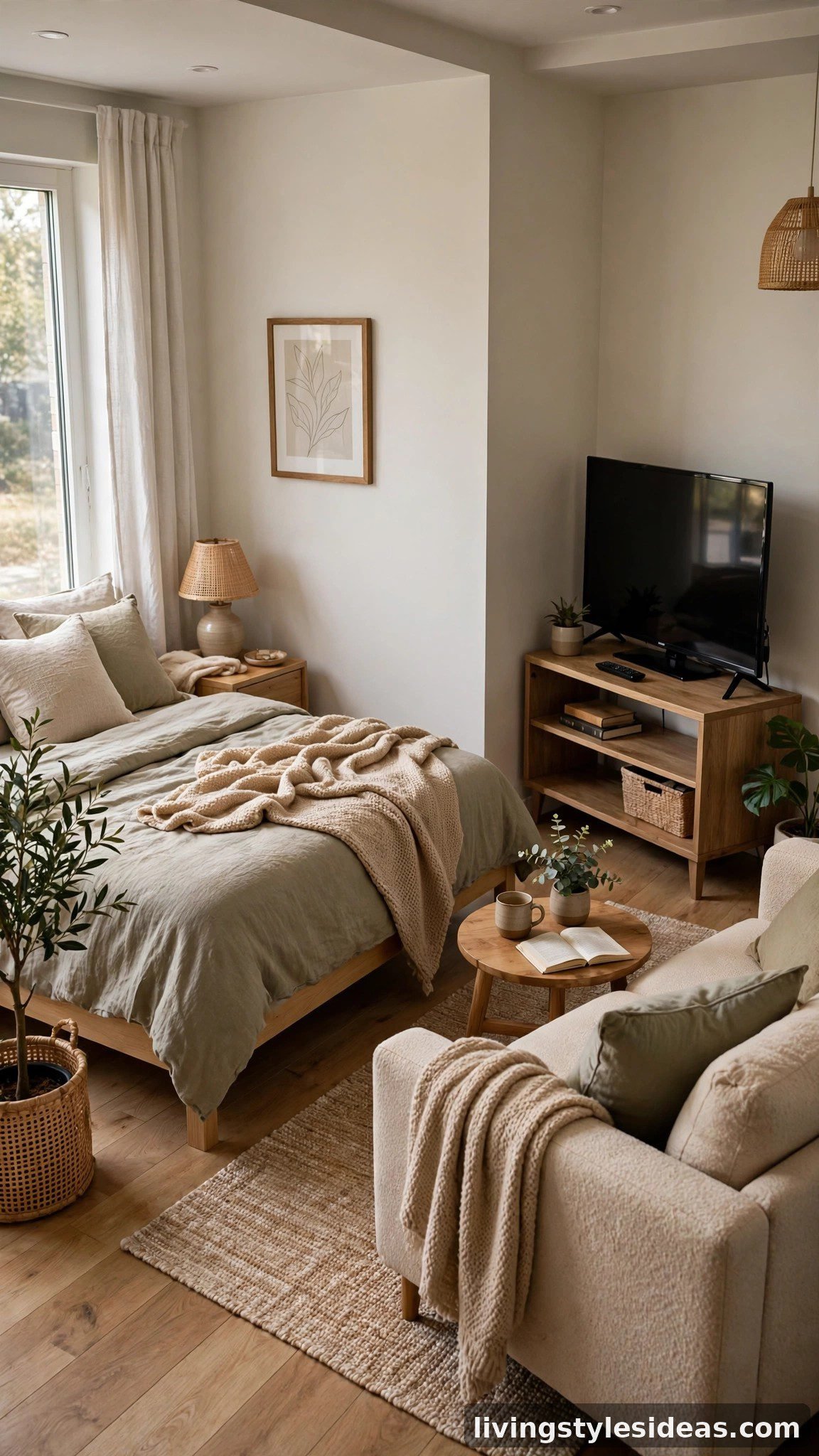
Odd corners and angled walls are common in studios — embrace them with a corner TV stand or angled mount, then position the sofa diagonally opposite with the bed along the remaining wall. Angling the TV outward fills dead corner space and lets the screen face both the sofa and, partially, the bed. A corner media stand often holds more gear than it looks like it should. This layout turns your studio’s weirdest angle into its entertainment hub.
17. Hide Media Gear in Smart Storage Furniture
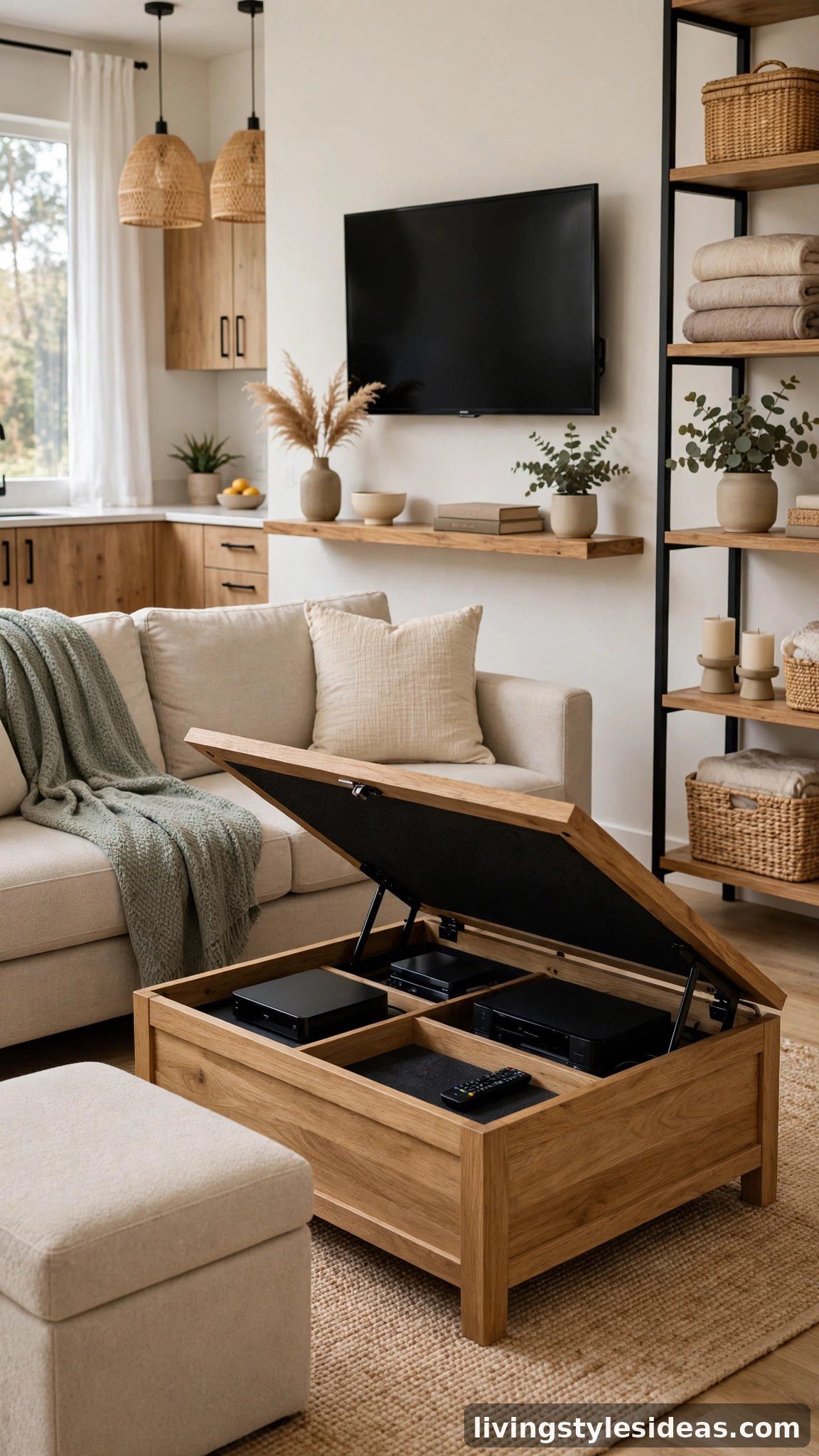
In a studio, visible cables and bulky consoles make everything feel cramped, so choose storage furniture that swallows your media gear. An ottoman with hidden compartments holds remotes and controllers, a lift-top coffee table hides the soundbar and streaming boxes, and cable raceways painted to match the wall make wires vanish. With the clutter gone, the sofa, bed, and TV layout breathes. Smart storage is what separates a cramped studio from a polished one.
FAQ
Can you fit a TV and a sofa in a studio apartment bedroom?
Absolutely — the trick is zoning rather than square footage. Use a sectional or bookshelf as a divider, mount the TV on the wall to save floor space, and choose a sofa size that leaves clear walkways. A loveseat or apartment-size sofa works best in studios under 500 square feet, while a swivel TV mount lets one screen serve both the bed and the sofa.
Where should I put the TV in a studio with no living room?
Mount it on the wall with the clearest sightline from both the sofa and the bed — commonly the foot-of-bed wall, the kitchen divider wall, or a corner angled toward both zones. Wall-mounting keeps floor space open and lets you set the exact viewing height. A full-motion swivel mount is ideal because it lets you angle the screen toward whichever seat you are using.
How do I separate the bed from the sofa area in a studio?
Use furniture as dividers: an L-shaped sectional, a low media console, an open bookshelf, or even a ceiling-track curtain. Area rugs also create visual zones without any physical barrier. The goal is a clear sense of two zones — sleep and lounge — while keeping sightlines and light flowing so the studio still feels like one open, airy home.
What size TV and sofa work best in a small studio?
For most studios, a 43 to 55 inch TV is the sweet spot — big enough for movie nights without overwhelming the room. Sit 6 to 9 feet from the screen. For the sofa, choose an apartment-size two-seater or a compact loveseat, usually 60 to 72 inches wide. Measure your walkways first: you need at least 30 inches of clear path around furniture for the layout to feel comfortable, not cramped.
Final Thoughts
A studio apartment does not have to choose between a real bedroom and a real living room — with the right layout, you get both. Whether you mount the TV at the foot of the bed, divide the room with a clever bookshelf, or let a swivel mount serve two zones at once, the secret is treating the bed, the sofa, and the TV as one connected arrangement instead of three separate problems. Pick the idea that fits your floor plan, keep walkways clear, hide the clutter, and your one-room home will feel twice its size.